
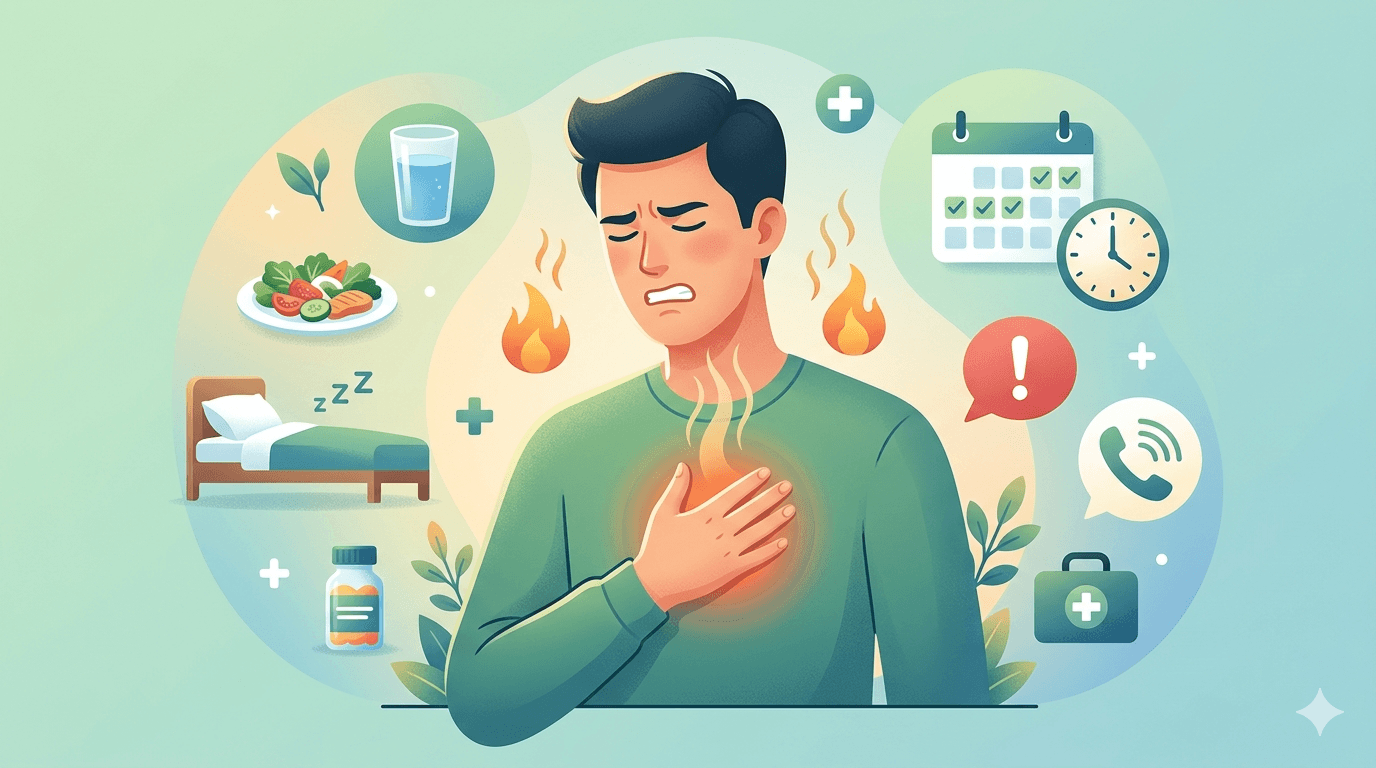
Heartburn is a common condition that many people experience at some point in their lives. It is often described as a burning sensation in the chest, usually felt just behind the breastbone. While it may feel alarming, heartburn is typically caused by acid reflux, when stomach acid flows back into the esophagus.
This happens when the lower esophageal sphincter, a muscle that normally keeps stomach contents in place, relaxes or weakens. As a result, acid rising from the stomach irritates the esophagus, leading to discomfort.
For most people, occasional heartburn is not serious. However, frequent heartburn may be a sign of gastroesophageal reflux disease (GERD), a chronic condition that can affect the digestive system and require medical care. Understanding heartburn symptoms, triggers, and treatment options can help you manage discomfort and protect your long-term health.
What Does Heartburn Feel Like?
Heartburn is a burning pain in the chest that can range from mild to severe. It often occurs after eating and may feel worse when lying down or bending over.
In addition to the burning feeling, people may experience a bitter or acidic taste in the mouth, throat irritation, or a sensation of food or acid coming back up. Some individuals also notice chest discomfort or pressure that can feel similar to heart-related chest pain.
Heartburn symptoms can last a few minutes to several hours, depending on the cause and severity. While the sensation can be uncomfortable, it is usually related to acid reflux rather than a problem with the heart. However, because symptoms can overlap with a heart attack, it’s important to take new or severe chest pain seriously.
When Does Heartburn Happen?
Heartburn typically occurs when the digestive system is under strain or when stomach acid is more likely to move upward.
It is more likely to happen after eating large meals, especially those high in fat or spicy foods, or after lying down soon after eating. Many people notice symptoms in the evening, when digestion slows, and stomach contents remain in the stomach longer.
Lifestyle factors also play a role. Stress, poor sleep, alcohol, and smoking can all make heartburn worse. In addition, pregnancy and weight gain increase abdominal pressure, which can push stomach acid upward and trigger reflux.
Even small changes, like eating later than usual or having a full stomach, can trigger symptoms, making heartburn feel like it starts suddenly.
What Causes Heartburn?
Heartburn can have several causes, all related to how acid behaves in the digestive system.
| At its core, heartburn occurs when the lower esophageal sphincter fails to function properly, allowing acid to back up into the esophagus. This can be triggered by certain foods, lifestyle habits, or underlying conditions.
Common causes of heartburn include:
|
 |
In some cases, non-acid reflux or functional heartburn may occur, where symptoms are present without significant acid exposure. Because heartburn can also be confused with other conditions, such as esophageal disease or even heart-related chest pain, accurate diagnosis is important if symptoms persist.
How to Get Rid of Heartburn Fast
For many people, heartburn can be relieved quickly with simple self-care and over-the-counter treatments.
Antacids are commonly used to neutralize stomach acid and provide fast relief for occasional heartburn. Other medications, such as H2 receptor antagonists and proton pump inhibitors (PPIs), help reduce acid production and are often used for more frequent symptoms.
Simple strategies can also help reduce discomfort. Staying upright after eating, drinking water, and avoiding trigger foods can prevent symptoms from worsening. Chewing gum may also help by increasing saliva, which can reduce acid in the esophagus.
If symptoms continue despite treatment, a healthcare provider may recommend additional treatment options, including prescription medications or further evaluation.
Long-Term Ways to Prevent Heartburn
Managing heartburn long-term often involves consistent lifestyle changes that support the digestive system.
Eating smaller meals instead of large portions can reduce pressure on the stomach. Avoiding meals close to bedtime and giving your body time to digest food can also prevent nighttime symptoms.
Maintaining a healthy weight is especially important, as excess weight increases abdominal pressure and contributes to reflux. Choosing a balanced diet with whole foods, limiting alcohol, and avoiding smoking can significantly reduce symptoms.
Other helpful changes include improving sleep habits, reducing stress, and avoiding tight clothing around the waist. These steps not only reduce heartburn but also support overall health and well-being.
When Heartburn May Be GERD
Frequent or persistent heartburn may be a sign of gastroesophageal reflux disease (GERD). Unlike occasional reflux, GERD is a chronic condition that can damage the esophagus over time.
If left untreated, GERD can lead to complications such as esophageal inflammation, narrowing, or changes in the lining known as Barrett’s esophagus. Because of these risks, ongoing symptoms should not be ignored.
Diagnosis may involve a clinical evaluation, imaging, or procedures such as an upper endoscopy to examine the esophagus and identify damage.
When to See a Doctor
| You should seek medical care if your symptoms are frequent, worsening, or interfering with your daily life.
Persistent heartburn, difficulty swallowing, or symptoms that do not improve with over-the-counter medications may indicate a more serious condition. A healthcare provider can help determine the cause and recommend appropriate treatment. Heartburn that occurs alongside other symptoms such as unexplained weight loss or ongoing chest discomfort should always be evaluated. |
 |
When Heartburn Could Be an Emergency
Although heartburn is usually not dangerous, it can sometimes feel similar to a heart attack, which is a life-threatening condition.
Seek emergency medical care immediately if you experience severe chest pain, pain that spreads to the arm or jaw, shortness of breath, cold sweats, dizziness, or nausea. These symptoms may indicate a cardiac event and require urgent attention.
If you are unsure whether your symptoms are heartburn or something more serious, it is always safest to seek emergency care.
Frequently Asked Questions
Why does heartburn happen after eating?
Heartburn often occurs after eating because the stomach produces acid to help digest food. Large meals or certain foods can increase stomach pressure, making it easier for acid to move into the esophagus.
How long does heartburn usually last?
Heartburn can last anywhere from a few minutes to several hours. The duration depends on the severity of reflux and the rate of stomach emptying.
Can heartburn start suddenly?
Yes, heartburn can start suddenly due to triggers such as diet changes, stress, pregnancy, or lying down after eating. Even people who don’t usually experience heartburn can develop symptoms under certain conditions.
Is heartburn the same as GERD?
No. Occasional heartburn is common, but frequent symptoms may indicate GERD, a chronic condition that requires medical evaluation and treatment.
Can heartburn feel like a heart attack?
Yes, heartburn can sometimes mimic heart attack symptoms, including chest pain and pressure. Because of this overlap, any severe or unfamiliar chest pain should be evaluated immediately.
How +MEDRITE Urgent Care Can Help
At +MEDRITE Urgent Care, we provide evaluation and treatment for heartburn, acid reflux, and GERD symptoms. Whether you are experiencing occasional discomfort or more persistent symptoms, our team can help identify the cause and guide you toward effective treatment.
Walk-ins are always welcome, and you can now book appointments in advance for added convenience, making it easier to get the care you need on your schedule.