
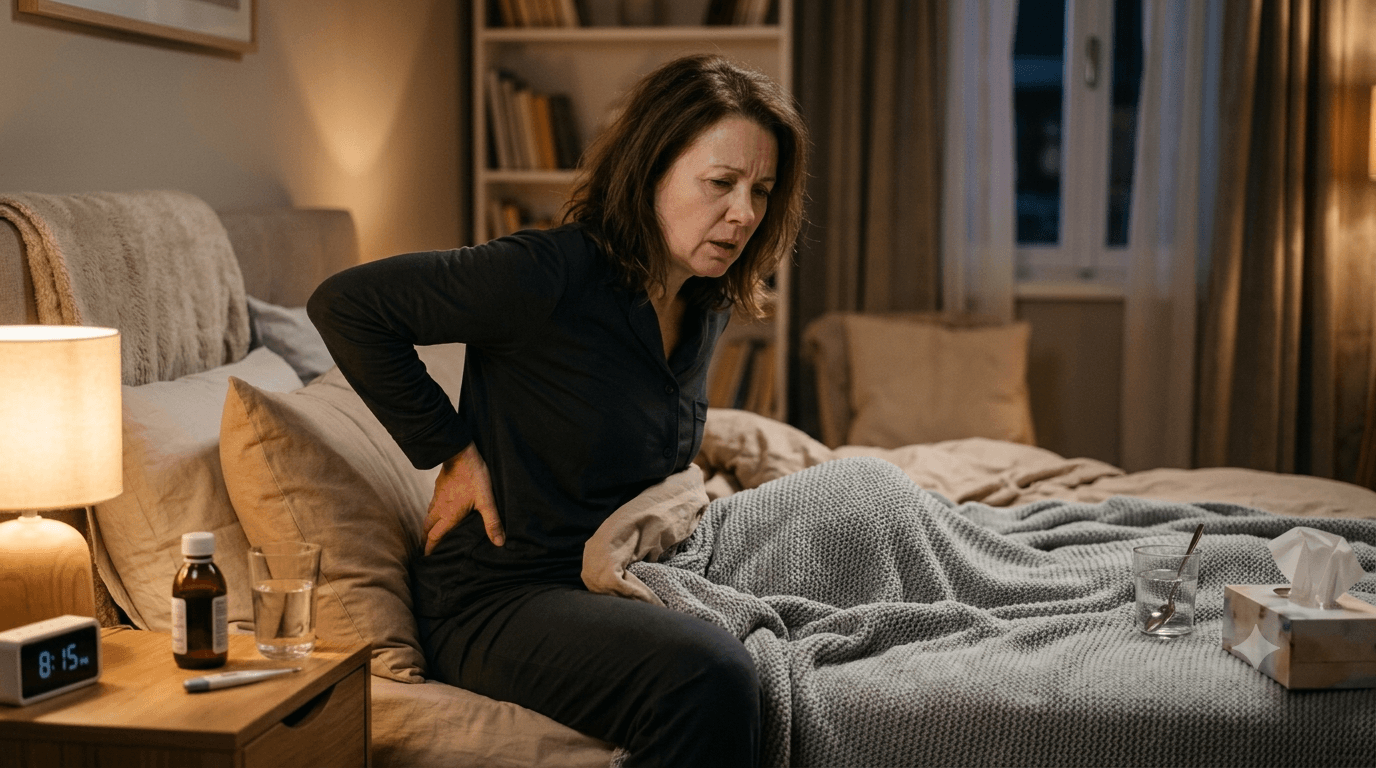
Yes, pneumonia can cause back pain, but back pain by itself is not enough to diagnose pneumonia. The more important clue is the pattern around the pain. Pneumonia-related pain usually occurs with respiratory symptoms such as cough, fever, chills, fatigue, chest discomfort, shortness of breath, or pain that worsens with deep breathing or coughing.
Back pain can occur when inflammation in or around the lungs irritates the chest lining, when repeated coughing strains the muscles between the ribs and upper back, or when chest discomfort is felt in a nearby area. That said, many other problems can cause back pain, including muscle strain, kidney infection, kidney stones, gallbladder problems, acid reflux, heart-related conditions, and injuries. A clinician can help clarify the difference based on your symptoms, exam findings, and test results.
The Short Answer: Pneumonia Can Cause Back Pain, But Context Matters
Pneumonia is an infection that inflames the air sacs in one or both lungs. Those air sacs can fill with fluid or pus, which may cause cough, fever, chills, mucus, fatigue, and trouble breathing. Some people also feel chest pain when breathing or coughing. Because the lungs, ribs, chest wall, and upper back are closely connected, pain from pneumonia may be felt in the back, especially the upper or middle back.
This is why the question “Can pneumonia cause back pain?” needs a careful answer. Pneumonia may be one explanation for back pain that appears with cough, fever, shortness of breath, or chest pain. It is less likely when the only symptom is back pain after lifting, twisting, sleeping awkwardly, or sitting for long periods. Pneumonia is also less likely when the pain can be reproduced by pressing on a single sore muscle or by moving the spine in a specific way, although overlap can occur.
How Pneumonia May Lead To Chest And Back Pain
Pneumonia-related discomfort can come from several pathways. The exact reason is not always obvious without an exam, but these are the most common explanations.
| Possible Reason | How It May Feel | Why It Happens |
|---|---|---|
| Pleuritic pain | Sharp or stabbing pain that worsens with deep breathing, coughing, sneezing, or certain positions. | Inflammation can irritate the pleura, the thin lining around the lungs and inside of the chest wall. |
| Cough-related muscle strain | Sore, tight, or aching pain in the ribs, upper back, shoulders, or chest wall. | Repeated coughing can overwork the muscles between the ribs, along the spine, and across the upper body. |
| Chest wall irritation | Tenderness around the ribs or pain that feels worse with movement. | Forceful coughing and inflammation can make the chest wall sensitive. |
| Referred discomfort | Pain felt in the upper back, shoulder blade area, or side of the chest. | Nerves in the chest and upper back can make pain feel like it is coming from a nearby area. |
| Another condition | Pain that feels unusual, severe, lower-back focused, or unrelated to breathing. | Kidney, heart, stomach, gallbladder, spine, or muscle conditions can mimic or overlap with pneumonia symptoms. |
Where Is Pneumonia Pain Felt?
Pneumonia pain is often felt in the chest, side, upper back, or between the shoulder blades. Some people describe it as a sharp catch when taking a deep breath. Others describe a heavy ache from coughing. Upper back pain and pneumonia concerns are common because the lungs sit close to the ribs and upper back muscles.
Lower back pain is not the classic location for pneumonia pain, although coughing can strain the lower back in some people. Lower back pain with fever, chills, nausea, vomiting, burning urination, or blood in the urine may point to a kidney infection or a kidney stone rather than a lung infection. Severe chest or back pain can also be a warning sign of heart or blood vessel problems, which is why sudden, intense, or unexplained pain should not be brushed off.
Signs Your Back Pain May Be Related To Pneumonia
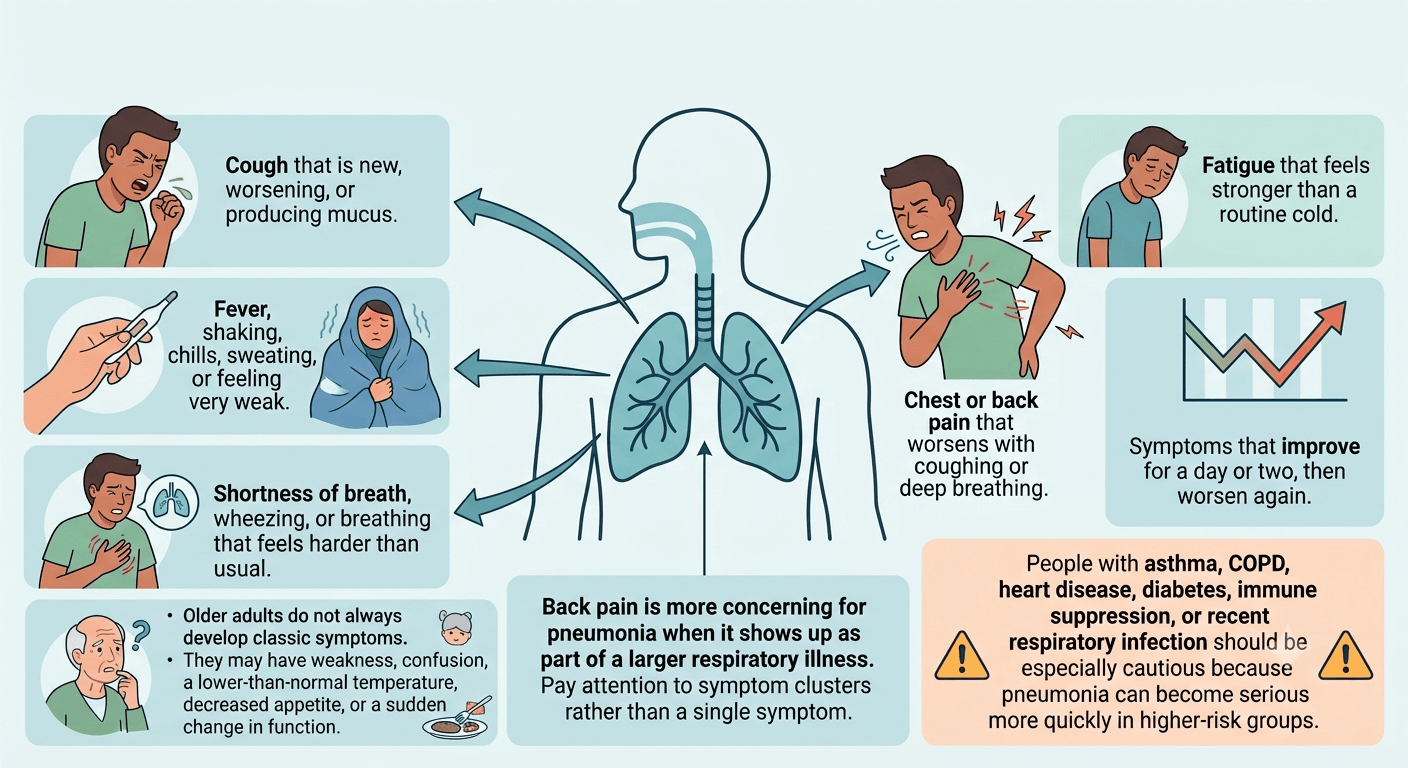
Back pain is more concerning for pneumonia when it shows up as part of a larger respiratory illness. Pay attention to symptom clusters rather than a single symptom.
- Cough that is new, worsening, or producing mucus.
- Fever, shaking, chills, sweating, or feeling very weak.
- Shortness of breath, wheezing, or breathing that feels harder than usual.
- Chest or back pain that worsens with coughing or deep breathing.
- Fatigue that feels stronger than a routine cold.
- Symptoms that improve for a day or two, then worsen again.
Older adults do not always develop classic symptoms. They may have weakness, confusion, a lower-than-normal temperature, decreased appetite, or a sudden change in function. People with asthma, COPD, heart disease, diabetes, immune suppression, or recent respiratory infection should be especially cautious because pneumonia can become serious more quickly in higher-risk groups.
Pneumonia Back Pain Vs. Other Causes Of Back Pain
The goal is not to self-diagnose. The goal is to notice when back pain follows a respiratory pattern and when it may point elsewhere. A pulled muscle often follows a specific activity, such as lifting, exercise, coughing hard, or sleeping in an awkward position for several days. It may feel better with rest, heat, gentle stretching, or over-the-counter pain relief if those medicines are safe for you.
Kidney infection pain is often deeper and may be felt in the flank, the area between the ribs and hips, on one or both sides. It may come with fever, chills, nausea, vomiting, painful urination, urinary urgency, or cloudy or bloody urine. Kidney stones can cause severe waves of pain that may move toward the groin. Heart-related pain can involve chest pressure, shortness of breath, sweating, nausea, or pain spreading to the arm, jaw, neck, or back. Those symptoms require emergency attention.
How Pneumonia Is Evaluated
A medical evaluation usually starts with your symptoms, medical history, vital signs, and a lung exam. A clinician may listen for crackles, decreased breath sounds, wheezing, or other changes. Oxygen level, temperature, heart rate, and breathing rate can help show how much the illness is affecting the body.
Testing depends on the situation. Some patients may need COVID-19 or flu testing because viral infections can mimic or contribute to pneumonia. A chest X-ray may be recommended when pneumonia is suspected, when symptoms are more severe, or when a provider needs to look for lung changes. Bloodwork or additional testing may be needed if symptoms suggest a more serious infection or another diagnosis.
Urgent Care Vs. Er For Pneumonia Symptoms And Back Pain
Urgent care can be a good option when symptoms are concerning but not immediately life-threatening. Examples include cough with fever, chest congestion, mild shortness of breath, back pain that worsens with coughing, persistent fatigue, or symptoms that are not improving as expected.
For same-day evaluation of cough, fever, chest discomfort, and similar symptoms, +MEDRITE acute illness care can help assess what may be causing your symptoms. If imaging is recommended during your visit, X-ray services may help support the evaluation.
Go to the emergency room or call 911 if you have severe trouble breathing, bluish lips or face, confusion, fainting, severe chest pain, coughing up large amounts of blood, oxygen concerns if you monitor at home, or symptoms that feel rapidly worse. Infants, older adults, pregnant patients, and people with serious underlying health conditions should seek care sooner when breathing symptoms appear.
What Helps Pneumonia-Related Back Pain?
Treating the cause is the most important part. Bacterial pneumonia may require antibiotics. Viral pneumonia may need supportive care or antiviral treatment in certain situations. If coughing is driving muscle soreness, pain often improves as the infection and cough improve.
Rest, hydration, warm fluids, a clean humidifier, and avoiding smoke can support recovery. Acetaminophen or ibuprofen may help with fever and body aches for some adults, but they are not safe for everyone. People with kidney disease, stomach ulcers, blood thinner use, liver disease, certain heart conditions, pregnancy, or medication interactions should ask a clinician or pharmacist before using over-the-counter pain relievers. Do not give aspirin to children or teenagers unless a clinician specifically recommends it.
If you were diagnosed with pneumonia and were prescribed antibiotics, take them exactly as directed. Stopping early because you feel better can allow the infection to return. If symptoms worsen despite treatment, or if back pain becomes severe, a follow-up visit is important.
How +Medrite Can Help
+MEDRITE urgent care services can evaluate respiratory symptoms, back or chest discomfort linked to illness, and concerns about pneumonia. A visit may include a physical exam, vital signs, respiratory testing when appropriate, and guidance on whether imaging or additional care is needed. You can also find a center near you for same-day care.
Frequently Asked Questions
Can Pneumonia Cause Upper Back Pain?
Yes. Upper back pain can occur with pneumonia, especially when it worsens with coughing or deep breathing. It can come from inflammation around the lungs, chest wall irritation, or sore muscles from repeated coughing.
Can Pneumonia Cause Lower Back Pain?
It can, but lower back pain is less typical. Persistent lower back or flank pain with urinary symptoms, fever, nausea, or vomiting may suggest a kidney problem. Sudden severe back pain, chest pressure, or trouble breathing should be treated as urgent.
How Do I Know If Back Pain Is From Pneumonia Or A Pulled Muscle?
A pulled muscle often changes with position or movement and may follow lifting or coughing. Pneumonia-related pain is more likely when there is fever, cough, mucus, shortness of breath, chest pain, or pain that worsens with deep breathing. A medical exam can help clarify the cause.
Should I Wait To See If Pneumonia Symptoms Go Away?
Do not wait if symptoms are worsening, breathing feels difficult, fever persists, or chest and back pain are concerning. Pneumonia can range from mild to serious, and earlier evaluation can help determine the right next step.
Questions A Clinician May Ask About Pneumonia And Back Pain
When back pain and breathing symptoms happen together, the details matter. A clinician may ask when the pain started, whether it came before or after the cough, where it is located, whether it is sharp or dull, and whether it changes with deep breathing, coughing, eating, movement, or pressing on the area. These questions help separate lung-related pain from muscle strain, kidney pain, digestive causes, and heart-related symptoms.
It also helps to know whether you recently had the flu, COVID-19, bronchitis, a severe cold, travel, prolonged bed rest, a fall, or a chest injury. Bring a medication list if you take blood thinners, immune-suppressing medicine, steroids, inhalers, or daily heart or lung medications. These details can change the level of concern and the next step in testing.
What Not To Assume About Pneumonia Pain
Do not assume that every cough with back pain is pneumonia. Bronchitis, asthma flare-ups, flu, COVID-19, sinus drainage, acid reflux, and muscle strain can also cause coughing and soreness. On the other hand, do not assume that pneumonia must cause dramatic symptoms. Some people, especially older adults, can have pneumonia with subtle fever, weakness, confusion, or less obvious breathing complaints.
The safest approach is to look at the whole picture. Back pain that clearly follows a workout and improves steadily may not need the same response as back pain with fever, shaking chills, worsening cough, and shortness of breath. If symptoms are mixed or changing, a medical evaluation is more reliable than interpreting pain location alone.
Preventing Pneumonia And Future Respiratory Infections
Not every case of pneumonia can be prevented, but basic preventive measures can lower the risk. Stay current on recommended vaccines, including flu and pneumococcal vaccines when appropriate. Wash hands often, avoid close contact with people who are sick when possible, cover coughs, and avoid smoking or vaping. People with asthma, COPD, diabetes, heart disease, or immune conditions should keep their routine care plans current because chronic conditions can raise pneumonia risk and make recovery harder.
If you are recovering from a respiratory illness and new back pain appears, pay attention to whether the pain is improving, spreading, or becoming tied to breathing. A simple symptom timeline can help a clinician understand whether this is likely muscle soreness from coughing or a sign that the infection needs another look.
Related +Medrite Services
These +MEDRITE pages may be useful for readers who want care options related to this topic:
- Review acute illness care for cough, fever, chest discomfort, and other short-term illness symptoms.
- Review X-ray services when imaging may help evaluate chest or injury-related concerns.
- Review urgent care services for same-day evaluation of non-life-threatening symptoms.
- Review find a center to locate a nearby +MEDRITE center.
Medical Disclaimer
This article is for general educational purposes only and is not a diagnosis or a substitute for professional medical advice. Symptoms can have many causes. If you have severe symptoms, worsening symptoms, or a medical emergency, call 911 or go to the nearest emergency room.
References
- Mayo Clinic. (n.d.). Pneumonia symptoms and causes. https://www.mayoclinic.org/diseases-conditions/pneumonia/symptoms-causes/syc-20354204
- American Lung Association. (n.d.). Pneumonia symptoms and diagnosis. https://www.lung.org/lung-health-diseases/lung-disease-lookup/pneumonia/symptoms-and-diagnosis
- National Heart, Lung, and Blood Institute. (n.d.). Pneumonia symptoms. https://www.nhlbi.nih.gov/health/pneumonia/symptoms
- Centers for Disease Control and Prevention. (n.d.). Pneumococcal disease symptoms and complications. https://www.cdc.gov/pneumococcal/signs-symptoms/index.html
- Cleveland Clinic. (n.d.). Pneumonia. https://my.clevelandclinic.org/health/diseases/4471-pneumonia
- MedlinePlus. (n.d.). Pneumonia. https://medlineplus.gov/pneumonia.html