
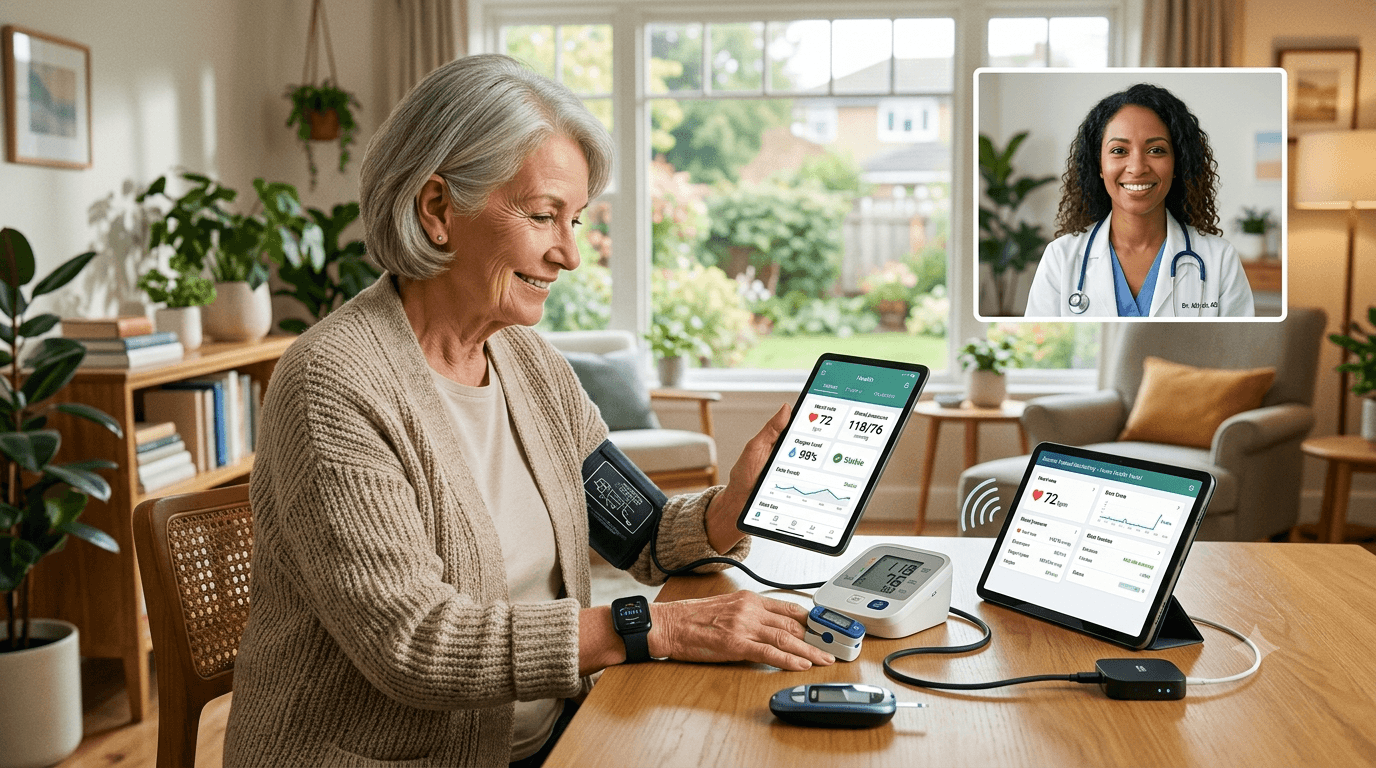
Managing a chronic condition doesn’t stop when you leave your healthcare provider’s office. Conditions such as high blood pressure, diabetes, heart disease, and chronic obstructive pulmonary disease (COPD) often require ongoing attention, making it important to track changes that happen between scheduled appointments.
Remote patient monitoring (RPM) provides healthcare providers with another way to stay connected with eligible patients outside the clinic. Using approved medical devices, patients can share certain health measurements from home, allowing providers to review trends over time and, when appropriate, use that information to support ongoing care.
For many people living with chronic conditions, remote patient monitoring can be part of a personalized care plan that helps providers better understand how their health changes day to day.
Medical Disclaimer: This article is for educational purposes only and should not replace professional medical advice, diagnosis, or treatment. Always consult a qualified healthcare provider with questions about your health or before making changes to your care plan.
What Is Remote Patient Monitoring?
Remote patient monitoring is a healthcare service that allows healthcare providers to review certain health measurements collected while eligible patients are at home. Instead of relying only on information gathered during office visits, providers can evaluate health data over time to better understand changes in a patient’s condition.
Depending on an individual’s healthcare needs, remote patient monitoring may include information such as:
- Blood pressure
- Blood glucose levels
- Heart rate
- Blood oxygen levels
- Weight
One important difference between remote patient monitoring and self-monitoring is that information from remote patient monitoring is shared with a healthcare provider as part of an ongoing care plan. Rather than simply recording readings for personal use, patients and providers can use this information to support conversations about managing chronic conditions.
For some eligible patients, remote patient monitoring may also be incorporated into a broader chronic care management plan that provides ongoing support for long-term health conditions.
How Does Remote Patient Monitoring Work?
Every patient’s care plan is different, but the overall process is generally straightforward.
If a healthcare provider determines that remote patient monitoring is appropriate, the patient receives guidance on how and when to use approved monitoring equipment at home. Depending on the condition being managed, this may include devices such as a blood pressure monitor, a blood glucose meter, a pulse oximeter, a digital weight scale, or other prescribed monitoring equipment.
After a measurement is taken, the information is securely shared with the healthcare team using approved technology. Rather than focusing on a single reading, providers typically review trends over time to better understand how a patient’s condition may be changing.
For example, a series of rising blood pressure readings or unexpected weight changes may prompt a healthcare provider to contact the patient, recommend additional follow-up, or determine whether changes to the treatment plan are warranted.
Remote patient monitoring is designed to complement routine medical care, not replace it. Patients should continue attending scheduled appointments and seek medical care if they develop new, worsening, or concerning symptoms.
What Is Remote Patient Monitoring Used For?
Remote patient monitoring is most commonly used to support the management of chronic conditions that benefit from ongoing observation between office visits. Reviewing health information over time can help healthcare providers better understand how a patient’s condition is responding to treatment and whether additional follow-up may be needed.
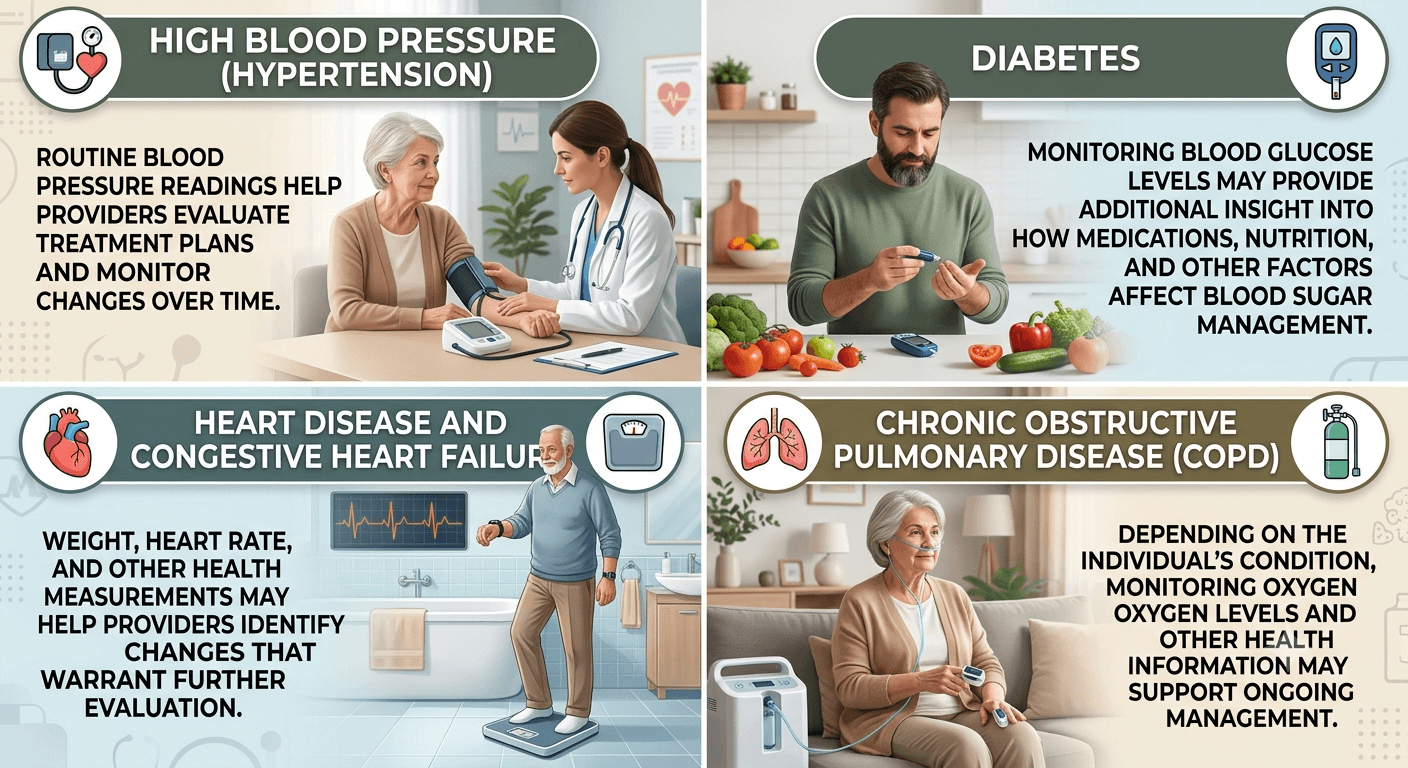
Some conditions that may be monitored through remote patient monitoring include:
- High blood pressure (hypertension): Routine blood pressure readings can help providers evaluate treatment plans and monitor changes over time.
- Diabetes: Monitoring blood glucose levels may provide additional insight into how medications, nutrition, and other factors affect blood sugar management.
- Heart disease and congestive heart failure: Weight, heart rate, and other health measurements may help providers identify changes that warrant further evaluation.
- Chronic obstructive pulmonary disease (COPD): Depending on the individual’s condition, monitoring oxygen levels and other health information may support ongoing management.
Healthcare providers may also recommend remote patient monitoring for some patients following a hospitalization or other significant change in their health. In certain situations, it may be incorporated alongside transitional care management to help support continuity of care after a patient returns home.
How Remote Patient Monitoring Supports Chronic Disease Management
Managing a chronic condition often involves more than treating symptoms when they appear. Healthcare providers frequently look for patterns over time to better understand how a patient’s condition is responding to treatment. Remote patient monitoring helps make those conversations more informed by providing additional health information between office visits.
Depending on the patient’s care plan, regularly collected health measurements may help providers:
- Monitor changes in a chronic condition over time.
- Evaluate how medications or treatment plans are working.
- Identify trends that may require additional follow-up.
- Support more personalized conversations during appointments.
For many patients, remote patient monitoring can also encourage greater involvement in their own healthcare. Regularly tracking health measurements may help individuals better understand how factors such as nutrition, physical activity, stress, and medication adherence affect their condition.
Remote patient monitoring is only one part of ongoing chronic disease management. Healthcare providers may combine it with other services, including care coordination, to help ensure patients receive appropriate follow-up, communicate with members of their healthcare team, and continue working toward their long-term health goals.
When to Talk to a Healthcare Provider About Remote Patient Monitoring
Remote patient monitoring is not appropriate for everyone, and eligibility depends on a person’s medical history, current health needs, and treatment plan.
You may want to discuss remote patient monitoring with your healthcare provider if you:
- Are managing one or more chronic health conditions.
- Have experienced frequent changes in your blood pressure, blood sugar, or other health measurements.
- Have recently returned home after a hospitalization and require closer follow-up.
- Want additional support between routine medical appointments.
Your healthcare provider can determine whether remote patient monitoring is appropriate and explain how it may fit into your overall plan of care.
Frequently Asked Questions
Does Medicare cover remote patient monitoring?
Medicare may cover remote patient monitoring services for eligible beneficiaries when certain coverage requirements are met. Coverage depends on factors such as medical necessity, the services provided, and Medicare guidelines. Patients should speak with their healthcare provider or insurance plan to understand their individual coverage.
Is remote patient monitoring the same as telehealth?
No. Although both use technology to support healthcare, they are different services. Telehealth typically involves virtual appointments between patients and healthcare providers, while remote patient monitoring focuses on collecting and reviewing health measurements taken outside of a healthcare setting.
Can remote patient monitoring replace regular doctor visits?
No. Remote patient monitoring is designed to complement routine medical care, not replace it. Patients should continue attending recommended appointments and seek medical attention if they experience new or worsening symptoms.
Is my health information secure?
Healthcare providers and organizations that offer remote patient monitoring are expected to use secure technology and comply with privacy regulations, including the Health Insurance Portability and Accountability Act (HIPAA), to help protect patient health information.
Is Remote Patient Monitoring Right for You?
Remote patient monitoring gives healthcare providers another way to stay informed about the health of eligible patients living with chronic conditions. By reviewing health measurements collected between appointments, providers can better understand changes over time and use that information to support ongoing care when appropriate.
Because every patient’s healthcare needs are different, remote patient monitoring is most effective when it is part of a personalized care plan developed with a qualified healthcare provider. Depending on an individual’s needs, it may be used alongside services such as chronic care management, care coordination, or transitional care management to help support continuity of care.
At MedRite, Concierge Medical Services may include remote patient monitoring as part of a comprehensive approach to caring for eligible patients with chronic conditions.
References
- Centers for Medicare & Medicaid Services. (2024). Remote physiologic monitoring services. https://www.cms.gov/medicare/coverage/telehealth/remote-patient-monitoring
- Health Resources and Services Administration. (n.d.). Telehealth and remote patient monitoring. https://telehealth.hhs.gov/providers/best-practice-guides/remote-patient-monitoring
- Office of the National Coordinator for Health Information Technology. (n.d.). What is telehealth? How is telehealth different from telemedicine? https://www.healthit.gov/faq/what-telehealth-how-telehealth-different-telemedicine
- American Diabetes Association Professional Practice Committee. (2025). Standards of Care in Diabetes—2025. Diabetes Care, 48(Supplement_1). https://diabetesjournals.org/care/issue/48/Supplement_1
- American Heart Association. (2024). Understanding blood pressure readings. https://www.heart.org/en/health-topics/high-blood-pressure/understanding-blood-pressure-readings