

Dehydration does not directly cause a UTI. Bacteria cause urinary tract infections. However, dehydration may contribute to urinary irritation and may increase UTI risk in some situations because you urinate less often, urine becomes more concentrated, and bacteria may have more time to remain in the bladder. That means hydration can support urinary health, but drinking water is not a substitute for UTI testing or treatment when symptoms suggest infection.
The best way to think about dehydration and UTI risk is this: dehydration can create conditions that are less helpful for the urinary tract, but it is not the germ. If you have burning when you urinate, frequent urination, urgency, pelvic pressure, cloudy urine, blood in the urine, fever, or back pain, you should be evaluated rather than trying to flush the infection out on your own.
What actually causes a UTI?
A UTI happens when bacteria enter the urinary tract and multiply. Most bladder infections involve bacteria from the bowel area, often E. coli. The infection may affect the urethra, bladder, ureters, or kidneys. Bladder infections are common and uncomfortable, while kidney infections can become more serious and need prompt care.
Risk factors can include sexual activity, pregnancy, menopause-related changes, certain birth control methods such as diaphragms or spermicides, urinary retention, kidney stones, catheter use, diabetes, immune suppression, and a history of recurrent UTIs. Hydration is only one part of the bigger picture.
How dehydration may contribute to UTI risk
When you are well hydrated, you generally urinate more regularly. Urination helps move bacteria out of the urinary tract before they have more time to multiply. When you are dehydrated, you may urinate less often, and your urine may become darker and more concentrated. Concentrated urine can irritate the bladder and urethra, which may make burning or urgency feel worse.
Dehydration vs. UTI Symptoms
Because dehydration and UTIs can share some symptoms, it can be difficult to tell them apart. While dehydration may cause concentrated urine and mild urinary irritation, a UTI is caused by bacteria and usually requires medical evaluation.
| Dehydration | Urinary Tract Infection (UTI) |
|---|---|
| Dark yellow or concentrated urine | Burning or pain during urination |
| Urinating less often | Frequent urge to urinate |
| Dry mouth and increased thirst | Pelvic pressure or discomfort |
| Fatigue, dizziness, or headache | Cloudy or bloody urine |
| Symptoms often improve with hydration | Symptoms often persist and may require antibiotics |
If symptoms continue after you’ve rehydrated, or you develop burning, urgency, blood in the urine, fever, or back pain, it’s important to seek medical evaluation. A urine test can help determine whether a bacterial infection is present.
Does drinking water help a UTI?
Drinking water can help dilute urine and support comfort. It may also help the body move urine through the bladder more regularly. But once a bacterial UTI is present, water alone may not clear it. Many UTIs require antibiotics, and delaying treatment can allow infection to spread to the kidneys.
Cranberry products, probiotics, and supplements are often discussed for UTI prevention. Some people use them, but they should not replace medical evaluation when symptoms are present. Be especially cautious with supplements if you are pregnant, take blood thinners, have kidney disease, or take daily medications.
What to do if you think dehydration is affecting your urinary symptoms
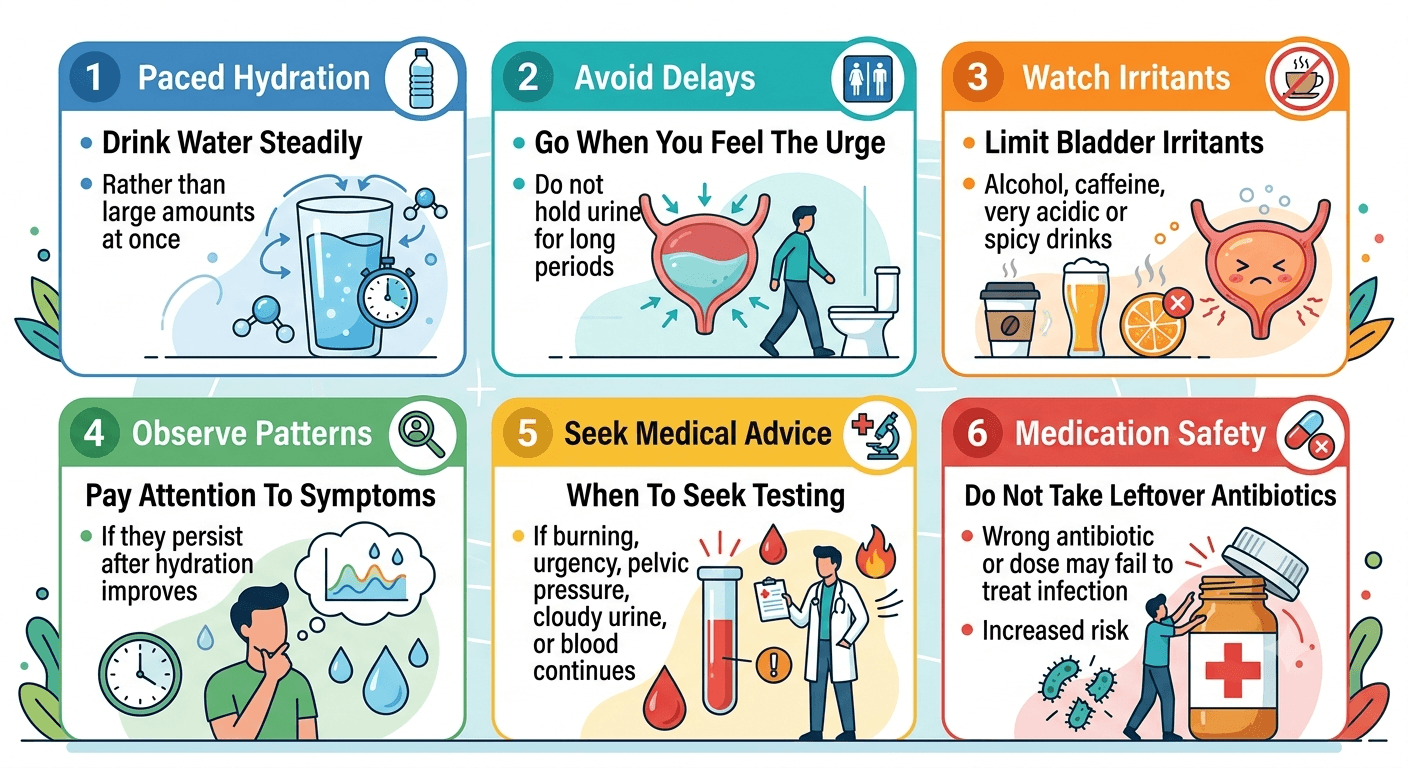
- Drink water steadily rather than trying to force a large amount at once.
- Avoid holding urine for long periods when you feel the urge to go.
- Limit bladder irritants if they worsen symptoms, such as alcohol, caffeine, and very acidic or spicy drinks.
- Pay attention to symptoms that persist after hydration improves.
- Seek testing if burning, urgency, pelvic pressure, cloudy urine, or blood in urine continues.
- Do not take leftover antibiotics. The wrong antibiotic or dose may fail to treat the infection and can increase risk.
How UTIs are tested and treated
A clinician may recommend urine testing to look for signs of infection. In some cases, a urine culture may help identify the bacteria and guide antibiotic choice. Treatment depends on the location and severity of infection, pregnancy status, allergies, kidney function, medical history, and whether symptoms suggest a simple bladder infection or something more complicated.
+MEDRITE urgent care services can evaluate urinary symptoms that need prompt attention. When appropriate, on-site lab services can support testing during the visit.
When to seek urgent or emergency care
Seek same-day care for burning with urination, frequent urination, urgency, pelvic pressure, blood in the urine, symptoms lasting more than a day or two, or symptoms that return after treatment. Seek care sooner if you are pregnant, have diabetes, have kidney disease, are immunocompromised, or have recurrent UTIs.
Go to the ER or seek emergency help if symptoms include fever with back or flank pain, vomiting, severe weakness, confusion, fainting, severe dehydration, or signs of sepsis such as rapid breathing, rapid heart rate, or feeling extremely ill. These symptoms can suggest kidney infection or a more serious illness.
How to lower UTI risk
UTI prevention is not only about water. It is about reducing opportunities for bacteria to enter or remain in the urinary tract. Urinate when you need to rather than holding it for long periods. Consider urinating after sex. Wipe front to back. Avoid irritating products around the genital area, including douches and heavily scented sprays. Talk with a clinician if UTIs are recurrent, because prevention may require a more personalized plan.
For recurring urinary symptoms or prevention questions, +MEDRITE primary care may be helpful for follow-up. You can also find a center near you for timely care.
Frequently asked questions
Can not drinking water cause a UTI?
Not directly. Bacteria cause UTIs. Not drinking enough water may contribute to concentrated urine and less frequent urination, which can be less protective for the urinary tract.
Can dehydration feel like a UTI?
Sometimes. Concentrated urine can cause a stronger odor, darker color, and irritation. Burning, frequent urination, urgency, pelvic pressure, or blood in the urine should be checked for a UTI.
Can I flush out a UTI with water?
Water may help comfort and hydration, but it may not cure a bacterial UTI. If symptoms suggest infection, testing and antibiotics may be needed.
How much water should I drink to prevent UTIs?
Fluid needs vary by body size, activity, heat exposure, diet, pregnancy status, medications, and medical conditions. A practical goal is pale yellow urine most of the time, unless a clinician has told you to restrict fluids. People with heart failure, kidney disease, or other conditions should ask their clinician about safe fluid intake.
Who should be extra careful about dehydration and urinary symptoms?
Some people should seek care sooner when urinary symptoms appear. This includes pregnant patients, older adults, people with diabetes, people with kidney disease, people with immune suppression, and anyone with a history of kidney infection or recurrent UTIs. Dehydration can also progress more quickly during fever, vomiting, diarrhea, heat exposure, heavy sweating, or limited access to fluids.
Children and older adults may not describe symptoms clearly. A child may have fever, belly pain, accidents after being toilet trained, irritability, or poor appetite. An older adult may have weakness, confusion, falls, or reduced fluid intake. These patterns should not be dismissed as simple dehydration without considering infection and other causes.
Hydration habits that support urinary health
Healthy hydration is usually about consistency. Drink water across the day, more during heat or exercise, and more when illness causes sweating or fluid loss. Use urine color as a rough guide, but remember that vitamins, foods, and medicines can change color. Pale yellow urine is often a helpful sign, while very dark urine, dizziness, dry mouth, or reduced urination may suggest dehydration.
People with heart failure, kidney disease, liver disease, or certain medications should not automatically increase fluids without medical guidance. For them, too much fluid can be harmful. Prevention advice should always fit the person, not just the symptom.
Why UTI symptoms should not be ignored
A mild bladder infection can become more uncomfortable and may spread upward toward the kidneys. Kidney infections can cause fever, chills, flank pain, nausea, vomiting, and feeling very ill. They may require stronger treatment and, in some cases, emergency care. Early testing is especially important when symptoms are more than mild or when risk factors are present.
Recurring symptoms also deserve a closer look. Repeated UTIs may be related to anatomy, hormones, sexual activity, stones, incomplete bladder emptying, medications, or other health conditions. If symptoms keep returning, prevention may require a tailored plan instead of simply drinking more water.
What to avoid when you suspect a UTI
Avoid using someone else’s antibiotics or old antibiotics from a previous infection. Avoid delaying care if symptoms include fever, back pain, vomiting, pregnancy, or blood in the urine. Avoid assuming that cranberry juice, supplements, or extra water will fix an active infection. These steps may seem proactive, but they can delay treatment that actually addresses the bacteria.
How to prepare for a UTI visit
Before your visit, note when symptoms started, how often you are urinating, whether you have fever or back pain, whether pregnancy is possible, and whether you have had UTIs before. Bring a list of allergies and medications. If you recently took antibiotics, say when and what they were, because that can affect testing and treatment choices.
Try not to urinate immediately before arriving if you can do so comfortably, because a urine sample may be needed. Do not delay care just to provide a sample, especially if you have severe symptoms. If you are vomiting, faint, confused, or unable to keep fluids down, emergency care may be safer.
The bottom line on dehydration and UTIs
Hydration is helpful, but it should be framed accurately. Drinking enough water may help flush the bladder, reduce concentrated urine, and ease some irritation. It does not kill bacteria in the same way an appropriate antibiotic can. If symptoms point to infection, the most useful step is confirming the cause and treating it early.
This distinction protects patients from two common mistakes: blaming every UTI on not drinking enough water, and assuming more water will solve an active infection. A better plan is to hydrate consistently, avoid holding urine, recognize symptoms early, and seek care when symptoms suggest more than simple irritation.
If symptoms keep coming back, ask about prevention rather than repeating the same home strategies. Recurrent UTIs may need urine culture, medication review, sexual health review, menopause-related care, or evaluation for another condition that mimics infection.
For most people, the practical takeaway is simple: water helps the urinary tract function, but symptoms guide action. Burning, urgency, blood in urine, fever, flank pain, pregnancy, or symptoms that persist after hydration should move the plan from home care to medical evaluation.
Related +MEDRITE services
These +MEDRITE pages may be useful for readers who want care options related to this topic:
- Review urgent care services for UTI symptoms that need prompt evaluation.
- Review on-site lab services when urine testing or other lab support is appropriate.
- Review primary care for follow-up on recurring urinary symptoms or prevention questions.
- Review find a center to locate a nearby +MEDRITE center.
Medical disclaimer
This article is for general educational purposes only and is not a diagnosis or a substitute for professional medical advice. Symptoms can have many causes. If you have severe symptoms, worsening symptoms, or a medical emergency, call 911 or go to the nearest emergency room.
References
- National Institute of Diabetes and Digestive and Kidney Diseases. (n.d.). UTI symptoms and causes. https://www.niddk.nih.gov/health-information/urologic-diseases/bladder-infection-uti-in-adults/symptoms-causes
- Mayo Clinic. (n.d.). UTI diagnosis and treatment. https://www.mayoclinic.org/diseases-conditions/urinary-tract-infection/diagnosis-treatment/drc-20353453
- Centers for Disease Control and Prevention. (n.d.). About Urinary Tract Infection. https://www.cdc.gov/uti/about/index.html
- Office on Women’s Health. (n.d.). Urinary Tract Infections. https://www.womenshealth.gov/a-z-topics/urinary-tract-infections
- MedlinePlus. (n.d.). Urinary Tract Infections. https://medlineplus.gov/urinarytractinfections.html
- Urology Care Foundation. (n.d.). Urinary Tract Infection in Adults. https://www.urologyhealth.org/urology-a-z/u/urinary-tract-infections-in-adults