

Sexually transmitted infections (STIs) remain common, and many infections can develop without causing noticeable symptoms. Because of this, STI testing plays an important role in preventive healthcare and sexual health for men of all ages.
Whether you’re entering a new relationship, have multiple sexual partners, or simply want to stay proactive about your health, routine STI testing can help identify infections early and reduce the risk of long-term complications. Understanding when to get tested and what to expect during the testing process can help you make informed decisions about your health.
Why STI Testing Matters
Regular STI testing is one of the most effective ways to protect your health and your partners’.
Many sexually transmitted infections can be successfully treated when detected early. However, some infections may lead to serious health problems if left untreated. Certain STIs can affect fertility, increase the risk of other infections, and contribute to long-term health issues.
Benefits of routine STI testing include:
- Early detection of infections
- Timely treatment when needed
- Reduced risk of spreading infections to sexual partners
- Protection against long-term complications
- Greater awareness of your overall sexual health
Testing is particularly important because many common STIs do not always cause symptoms.
Common Signs That May Indicate STI Testing Is Needed
While some sexually transmitted infections cause no symptoms, others may produce noticeable changes that warrant medical evaluation.
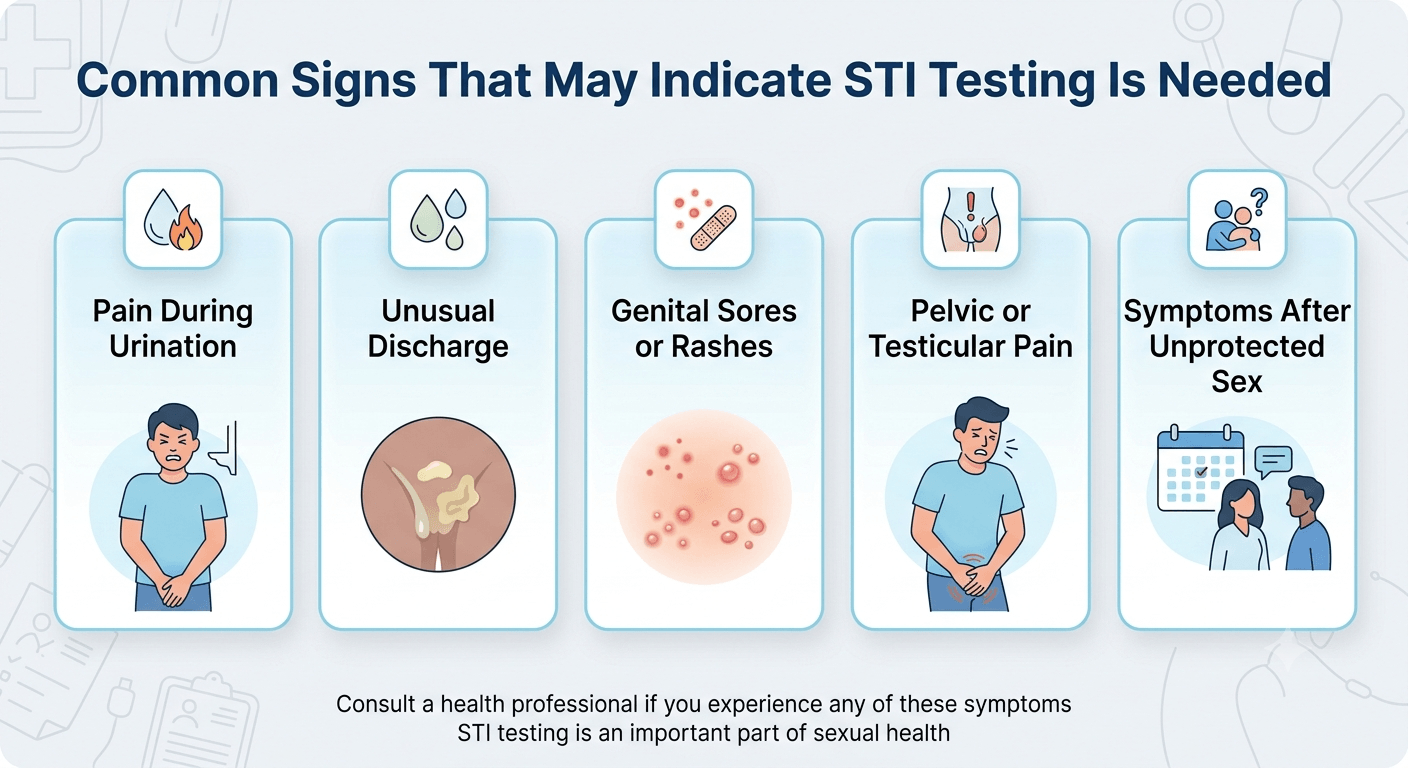
Pain During Urination
A burning sensation or discomfort during urination can sometimes be associated with sexually transmitted infections such as chlamydia or gonorrhea. However, other health conditions can cause similar symptoms, making professional evaluation important.
Unusual Discharge
Discharge from the penis that appears unusual in color, consistency, or amount may indicate an infection. Any unexpected discharge should be discussed with a healthcare provider.
Genital Sores or Rashes
Sores, blisters, bumps, or rashes in the genital area may be associated with conditions such as genital herpes, human papillomavirus (HPV), or other infections. These symptoms should not be ignored.
Pelvic or Testicular Pain
Pain in the pelvic region or testicles can occur for many reasons, including certain sexually transmitted infections. Persistent discomfort should be evaluated by a healthcare professional.
Symptoms After Unprotected Sex
If symptoms develop after unprotected sexual contact, testing may help identify whether an STI is present and determine appropriate next steps.
When Men Should Consider STI Testing
Testing recommendations vary based on sexual activity, personal risk factors, and medical history.
Men may want to consider STI testing if they:
- Have a new sexual partner
- Have multiple partners
- Have had unprotected sex
- Learn that a partner has tested positive for an STI
- Experience symptoms that may suggest an infection
- Want routine preventive screening as part of their healthcare
Situations Where Testing May Be Recommended
| Situation | Why Testing May Be Recommended |
|---|---|
| New sexual partner | Establish a baseline and support informed sexual health decisions |
| Multiple partners | Increased opportunity for exposure to infections |
| Symptoms of an STI | Helps identify infections and guide treatment |
| Partner diagnosed with an STI | Some infections can be present without symptoms |
| Routine preventive care | Many STIs can develop without noticeable symptoms |
Because every person’s situation is different, discussing your sexual history and risk factors with a healthcare provider can help determine an appropriate testing schedule.
Can Men Have STIs Without Symptoms?
Yes. Many sexually transmitted infections cause few or no symptoms, especially during the early stages.
A person may feel completely healthy while still carrying and potentially transmitting an infection to others. This is one reason routine STI testing is so important for sexually active individuals.
Infections that may not always cause symptoms include:
- Chlamydia
- Gonorrhea
- HIV
- Human papillomavirus (HPV)
- Hepatitis B
- Hepatitis C
Because symptoms are not always present, testing should not be based solely on how you feel.
What to Expect During STI Testing
Many men avoid getting tested because they are unsure what the process involves. Fortunately, STI testing is often straightforward, confidential, and relatively quick.
Depending on the specific STI being evaluated, testing may include:
- A urine sample
- A blood test
- A swab test from the throat, genital area, or rectum
- A physical exam when symptoms are present
For example:
- HIV testing often involves a blood sample.
- Chlamydia and gonorrhea testing may use a urine test or a swab.
- Hepatitis B and hepatitis C screening typically require blood testing.
The type of STI test recommended will depend on your symptoms, sexual history, risk factors, and your healthcare provider’s assessment.
Once testing is complete, your provider will explain your test results and discuss any recommended follow-up testing or treatment options if necessary.
How +MEDRITE Can Help
Taking care of your sexual health should be simple, convenient, and confidential.
At +MEDRITE, our providers can discuss your sexual history, evaluate symptoms, review risk factors, and recommend appropriate STI testing based on your individual needs. We offer confidential testing services and can help guide next steps if additional evaluation, follow-up care, or treatment is needed.
Whether you’re experiencing symptoms, have concerns after a new sexual encounter, or simply want routine screening, our team is here to help.
Walk-ins are welcome, and appointments are also available for added convenience.
Frequently Asked Questions
How Often Should Men Get Tested for STIs?
Testing frequency varies based on sexual activity, risk factors, and healthcare provider recommendations. Some individuals may benefit from routine screening, while others may require more frequent testing based on their circumstances.
Does STI Testing Hurt?
Most STI tests are simple and involve providing a urine sample, blood sample, or swab. Many people find the process quick and relatively comfortable.
How Long Does It Take to Get Results?
The timeline depends on the type of test performed. Some results may be available within a few days, while others may take longer.
Can I Get Tested If I Don’t Have Symptoms?
Yes. Many sexually transmitted infections do not cause symptoms. Routine testing can help identify infections early and support better long-term health outcomes.
Protect Your Sexual Health
STI testing is an important part of preventive healthcare and sexual wellness. Because many infections can develop without symptoms, routine screening can help identify concerns early and reduce the risk of long-term complications.
If you’re sexually active, have a new partner, have multiple partners, or simply want to stay informed about your health, speaking with a healthcare provider about STI testing can be a proactive step. Early detection, timely treatment, and ongoing preventive care can help protect both your health and your partners’ health.
Walk-ins and appointments are available at +MEDRITE for confidential STI testing and sexual health services.