

Sexually transmitted infections (STIs) are common, and many people who have them may not realize it. In fact, several sexually transmitted infections can develop without causing noticeable symptoms, making routine testing an important part of preventive healthcare.
Whether you’re entering a new relationship, have multiple sexual partners, or simply want to stay informed about your health, understanding how often you should get tested for HIV and other STIs can help protect both you and your partners. Early detection allows for timely treatment, reduces the risk of long-term complications, and helps prevent the spread of infections.
Why Regular STI Testing Matters
Routine STI testing is about more than identifying infections; it plays an important role in protecting your overall health and supporting disease prevention efforts.
Many sexually transmitted infections can be successfully treated when detected early. Left untreated, some infections may increase the risk of serious health problems, including infertility, pelvic inflammatory disease, chronic pain, and other long-term complications. Certain viral STIs, such as human papillomavirus (HPV), have also been associated with conditions like cervical cancer.
Regular screening can help:
- Identify infections before symptoms develop
- Reduce the risk of spreading STIs to sexual partners
- Support timely treatment and follow-up care
- Protect long-term sexual and reproductive health
For many people, STI testing becomes a routine part of preventive healthcare, similar to annual wellness exams and other recommended screenings.
Can You Have an STI Without Symptoms?
Yes. Many sexually transmitted infections are asymptomatic, meaning they cause no noticeable symptoms.
This is one reason routine testing is so important. A person can have an STI and unknowingly transmit it to a sexual partner through vaginal, oral, or anal sex. Some infections may remain undetected for months or even years if screening is not performed.
Common STIs that may not cause symptoms right away include:
- Chlamydia
- Gonorrhea
- HIV
- Human papillomavirus (HPV)
- Herpes simplex virus (HSV)
Even when symptoms do occur, they may be mild or mistaken for other health conditions. Because of this, testing should not be based solely on the presence of symptoms.
How Often Should You Get Tested for HIV?
HIV, or human immunodeficiency virus, attacks the immune system and can lead to acquired immunodeficiency syndrome (AIDS) if left untreated. Fortunately, advances in testing and treatment have significantly improved outcomes for people living with HIV.
The Centers for Disease Control and Prevention (CDC) recommends that most adults be tested for HIV at least once as part of routine healthcare. However, some individuals may benefit from more frequent testing based on their risk factors and sexual activity.
More frequent HIV testing may be appropriate for people who:
- Have multiple sexual partners
- Have a new sexual partner
- Have a partner with HIV
- Have another STI diagnosis
- Engage in unprotected sex
- Share needles or injection equipment
Because every person’s situation is different, discussing your sexual history and risk factors with a healthcare provider can help determine an appropriate testing schedule.
General HIV Testing Considerations
| Situation | General Testing Considerations |
|---|---|
| Sexually active adults | Discuss routine HIV testing with a healthcare provider |
| New sexual partner | Consider testing as part of sexual health planning |
| Multiple sexual partners | More frequent testing may be recommended |
| Previous STI diagnosis | Follow healthcare provider recommendations |
| Higher-risk individuals | Testing frequency may increase based on risk factors |
How Often Should You Get Tested for Other STIs?
Testing recommendations vary depending on the infection, age, sexual activity, and individual risk factors.
Chlamydia
Chlamydia is one of the most commonly reported bacterial STIs. Because it often causes no symptoms, routine screening may be recommended for certain sexually active individuals based on risk factors.
Gonorrhea
Like chlamydia, gonorrhea may not cause noticeable symptoms. Testing may be recommended for individuals with higher-risk sexual behaviors or those diagnosed with another STI.
Syphilis
Syphilis can progress through several stages and may cause serious health complications if left untreated. Healthcare providers may recommend screening for people with increased risk factors.
Hepatitis B and Hepatitis C
Hepatitis B and hepatitis C can affect the liver and may be spread through blood or certain types of sexual contact. Screening recommendations vary based on age, risk factors, vaccination status, and medical history.
Factors That May Affect Testing Frequency
There is no one-size-fits-all answer to STI testing frequency. Healthcare providers consider several factors when making screening recommendations.
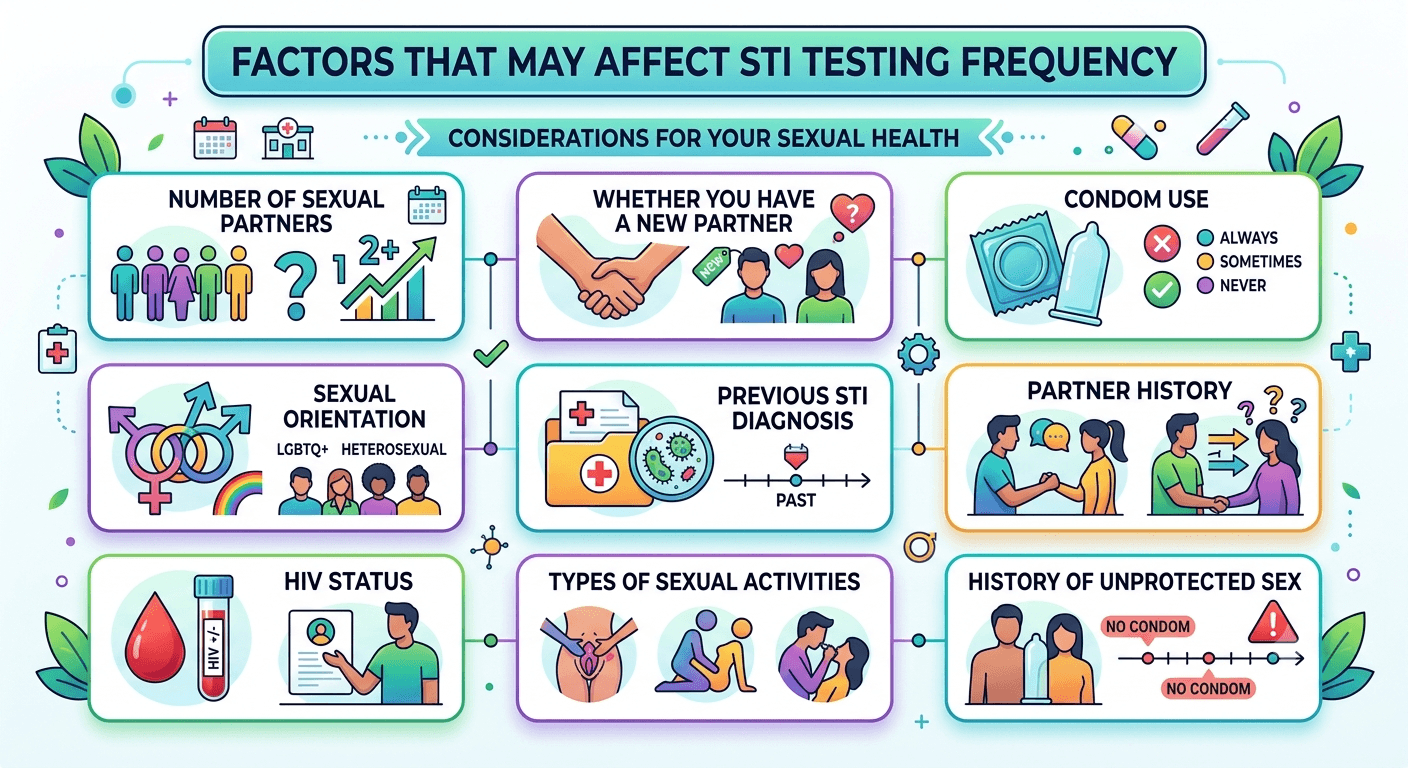
Factors that may influence testing include:
- Number of sexual partners
- Whether you have a new partner
- Condom use
- Sexual orientation
- Previous STI diagnosis
- Partner history
- HIV status
- Types of sexual activities
- History of unprotected sex
People with higher-risk exposures may benefit from more frequent screening than individuals with lower-risk profiles.
What Happens During STI Testing?
Many people are hesitant to get tested because they are unsure what the process involves. Fortunately, STI testing is often quick, confidential, and straightforward.
Depending on the infection being evaluated, testing may include:
- A blood test
- A urine sample
- A swab from the throat, genital area, or rectum
- A physical exam when symptoms are present
For HIV testing, a blood sample or a rapid HIV test may be used. Some HIV tests detect antibodies, while others identify parts of the virus itself.
The type of STI test recommended depends on your symptoms, sexual history, risk factors, and your healthcare provider’s evaluation.
After testing, healthcare professionals will explain your results and discuss any recommended follow-up testing or treatment if needed.
How +MEDRITE Can Help
Taking charge of your sexual health starts with access to convenient, confidential care.
At +MEDRITE, our providers can discuss your sexual history, evaluate risk factors, answer questions about STI symptoms, and recommend appropriate testing based on your individual needs. We offer confidential STI testing and can help guide next steps if additional evaluation, follow-up testing, or treatment is needed.
Walk-ins are welcome, and appointments are also available for added convenience.
Frequently Asked Questions
How Soon After Exposure Should I Get Tested
The timing depends on the specific infection. Some STIs can be detected relatively soon after exposure, while others may require a longer testing window. A healthcare provider can recommend the most appropriate timing based on your situation.
Can I Get Tested Without Symptoms?
Yes. Many sexually transmitted infections do not cause symptoms, which is why routine screening can be an important part of preventive healthcare.
How Long Does STI Testing Take?
Most STI testing appointments can be completed relatively quickly. The amount of time needed depends on the types of tests being performed.
Are STI Tests Confidential?
Yes. STI testing is confidential, and healthcare providers take privacy seriously. Your personal health information is protected under applicable privacy laws.
Prioritize Your Sexual Health
Regular STI testing is one of the most effective ways to protect your health and your partners’. Because many sexually transmitted infections develop without symptoms, routine screening can help identify infections early and reduce the risk of long-term complications.
If you are sexually active, have a new partner, or simply want to stay informed about your health, speaking with a healthcare provider about HIV and STI testing can help you make informed decisions. Early detection, timely treatment, and ongoing preventive care all play an important role in maintaining your long-term well-being.
Walk-ins and appointments are available at +MEDRITE for confidential STI testing and sexual health services.