
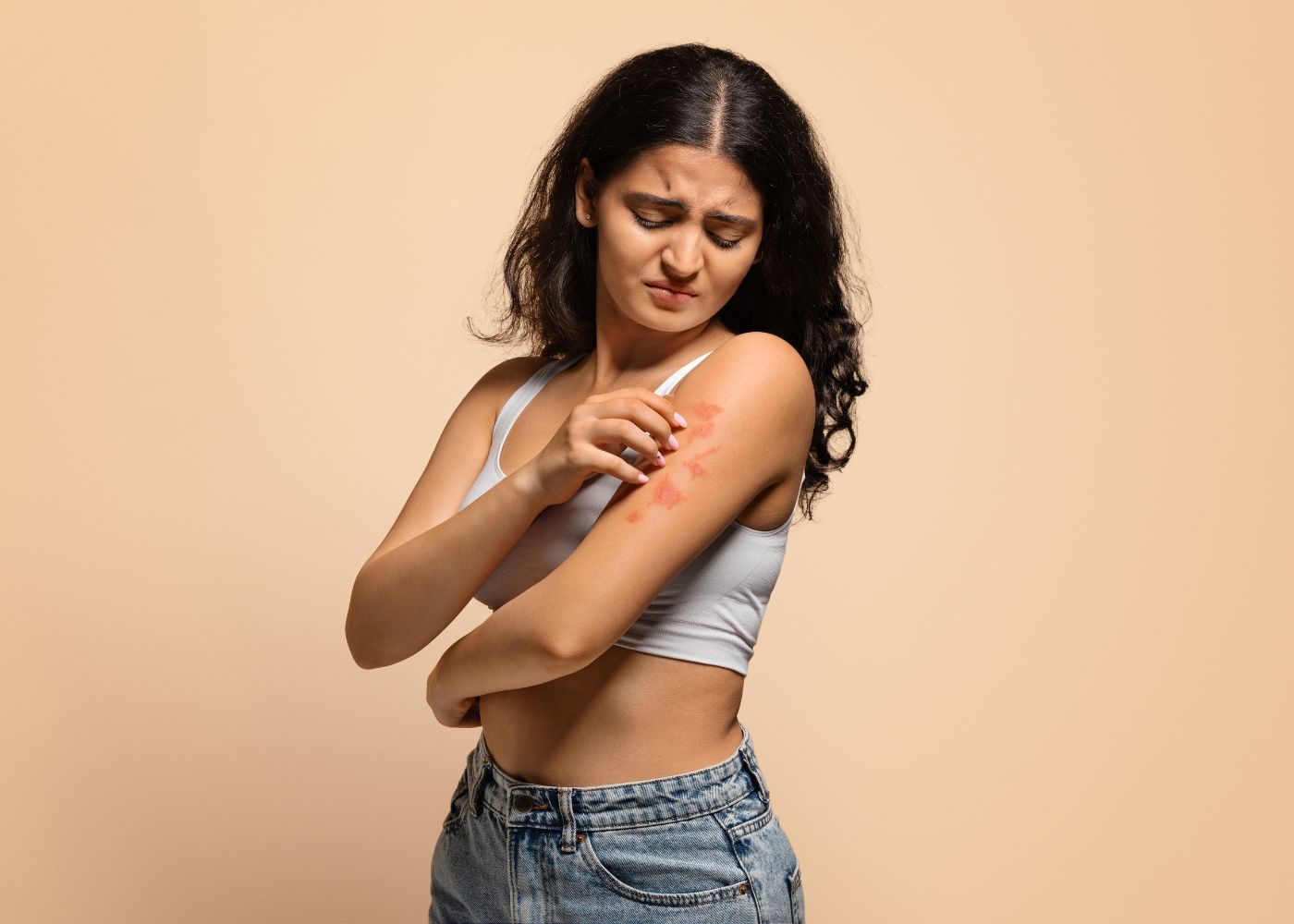
Hives are raised, itchy welts that can appear suddenly and move around the body. In adults, viruses are one possible trigger, especially when hives appear during or shortly after a cold, flu-like illness, COVID-19, a stomach virus, mononucleosis, or hepatitis. Still, not every case of hives is viral. Food allergy, medication reactions, insect stings, heat, cold, pressure on the skin, stress, autoimmune conditions, and unknown triggers can all cause hives, too.
That distinction matters. A viral hives rash can often be managed with supportive care and antihistamines, but hives accompanied by swelling of the lips, tongue, face, or throat can become dangerous quickly. Trouble breathing, trouble swallowing, faintness, or chest tightness should be treated as an emergency.
What Are Hives?
Hives, also called urticaria, are itchy, raised bumps or welts on the skin. Cleveland Clinic notes that hives may be red, skin-toned, pink, or darker depending on a person’s skin tone. They can be tiny or large, round or irregular, and they may change shape or location over minutes to hours.
A helpful clue is that an individual hive usually fades within 24 hours, leaving no bruise or mark. New hives may appear as old ones disappear, making the outbreak feel like it is spreading. Hives are different from many other rashes that stay fixed in one area, peel, blister, crust, or become painful.
Some people also develop angioedema, which is deeper swelling under the skin. The American Academy of Allergy, Asthma, and Immunology explains that angioedema often affects the face, throat, hands, or feet. Throat swelling can be life-threatening and needs immediate medical care.
Can A Virus Cause Hives?
Yes. A virus can cause hives in adults by activating the immune system. The hives are not usually caused by the virus living on the skin. Instead, the immune response can trigger histamine release, leading to itching, redness, and swelling.
AAAAI classifies acute urticaria as hives lasting less than six weeks and notes that viral infections are a common cause. The American College of Allergy, Asthma, and Immunology also lists viral infections, including the common cold, infectious mononucleosis, and hepatitis, among possible hive triggers.
Common Viral Illnesses That May Trigger Hives
| Possible Viral Trigger | How It May Appear With Hives | Important Note |
|---|---|---|
| Common cold viruses | Hives may appear with congestion, sore throat, cough, or fatigue. | Cold symptoms and hives can overlap with allergy symptoms, so the pattern matters. |
| Influenza | Hives may occur during or after fever, body aches, cough, and chills. | Flu can cause complications in higher-risk adults. Testing may be appropriate. |
| COVID-19 | Some people develop hives or other rashes around the time of infection. | Testing is useful if respiratory symptoms or exposure are present. |
| Mononucleosis | Hives may appear with fatigue, swollen glands, fever, or sore throat. | Some rashes are medication-related, so tell the provider about any recent antibiotic use. |
| Viral gastroenteritis | Hives may follow a stomach virus with nausea, vomiting, or diarrhea. | Dehydration or persistent symptoms should be evaluated. |
| Hepatitis and other viral infections | Hives can occur with broader immune activation. | Yellowing of the skin or eyes, dark urine, or severe abdominal pain requires medical care. |
Viral Hives Vs. Allergic Hives
Viral and allergic hives can look nearly identical. The difference is usually found in timing, associated symptoms, and possible exposures. Viral hives often appear with fever, cough, sore throat, congestion, fatigue, or recent illness. Allergic hives may appear soon after eating a trigger food, taking a medication, being stung by an insect, touching latex, or encountering another allergen.
Medication-related hives are especially important. Antibiotics, aspirin, ibuprofen, and other drugs can trigger hives in some people. If hives begin after starting a new medication, do not take another dose until you have contacted a medical professional for guidance, unless the medication is critical and your prescriber tells you otherwise.
There are also physical hives. Some people develop hives from cold exposure, pressure from tight clothing, heat, sweating, sunlight, vibration, or scratching. These are not viral, even though an illness can sometimes make skin more reactive.
How Long Do Viral Hives Last?
Many acute hives improve within days, but the timeline varies. Some hives come and go for a week or two while the immune system settles after an infection. Hives that continue for six weeks or longer are considered chronic urticaria and deserve follow-up evaluation.
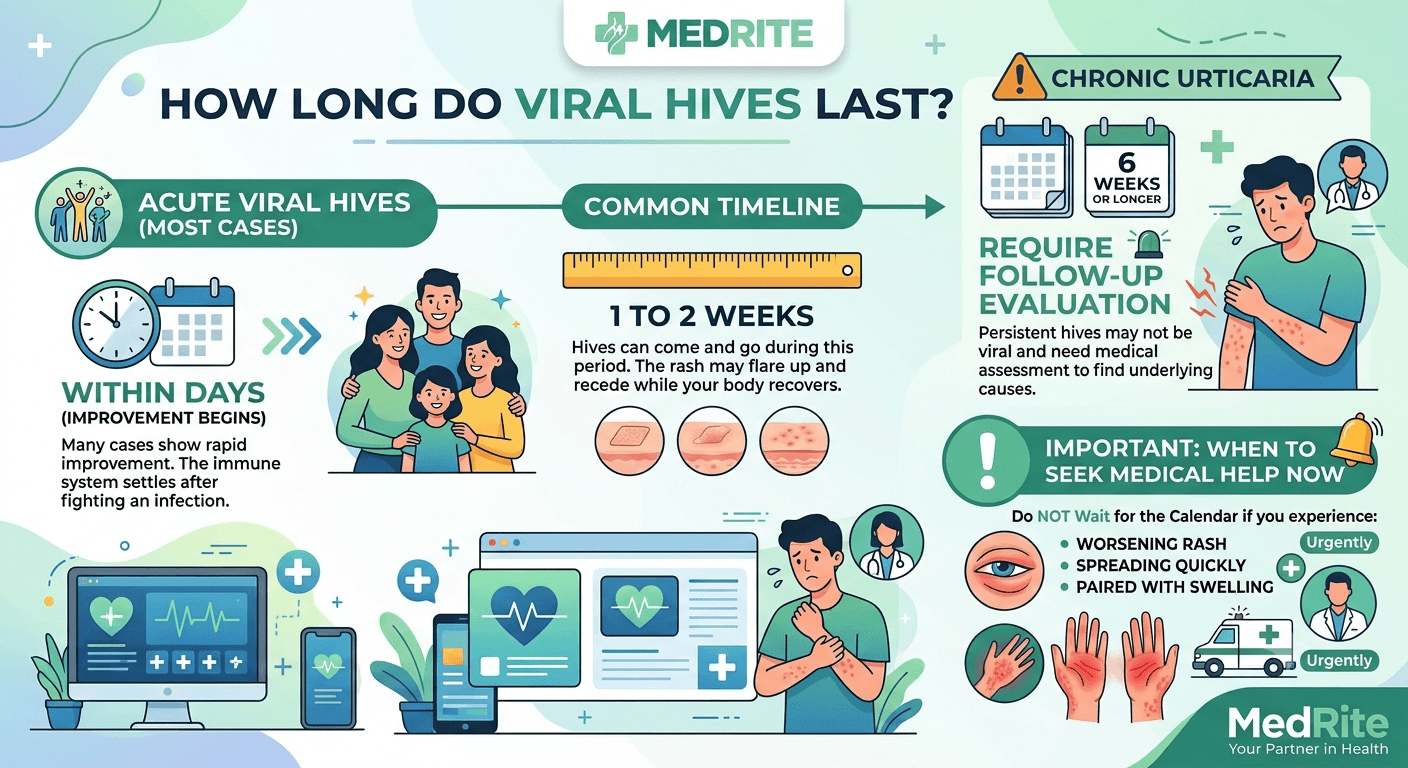
If you are asking how long viral hives last because the rash is worsening, spreading quickly, or paired with swelling, do not wait for the calendar to decide. Get medical help based on severity, not just duration.
When Hives Are An Emergency
Hives can be part of anaphylaxis, a serious allergic reaction. Call 911 or go to the nearest emergency room if hives occur with any of the following symptoms:
- Swelling of the lips, tongue, face, mouth, or throat.
- Trouble breathing, wheezing, throat tightness, or trouble swallowing.
- Dizziness, fainting, confusion, or a racing heartbeat.
- Chest tightness, severe vomiting, or a sense that something is very wrong.
- Hives after a known serious allergy exposure, such as a food, insect sting, or medication.
The American Academy of Dermatology advises seeking urgent or emergency care for hives accompanied by swelling of the face, mouth, or throat, or by swallowing or breathing problems, lightheadedness, faintness, or a racing heart. These symptoms can progress quickly.
How Viral Hives Are Treated
Treatment depends on severity and the suspected cause. For mild hives, a clinician may recommend a non-drowsy antihistamine, avoiding heat and alcohol, using cool compresses, wearing loose clothing, and keeping the skin moisturized. Scratching can make itching worse and irritate the skin, so keeping nails short may help.
More intense cases may need prescription-strength antihistamines or a short course of another medication. If a provider suspects a serious allergic reaction, treatment is different and may include epinephrine. Epinephrine is an emergency treatment, not a routine home remedy for ordinary hives.
Because hives can have many causes, it is helpful to write down what happened in the 24 to 48 hours before symptoms began. Include recent infections, new foods, new medications or supplements, insect bites, travel, hot showers, alcohol, exercise, and contact with new soaps, detergents, or lotions.
When To Visit +Medrite For Hives
+MEDRITE can evaluate hives that are uncomfortable, unclear in cause, related to an illness, or not improving with basic self-care. A provider can examine the rash, review possible triggers, screen for signs of infection or allergic reaction, and recommend next steps. If respiratory symptoms are present, testing for flu, COVID-19, strep, or other common illnesses may be considered based on the full picture.
Urgent care is appropriate for hives that are widespread but stable, hives with fever or illness symptoms, hives after a possible medication reaction, or hives that keep returning. Use emergency care instead if there is throat or mouth swelling, breathing trouble, faintness, or symptoms of anaphylaxis.
How To Make The Visit More Useful
If you visit urgent care for hives, bring or write down details that may point to the trigger. Helpful notes include when the hives started, whether each welt disappears within a day, what symptoms came first, and whether you recently had a fever, cough, sore throat, vomiting, diarrhea, or unusual fatigue. Also list any new foods, medications, supplements, insect bites, travel, household infections, and new soaps or detergents.
Photos can also help because hives may fade before the visit. Take clear pictures in good lighting if the rash is changing quickly. Do not delay emergency care to take pictures if swelling, breathing trouble, faintness, or throat tightness is present.
What To Avoid While Hives Are Active
While hives are active, heat can make itching worse. Hot showers, heavy exercise, alcohol, tight clothing, and scratching may all increase discomfort. Choose cool compresses, loose breathable clothing, and gentle fragrance-free skin products until the flare calms down. If a medicine may be involved, contact a provider promptly before taking another dose.
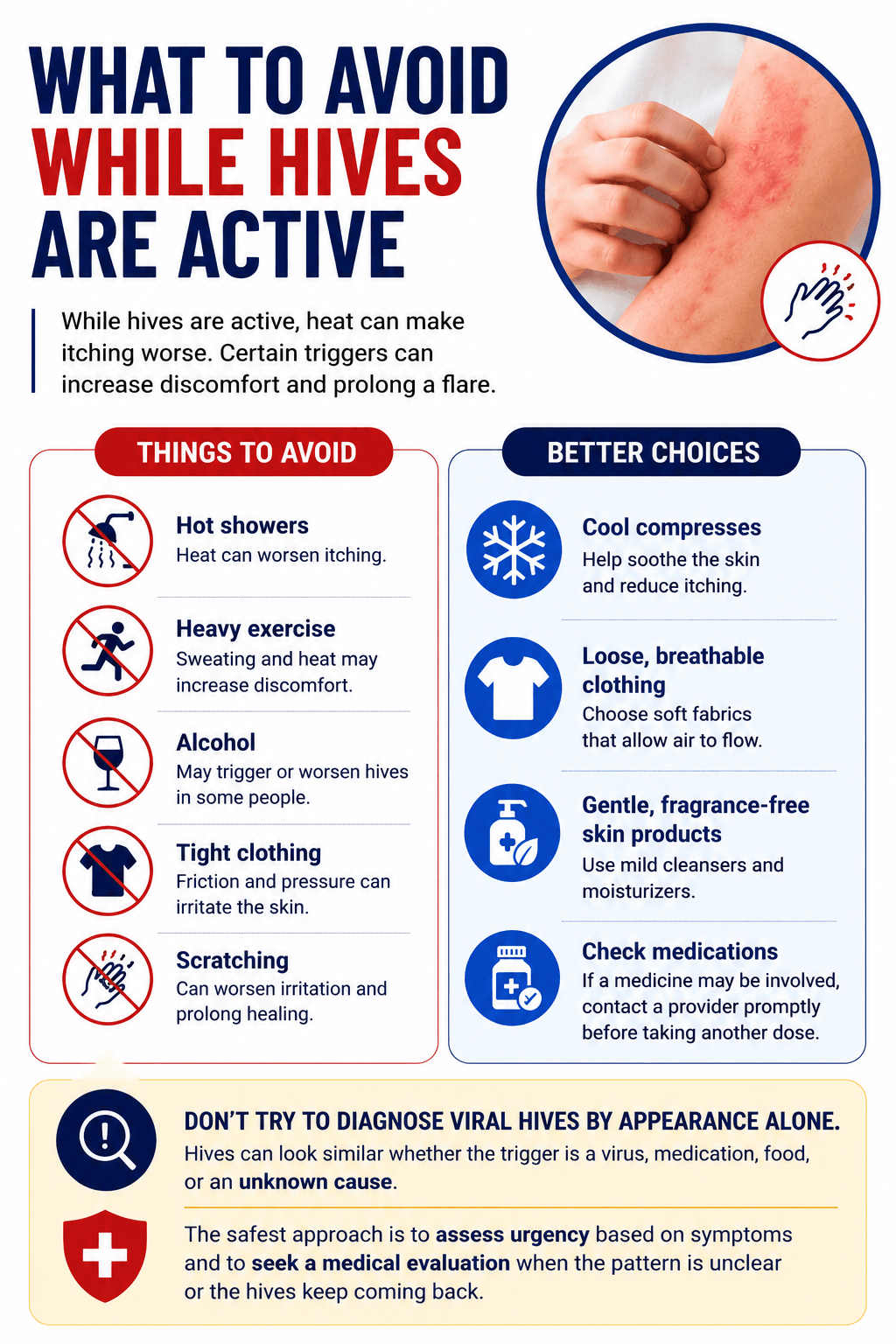
Do not try to diagnose viral hives by appearance alone. Hives can look similar whether the trigger is a virus, medication, food, or an unknown cause. The safest approach is to assess urgency based on symptoms and to seek a medical evaluation when the pattern is unclear or the hives keep coming back.
Frequently Asked Questions
Are Viral Hives Contagious?
The hives themselves are not contagious. The virus that triggered them may be contagious, so take normal illness precautions if you also have a cough, fever, sore throat, vomiting, diarrhea, or other symptoms of infection.
Can Adults Get Hives From A Cold Or Flu?
Yes. Respiratory viruses can trigger acute hives in adults. Because symptoms overlap with allergic reactions and other rashes, a medical evaluation can help if the cause is unclear.
Do Hives Always Mean An Allergy?
No. Hives can be allergic, viral, medication-related, physical, autoimmune, or idiopathic (no clear cause found).
Should I Take An Antihistamine?
Antihistamines are commonly used for hives, but the best choice depends on your age, medical history, other medications, and symptom severity. Ask a clinician or pharmacist if you are unsure.
Related +MEDRITE services
These +MEDRITE service pages may be useful for readers who want care options related to this topic:
- Review urgent care services for sudden rashes, hives, swelling, and other non-life-threatening concerns.
- Review acute illness care when hives appear with cold, flu-like, or other infection symptoms.
- Review pediatric care if a child in the family develops a rash, fever, or allergy-like symptoms.
- Review to find a center to locate a nearby +MEDRITE center for same-day evaluation.
Medical disclaimer
This article is for educational purposes only and is not a diagnosis or treatment plan. Seek immediate emergency care for hives with breathing problems, throat swelling, fainting, or signs of anaphylaxis.
References
- American Academy of Dermatology. (n.d.). Hives causes. https://www.aad.org/public/diseases/a-z/hives-causes
- American Academy of Dermatology. (n.d.). Hives diagnosis and treatment. https://www.aad.org/public/diseases/itchy-skin/hives
- American Academy of Allergy, Asthma & Immunology. (n.d.). Hives and angioedema overview. https://www.aaaai.org/tools-for-the-public/conditions-library/allergies/hives-(urticaria)-and-angioedema-overview
- American College of Allergy, Asthma & Immunology. (n.d.). Hives. https://acaai.org/allergies/allergic-conditions/skin-allergy/hives/
- Cleveland Clinic. (n.d.). Hives. https://my.clevelandclinic.org/health/diseases/8630-hives
- Mayo Clinic. (n.d.). Hives and angioedema symptoms and causes. https://www.mayoclinic.org/diseases-conditions/hives-and-angioedema/symptoms-causes/syc-20354908