

Fall often brings the same question back into exam rooms: what viruses are going around right now? The honest answer is that it changes by week, region, school calendar, travel patterns, and local outbreaks. One household may be dealing with a cold-like respiratory virus, another may have flu, and another may be passing around a stomach bug. Symptoms can overlap so much that the name of the illness is not always obvious from how someone feels on day one.
For +MEDRITE patients in New York, New Jersey, Connecticut, and Florida, the most useful approach is to think in groups: respiratory viruses, stomach viruses, and illnesses that can mimic viral infections. Respiratory viruses include COVID-19, flu, RSV, rhinovirus, enterovirus, parainfluenza, and human metapneumovirus. Stomach symptoms may come from norovirus or another cause of gastroenteritis. A sore throat can be viral, but strep throat is bacterial and may require testing and antibiotics. Testing and a clinical exam can help when symptoms are strong, risk is high, or timing matters.
Current update: why this page should be checked often
Virus activity changes quickly. At the time this article was prepared, CDC respiratory illness data showed very low national acute respiratory illness activity for late June 2026, with low flu, low RSV in most areas, and low COVID-19 in most areas. CDC also noted that parainfluenza, rhinovirus/enterovirus, and human metapneumovirus were elevated nationally but declining, and that whooping cough was still circulating. That snapshot is useful, but it is not a permanent forecast for fall.
By fall, schools, indoor gatherings, travel, and cooler weather in many regions can shift what is spreading. A page like this should be reviewed frequently during September through March, and again when public health agencies report local increases. If you are reading this during a new season, the exact mix of viruses may be different from the current update above.
The short answer: several respiratory and stomach viruses may circulate at once
When people search for what illness is going around, they are usually trying to match symptoms to a name. That can help, but it has limits. COVID-19, flu, RSV, and common cold viruses can all cause cough, congestion, sore throat, headache, fatigue, and fever.
Norovirus can cause sudden vomiting and diarrhea, but some respiratory viruses can also cause stomach upset. Allergies, asthma, sinus infections, pneumonia, strep throat, and foodborne illness can also mimic part of the picture.
| Illness | Common Symptoms | Often Stands Out Because… |
|---|---|---|
| COVID-19 | Cough, sore throat, fever, fatigue | Symptoms vary widely and may resemble those of a cold, the flu, or allergies. |
| Flu | Fever, chills, body aches, cough | Often starts suddenly with intense body aches and fatigue. |
| RSV | Congestion, cough, wheezing | Can be more serious for infants, older adults, and people with chronic conditions. |
| Common Cold | Runny nose, congestion, sore throat | Usually milder and develops gradually. |
| Norovirus | Vomiting, diarrhea, stomach cramps | Symptoms begin suddenly and spread quickly in households or group settings. |
COVID-19: still part of the fall illness mix
COVID-19 can still circulate outside the classic winter pattern. Symptoms can include sore throat, cough, congestion, fever, chills, fatigue, headache, muscle aches, loss of taste or smell, nausea, vomiting, diarrhea, or shortness of breath. Because symptoms overlap with those of the flu and other respiratory viruses, testing may be the only practical way to determine whether COVID-19 is involved. Patients can review +MEDRITE COVID-19 care options when exposure, symptoms, work requirements, travel, or contact with higher-risk relatives makes testing important.
A negative home test early in the course of symptoms does not always answer every question. Testing too soon, poor sample collection, or low virus levels can affect results. If symptoms are worsening or you need documentation for school, work, travel, or medical decision-making, a clinical visit may be more helpful than guessing based on a home result alone.
Flu: sudden fever, chills, aches, and fatigue
Influenza can spread in the fall and winter and may cause a sudden onset of fever, chills, body aches, cough, headache, sore throat, runny nose, and severe fatigue. Some people also develop vomiting or diarrhea, though that is more common in children than adults. +MEDRITE influenza urgent care can help patients with flu-like symptoms understand testing and care options.
Flu is different from a routine cold because it can cause more intense body-wide symptoms and may lead to complications such as pneumonia, worsening asthma, sinus infection, ear infection, or dehydration. People at higher risk include young children, adults 65 and older, pregnant patients, and people with chronic medical conditions. Early evaluation matters because antiviral medication works best when started early for patients who need it.
RSV: not just a pediatric virus
RSV is often discussed in infants, but adults can get it too. Many healthy adults have cold-like symptoms. Infants, young children, older adults, and people with heart disease, lung disease, or weakened immune systems are more likely to develop severe symptoms. +MEDRITE RSV urgent care may be useful when RSV symptoms overlap with bronchitis, flu, COVID-19, or another respiratory illness.
RSV symptoms may appear in stages rather than all at once. A child may start with congestion and decreased appetite, then develop cough, fever, wheezing, or faster breathing. In very young infants, symptoms can be subtle, such as irritability, less activity, poor feeding, or breathing difficulty. Adults with asthma or COPD may notice wheezing or a flare of their usual lung symptoms.
Common cold viruses, parainfluenza, and HMPV
Not every fall illness is flu, COVID-19, or RSV. Rhinoviruses are common causes of colds and can spread easily in schools, workplaces, and households. Enteroviruses can cause cold-like illness and sometimes other symptoms. Parainfluenza can cause croup in children and respiratory illness in adults. Human metapneumovirus can cause symptoms similar to those of RSV or bronchitis and may be more severe in higher-risk patients.
These viruses often improve with rest, fluids, and symptom support. However, a virus going around can still trigger asthma, dehydration, ear pain, sinus symptoms, wheezing, or persistent cough. If symptoms are more intense than expected, last longer than expected, or worsen after initially improving, medical evaluation can help rule out complications.
Norovirus and stomach bugs in fall and winter
Norovirus is a common cause of sudden vomiting and diarrhea. It spreads easily through direct contact, contaminated surfaces, contaminated food or water, and close group settings. People often call it the stomach flu, but it is not influenza. Most people improve in a few days, but dehydration can become serious, especially for young children, older adults, pregnant patients, and people with medical conditions.
A stomach virus going around may move through a household quickly. The most important home steps are fluids, handwashing with soap and water, cleaning contaminated surfaces, and staying home while sick and for a short period after symptoms stop. Hand sanitizer is convenient for many germs, but soap and water are especially important for norovirus.
Strep throat can look viral, but it is not a virus
Sore throat is one of the most confusing symptoms during fall. Many sore throats are caused by viruses and improve without antibiotics. Strep throat is caused by group A strep bacteria and can require antibiotics after a positive test.
Strep is more likely when a sore throat starts suddenly and is accompanied by fever, pain when swallowing, swollen front neck glands, red or swollen tonsils, or tiny red spots on the roof of the mouth. Cough, runny nose, hoarseness, and conjunctivitis are more suggestive of a viral cause.
Because symptoms are not perfectly reliable, a strep test may be needed. This is especially true for school-age children, people with known exposure, and patients with sore throat and fever but without clear viral symptoms.
When to use urgent care instead of waiting it out
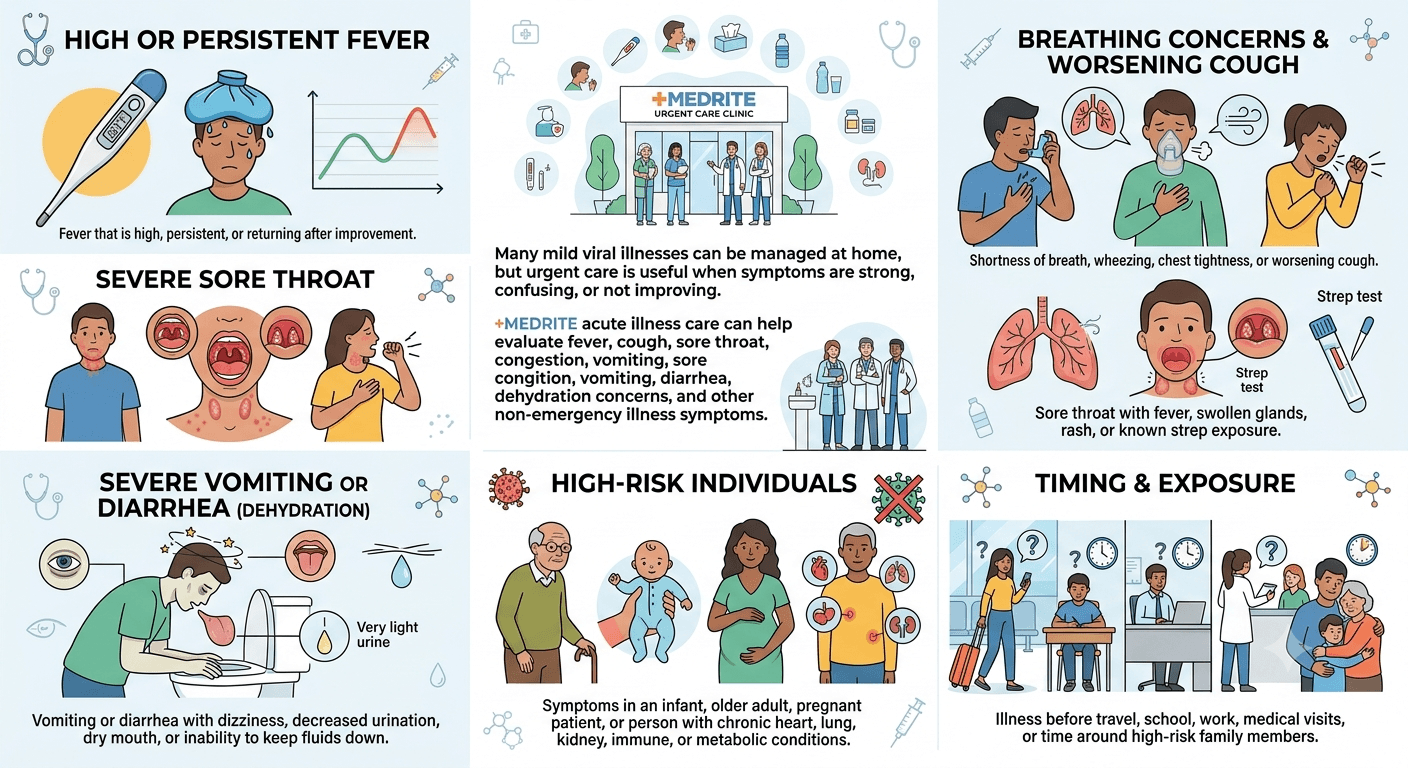
Many mild viral illnesses can be managed at home, but urgent care is useful when symptoms are strong, confusing, or not improving. +MEDRITE acute illness care can help evaluate fever, cough, sore throat, congestion, vomiting, diarrhea, dehydration concerns, and other non-emergency illness symptoms.
- Fever that is high, persistent, or returning after improvement.
- Shortness of breath, wheezing, chest tightness, or worsening cough.
- Sore throat with fever, swollen glands, rash, or known strep exposure.
- Vomiting or diarrhea with dizziness, decreased urination, dry mouth, or inability to keep fluids down.
- Symptoms in an infant, older adult, pregnant patient, or person with chronic heart, lung, kidney, immune, or metabolic conditions.
- Illness before travel, school, work, medical visits, or time around high-risk family members.
When symptoms may need emergency care
Go to the ER or call 911 for severe trouble breathing, blue lips or face, severe chest pain, confusion, fainting, signs of severe dehydration, stiff neck with fever, seizure, a child who is very hard to wake, or any symptom that feels life-threatening. Urgent care is not a substitute for emergency care when breathing, circulation, consciousness, or severe dehydration is involved.
How to lower your risk when viruses are spreading
Prevention works best when it is layered. Stay current on recommended vaccines. Wash hands often. Cover coughs and sneezes. Improve indoor air when possible. Stay home when sick. Consider a mask in crowded indoor settings when respiratory illness is rising or when you will be near someone at higher risk. Clean frequently touched surfaces, especially during stomach illness outbreaks. For norovirus concerns, use soap and water and disinfect contaminated surfaces with an appropriate product.
Frequently asked questions
What virus is going around right now in adults?
It depends on your location and the week. Adults commonly see COVID-19, flu, RSV, rhinovirus, enterovirus, parainfluenza, human metapneumovirus, and norovirus at different points in the year. Local testing and current public health data are more reliable than symptoms alone.
Can symptoms tell me whether it is COVID-19, flu, RSV, or a cold?
Symptoms can give clues, but they cannot always identify the virus. Testing may be needed when results would affect treatment, isolation, school or work planning, travel, or contact with a high-risk person.
What sickness is going around with vomiting and diarrhea?
Norovirus is a common cause of sudden vomiting and diarrhea, especially when symptoms spread quickly through a household or group setting. Food poisoning, other viruses, medication side effects, pregnancy, and medical conditions can also cause similar symptoms.
Should I test for every virus?
Not always. Testing is most useful when it changes the plan. A clinician may recommend testing based on symptoms, exposure, timing, risk factors, local activity, and whether the result affects treatment or infection-control decisions.
How to think about testing during fall virus season
Testing is not just about naming the virus. It can affect how you protect other people, whether antiviral treatment is considered, whether a child can return to school, and whether an older or higher-risk relative needs extra caution. The best test depends on the symptom pattern and timing. A person with a fever, cough, and body aches may need testing for flu and COVID-19.
A child with sore throat and fever but no cough may need a strep test. A person with sudden vomiting and diarrhea may not need routine viral testing unless symptoms are severe, an outbreak is suspected, or dehydration is a concern.
It also helps to know what testing cannot do. A test is a snapshot from one moment. Testing very early can sometimes miss an infection. Testing for one virus does not rule out every other cause. And a positive result does not automatically explain every symptom if red flags are present. For example, a person can test positive for a respiratory virus and still need evaluation for pneumonia, asthma flare, dehydration, or another complication.
How symptoms can change by day
Many viral illnesses do not arrive fully formed. Day one might be scratchy throat and fatigue. Day two might bring fever and body aches. Day three might bring more cough, congestion, or stomach upset. This changing pattern can make people feel as if they are getting several illnesses at once. Sometimes that is true, especially when households have multiple exposures. Other times, it is the same infection moving through different phases.
A symptom timeline can be useful. Write down when fever started, when cough began, whether mucus changed, when vomiting or diarrhea started, and whether symptoms are improving or worsening. This information helps a clinician determine whether the pattern fits a common viral illness or warrants consideration of another diagnosis. It also helps determine whether treatment windows for flu or COVID-19 may still matter.
What higher-risk patients should do sooner?
Some patients should not wait as long to be evaluated. This includes infants, older adults, pregnant patients, and people with asthma, COPD, heart disease, diabetes, kidney disease, immune suppression, or cancer treatment. The same virus that causes mild symptoms in one adult can create breathing trouble, dehydration, or complications in someone else. Higher-risk patients should also be careful around group settings when local respiratory illness is rising.
If you care for a higher-risk person, prevention becomes part of the care plan. Stay home when sick, test when results would change contact decisions, wear a mask if you must be near others while symptomatic, wash hands often, and avoid sharing cups, utensils, towels, or food. A small decision, such as delaying a visit to a newborn or older relative when you have symptoms, can make a meaningful difference.
Related +MEDRITE services
These +MEDRITE pages may be useful for readers who want care options related to this topic:
- Review acute illness care for evaluation of fever, cough, sore throat, congestion, stomach symptoms, and other short-term illnesses.
- Review COVID-19 care when symptoms or exposure raise concern about COVID-19.
- Review influenza urgent care for flu-like symptoms and testing guidance during flu season.
- Review RSV urgent care for RSV symptoms, especially in children, older adults, or higher-risk patients.
Medical disclaimer
This article is for general educational purposes only and is not a diagnosis or a substitute for professional medical advice. Symptoms can have many causes. If you have severe symptoms, worsening symptoms, or a medical emergency, call 911 or go to the nearest emergency room.
References
- Centers for Disease Control and Prevention. (2026, June 26). Respiratory illnesses data channel. https://www.cdc.gov/respiratory-viruses/data/index.html
- Centers for Disease Control and Prevention. (2026). Respiratory virus activity levels. https://www.cdc.gov/respiratory-viruses/data/activity-levels.html
- Centers for Disease Control and Prevention. (2026). FluView: Weekly U.S. influenza surveillance report. https://www.cdc.gov/fluview/index.html
- Centers for Disease Control and Prevention. (2026). RSV surveillance. https://www.cdc.gov/rsv/php/surveillance/index.html
- Centers for Disease Control and Prevention. (2026, June 18). NoroSTAT data. https://www.cdc.gov/norovirus/php/reporting/norostat-data.html
- Centers for Disease Control and Prevention. (2026, June 18). NoroSTAT data table. https://www.cdc.gov/norovirus/php/reporting/norostat-data-table.html