
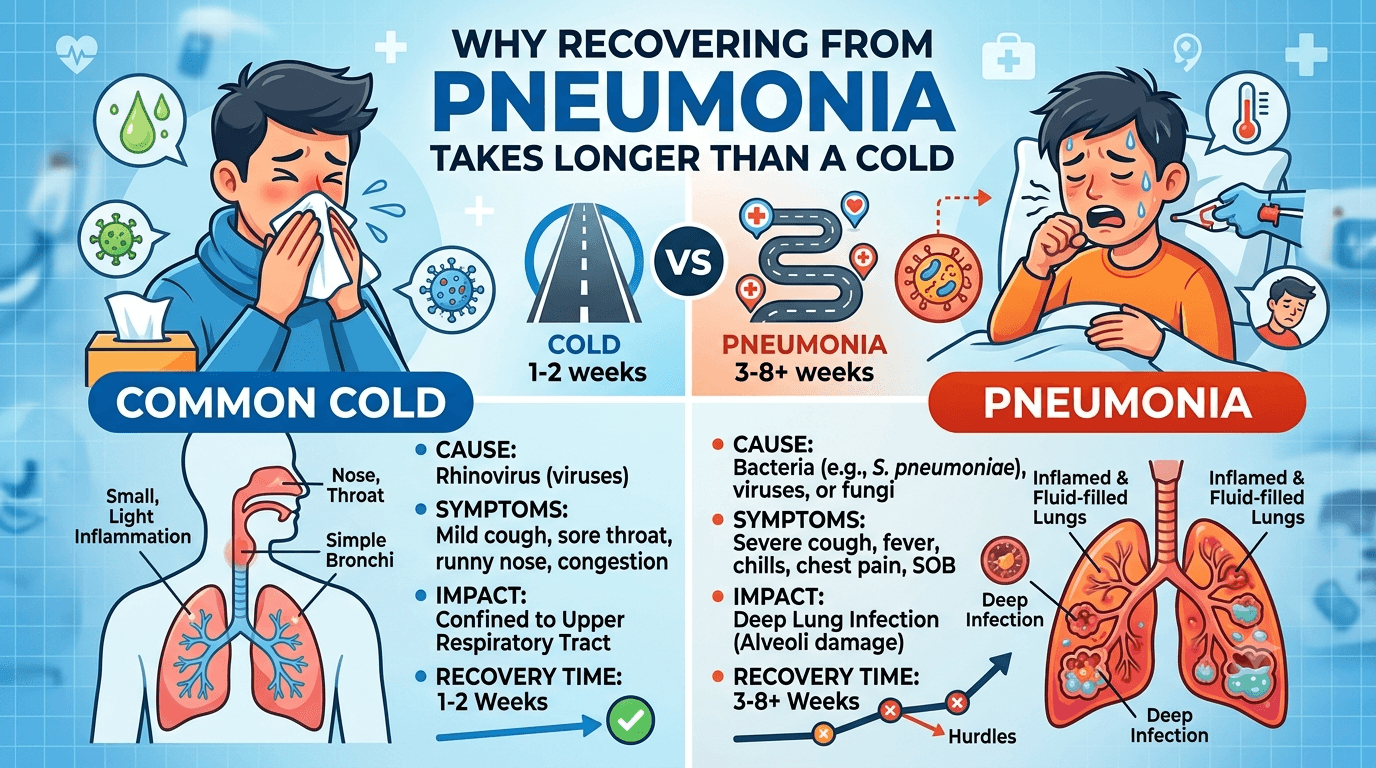
Pneumonia recovery time is usually longer than cold recovery because pneumonia affects the lungs more deeply. A cold usually stays in the upper respiratory tract, meaning the nose, throat, and sinuses. Pneumonia is a lower respiratory infection that inflames the air sacs in the lungs. Those air sacs may fill with fluid or pus, and the body needs time to clear infection, calm inflammation, rebuild strength, and restore comfortable breathing.
That is why a cold may start improving within several days, while pneumonia can leave someone coughing, tired, and short of breath for weeks. Some people feel much better after a week of treatment and rest. Others need a month or more, especially if they are older, have asthma or COPD, smoke, have heart disease, are immunocompromised, or have had a more severe infection.
Pneumonia Vs. Cold Recovery: The Main Difference
A common cold is usually caused by a virus that affects the upper airways. It can be miserable, but it often causes congestion, a runny nose, sneezing, a sore throat, a mild cough, and mild fatigue. Pneumonia can begin after a cold or flu, but it is not the same illness. It involves the lung tissue itself, which is why breathing, oxygen exchange, coughing, and fatigue can be more strongly affected.
Why Does Pneumonia Take So Long To Recover?
There is no single pneumonia recovery timeline that fits everyone. The type of germ, the severity of the infection, how early treatment starts, and your baseline health all matter. Still, pneumonia often takes longer than expected for a few practical reasons.
The infection is deeper in the lungs
A cold irritates the upper airway. Pneumonia reaches the lung tissue, where oxygen moves from the air sacs into the blood. When those air sacs are inflamed or filled with fluid, breathing can feel harder, and the body has to work more to clear secretions. Even after the infection is controlled, inflammation may take time to settle.
A cough can linger while the lungs clear mucus
Coughing is part of the body’s cleanup process. It helps move mucus, dead cells, and debris out of the airways. That does not make a lingering cough pleasant, but it explains why the cough may last after the fever improves. A cough that is slowly improving is different from one that becomes more severe, produces blood, or comes with worsening shortness of breath.
Fatigue can last after the fever is gone
Pneumonia asks a lot of the immune system. Fever, inflammation, poor sleep, decreased appetite, coughing, and reduced activity can all drain energy. People are often surprised to feel weak even after antibiotics begin working or the fever settles. Recovering from pneumonia fatigue usually requires gradual activity, hydration, nutrition, and patience.
Some people start with a higher risk
Adults over 65, young children, pregnant patients, smokers, and people with asthma, COPD, heart disease, diabetes, kidney disease, immune suppression, or recent flu or COVID-19 may need more time and closer follow-up. The same infection that is mild for one person may be more serious for another.
A General Pneumonia Recovery Timeline
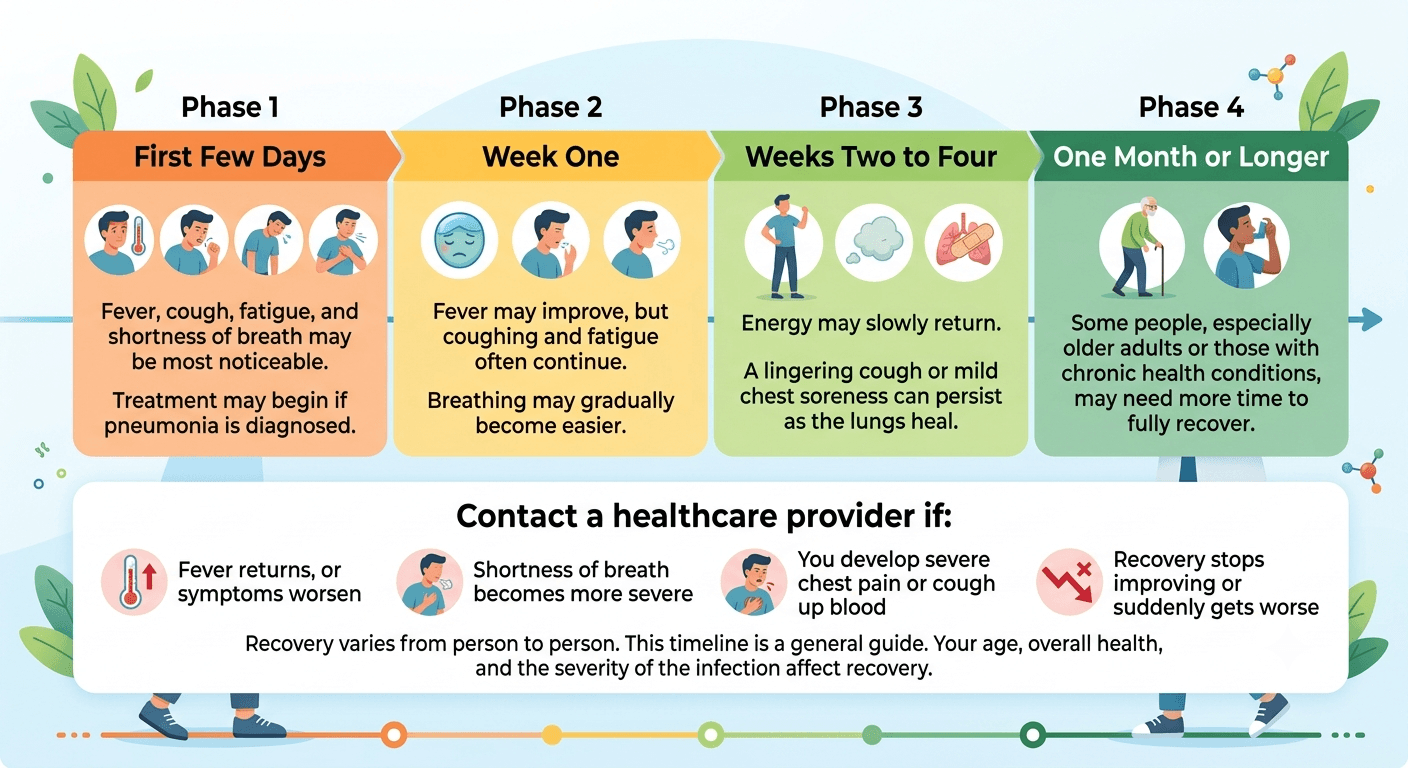
Recovery varies from person to person. The timeline below is a general guide. Your age, overall health, and the severity of the infection can all affect how long recovery takes.
First Few Days
- Fever, cough, fatigue, and shortness of breath may be most noticeable.
- Treatment may begin if pneumonia is diagnosed.
Week One
- Fever may improve, but coughing and fatigue often continue.
- Breathing may gradually become easier.
Weeks Two to Four
- Energy may slowly return.
- A lingering cough or mild chest soreness can persist as the lungs heal.
One Month or Longer
- Some people, especially older adults or those with chronic health conditions, may need more time to fully recover.
Contact a healthcare provider if:
- Fever returns, or symptoms worsen.
- Shortness of breath becomes more severe.
- You develop severe chest pain or cough up blood.
- Recovery stops improving or suddenly gets worse.
Why Does A Cold Usually Clear Faster?
Most colds do not cause the same level of lung inflammation. They can still lead to lingering cough or sinus symptoms, but the body is usually not repairing inflamed air sacs or recovering from a lower respiratory infection. A cold can also become complicated by bronchitis, sinusitis, flu, COVID-19, or pneumonia, so symptoms that suddenly worsen after initial improvement deserve attention.
If symptoms feel more intense than a routine cold, +MEDRITE acute illness care can help evaluate cough, fever, congestion, fatigue, and breathing concerns. When symptoms overlap with flu, influenza urgent care may also be relevant.
What Can Slow Pneumonia Recovery?
Several factors can make pneumonia recovery feel longer or increase the chance of a setback.
- Stopping antibiotics early or missing doses when antibiotics are prescribed.
- Returning to heavy exercise or demanding work before breathing and energy are ready.
- Smoking, vaping, secondhand smoke, or wood smoke exposure.
- Poor sleep, inadequate fluid intake, or insufficient food intake during recovery.
- Underlying lung disease, heart disease, immune suppression, or uncontrolled chronic conditions.
- A second infection, such as flu or COVID-19, or a complication from the original infection.
The goal is not to be on bed rest forever. It is a steady, gradual return. If walking across the room causes unusual breathlessness, that is not the time to push a hard workout. If light activity feels comfortable and symptoms continue to improve, you can usually build back slowly, following clinician guidance.
What Helps During Pneumonia Recovery?
The basics matter. Take prescribed medication exactly as directed. Drink enough fluids to keep the mucus thinner unless you have been told to restrict fluids. Rest when you need to. Avoid smoke and vaping. Eat what you can tolerate, with an emphasis on regular meals, protein, and fluids. Use a clean humidifier or warm shower if it helps loosen mucus. Ask before using cough medicine, especially if you have other medical conditions or take other medications, because coughing can help clear an infection.
Breathing exercises may be recommended by a clinician for some patients, but they should not replace medical care. If breathing exercises make you dizzy, worsen pain, or increase shortness of breath, stop and seek guidance.
When Follow-Up Care Is Important
Follow-up may be recommended after pneumonia, especially if symptoms were severe, you have chronic health conditions, you are older, or you are not improving as expected. Some people may need a repeat exam, oxygen check, or imaging depending on their symptoms and provider recommendations.
If a provider recommends imaging, +MEDRITE X-ray services may help support evaluation. You can also find a center near you.
Warning Signs During Pneumonia Recovery
Do not assume every lingering symptom is normal. Seek urgent care or emergency care based on severity.
- Fever returns after improving or remains high.
- Shortness of breath gets worse or appears at rest.
- Chest pain becomes severe, crushing, or does not feel tied to coughing.
- Cough produces blood or large amounts of discolored mucus.
- You feel confused, faint, severely weak, or dehydrated.
- Lips or face look blue, gray, or unusually pale.
Call 911 or go to the ER for severe breathing trouble, blue lips, confusion, fainting, severe chest pain, or a rapid decline. Urgent care is appropriate for non-life-threatening but concerning symptoms, such as persistent cough, fever, mild shortness of breath, fatigue that is not improving, or questions about whether recovery is on track.
How +Medrite Can Help With Pneumonia Recovery Concerns
+MEDRITE can evaluate respiratory symptoms that are not improving, symptoms that seem worse than a cold, or lingering concerns after a pneumonia diagnosis. Depending on your symptoms, a visit may include vital signs, oxygen assessment, physical exam, respiratory testing, and guidance on whether imaging, medication, follow-up, or emergency care is needed.
Frequently Asked Questions
How long does pneumonia last?
It depends. Some people feel much better within one to two weeks, but cough and fatigue may last longer. More serious pneumonia can take a month or more to fully recover from, especially in older adults or people with chronic conditions.
Why am I still tired after pneumonia?
Fatigue can linger because the immune system, lungs, sleep, appetite, and activity level were all affected. Gradual improvement is expected. Sudden worsening, new fever, or shortness of breath should be checked.
Can pneumonia come back after antibiotics?
Symptoms can return if the infection was not fully cleared, the medication was not completed, the germ was not sensitive to the antibiotic, or another illness developed. If symptoms return or worsen, contact a healthcare provider.
Is walking good while recovering from pneumonia?
Gentle movement may help some people rebuild stamina, but it should be gradual. Stop if you become unusually short of breath, dizzy, or weak. Ask your clinician when to return to work, school, exercise, or travel.
How To Pace Your Return To Normal Activity
One of the most common setbacks after pneumonia is doing too much on the first good day. Feeling better for a few hours does not always mean the lungs have fully recovered. A safer approach is to build activity in layers. Start with short walks around the home, then longer walks, then light chores, and only later return to more demanding exercise or physical work. If symptoms flare after activity, scale back and give your body more time.
Work and school plans may also need adjustment. People who stand all day, talk for long periods, lift, climb stairs, work outdoors, or care for children may need a slower return than people with lighter routines. If your job exposes you to smoke, dust, chemicals, cold air, or sick contacts, ask a clinician when it is reasonable to return and whether temporary restrictions are needed.
Why Recovery Can Feel Uneven
Pneumonia recovery is rarely a straight line. You may have a morning with more energy and an afternoon where the cough returns. You may sleep poorly because of coughing, then feel more tired the next day. Appetite may lag behind. Mucus may change as the lungs clear. These changes can be frustrating, but gradual improvement over time is more important than feeling better every single day.
A pattern of steady improvement is reassuring. A pattern of worsening breathlessness, returning fever, increasing chest pain, new confusion, or a cough that becomes more severe is different. That pattern deserves medical attention because it may signal treatment failure, a complication, dehydration, a second infection, or another diagnosis.
Special Recovery Considerations For Higher-Risk Patients
Older adults, people with chronic lung disease, and those with weakened immune systems may need closer monitoring during recovery. A lower fever or lack of fever does not always mean the illness is mild. Confusion, weakness, loss of appetite, falls, or trouble performing usual activities can be warning signs in older adults. People with asthma or COPD may also need guidance about inhaler use, triggers, and when shortness of breath needs urgent evaluation.
Children can also recover at different speeds. A child who is breathing fast, working hard to breathe, not drinking, acting unusually sleepy, or showing blue lips should receive urgent care. Parents should also be cautious when fever returns after improvement or when a cough interferes with sleep, hydration, or normal activity.
What To Ask At A Follow-Up Visit
A follow-up visit is a good time to ask whether symptoms are improving as expected, when to resume exercise, whether any medication changes are needed, and whether additional testing is recommended. Ask what symptoms should trigger urgent care and what symptoms should trigger the ER. If you have had repeated pneumonia, ask whether lung disease, aspiration risk, immune problems, smoking, workplace exposure, or vaccination status should be reviewed.
If you are tracking recovery at home, focus on practical measures: whether fever has stayed away, whether breathing is easier, whether cough is less frequent, whether appetite is returning, and whether you can do normal tasks with less rest. Those trends are more useful than comparing your recovery to another patient.
People often ask how long pneumonia lasts because they feel guilty about resting. Recovery is part of treatment. Pushing through severe fatigue or breathlessness can extend the setback and may hide signs that the infection is not resolving as expected.
Related +MEDRITE services
These +MEDRITE pages may be useful for readers who want care options related to this topic:
- Review acute illness care for cough, fever, fatigue, and respiratory symptoms that need evaluation.
- Review X-ray services when a clinician recommends imaging during respiratory assessment or follow-up.
- Review influenza urgent care when symptoms overlap with flu or flu complications.
- Review find a center to choose a nearby +MEDRITE location.
Medical disclaimer
This article is for general educational purposes only and is not a diagnosis or a substitute for professional medical advice. Symptoms can have many causes. If you have severe symptoms, worsening symptoms, or a medical emergency, call 911 or go to the nearest emergency room.
References
- American Lung Association. (n.d.). Pneumonia treatment and recovery. https://www.lung.org/lung-health-diseases/lung-disease-lookup/pneumonia/treatment-and-recovery
- National Heart, Lung, and Blood Institute. (n.d.). Pneumonia recovery. https://www.nhlbi.nih.gov/health/pneumonia/recovery
- American Lung Association. (n.d.). Pneumonia overview. https://www.lung.org/lung-health-diseases/lung-disease-lookup/pneumonia
- Harvard Health Publishing. (n.d.). Pneumonia. https://www.health.harvard.edu/topics/pneumonia
- Mayo Clinic. (n.d.). Pneumonia diagnosis and treatment. https://www.mayoclinic.org/diseases-conditions/pneumonia/diagnosis-treatment/drc-20354210
- American Thoracic Society. (n.d.). What Is Pneumonia?. https://site.thoracic.org/advocacy-patients/patient-resources/what-is-pneumonia