
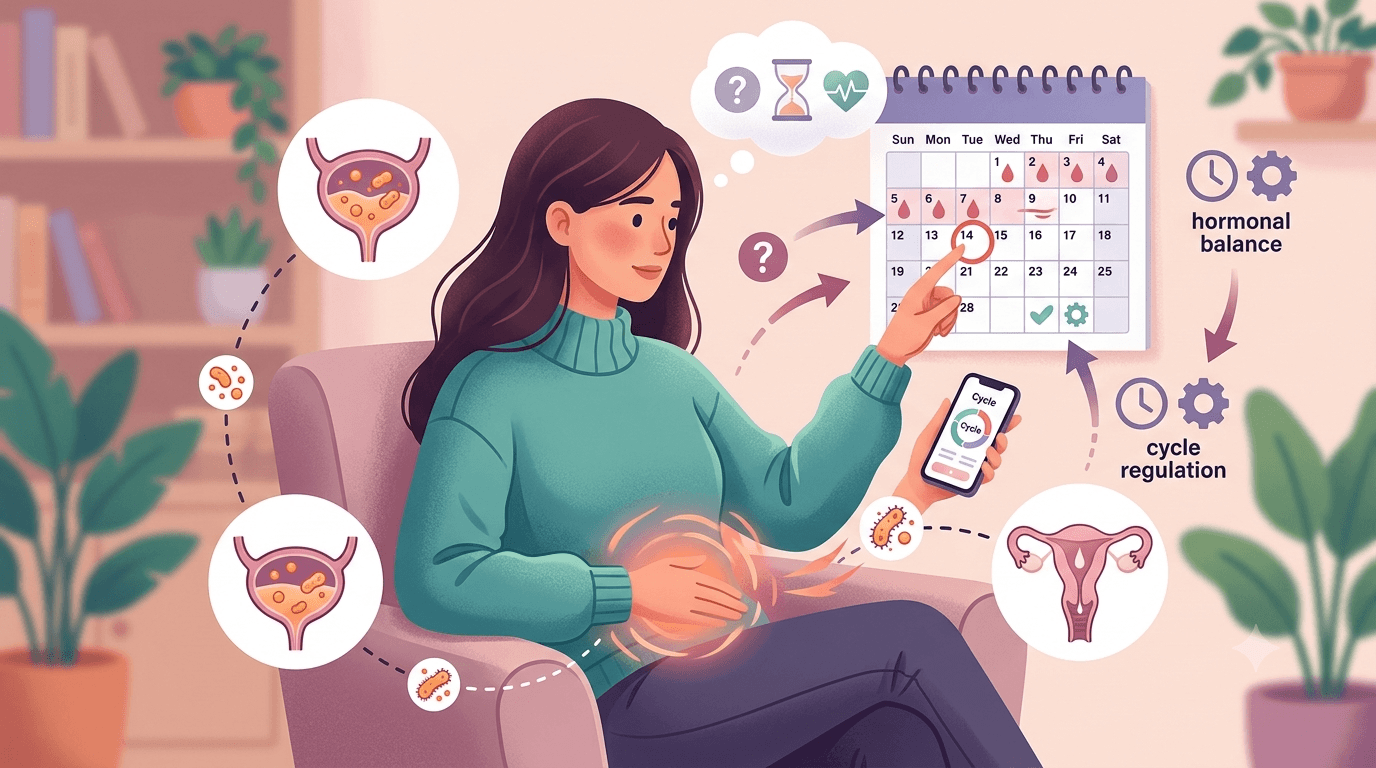
A UTI does not usually directly change your menstrual cycle. UTIs are infections in the urinary tract, most often the bladder. Period timing is controlled by ovulation, hormones, pregnancy status, stress, illness, weight changes, medications, and other reproductive health factors. Still, a UTI can happen before, during, or after a period, and the symptoms can overlap enough to make it feel like the infection is affecting your cycle.
The safest way to answer “can a UTI affect your period” is with nuance. A UTI may add physical stress, pelvic discomfort, fatigue, or confusion about bleeding and urinary symptoms. It can also appear at the same time as a late period, pregnancy, STI, vaginitis, or abnormal bleeding. If your period is late, bleeding is unusual, or symptoms are not clearly urinary, testing can help clarify what is going on.
The Short Answer: Usually Not Directly
A bladder infection can make you feel miserable, but it does not typically stop ovulation or directly change the uterine lining. That means a UTI is not usually the direct reason a period is late, missed, early, or irregular. However, illness and stress can affect the body, and cycle changes are common for many reasons that may happen at the same time as a UTI.
This matters because the older way of explaining this topic often overstates the UTI-period connection. It is more accurate to separate urinary symptoms from menstrual symptoms, then look for overlapping causes. A late period should not automatically be blamed on a UTI. Pregnancy, stress, hormonal changes, thyroid concerns, polycystic ovary syndrome, recent weight change, intense exercise, perimenopause, emergency contraception, and other medications can all play a role.
Why UTI and Period Symptoms Can Be Confusing
UTI symptoms and period symptoms can overlap in the lower abdomen and pelvis. During a period, cramps, pelvic pressure, fatigue, and more frequent bathroom trips can happen. During a UTI, bladder irritation can cause burning with urination, urgency, frequent urination, lower belly pressure, cloudy urine, strong-smelling urine, or blood in the urine. When both are happening together, it can be hard to tell which symptom belongs to which issue.
| Symptom | More typical of a UTI | More typical of a period or gynecologic issue |
| Burning when urinating | Common, especially with bladder infection. | Not typical of normal menstruation. |
| Frequent urge to urinate | Common and often urgent or uncomfortable. | Can happen mildly with bloating, but usually not burning. |
| Lower abdominal pressure | Can feel centered over the bladder. | Can feel crampy, widespread, or tied to bleeding. |
| Blood | May appear in urine or on toilet paper after urination. | Menstrual bleeding comes from the vagina and follows cycle patterns. |
| Unusual discharge or odor | Not a classic bladder infection symptom. | May suggest vaginitis, STI, or another gynecologic concern. |
| Late or missed period | Not usually caused directly by a UTI. | Pregnancy, stress, hormones, medications, or other factors should be considered. |
Can a UTI delay your period?
A UTI itself is not considered a common direct cause of a delayed period. However, the body does not operate in separate compartments. Pain, poor sleep, fever, dehydration, anxiety, and illness-related stress may affect how you feel during a cycle. If ovulation is delayed for any reason, the period can arrive later than expected.
The key point is that “UTI before period” does not prove that the UTI caused the period to shift. A late period after sex should prompt a pregnancy test, even if UTI symptoms are present. A missed or irregular period that repeats over several cycles should be discussed with a healthcare provider.
Could It Be Pregnancy, an STI, Or Something Else?
Pregnancy can cause urinary frequency, pelvic pressure, breast tenderness, nausea, fatigue, and a missed period. Some of those symptoms can be mistaken for a UTI. A UTI can also occur during pregnancy, and an untreated infection may become more serious, so pregnant patients or those who may be pregnant should seek care promptly.
Some sexually transmitted infections can cause burning with urination, pelvic pain, spotting, unusual discharge, or bleeding after sex. If STI exposure is possible or symptoms include discharge, sores, pelvic pain, or bleeding that does not fit your usual period, STD testing may be an important part of evaluation.
Vaginal yeast infections, bacterial vaginosis, pelvic inflammatory disease, kidney stones, interstitial cystitis, endometriosis, ovarian cysts, and medication side effects can also overlap with urinary or menstrual symptoms. That is why testing matters when symptoms are unclear.
When Bleeding Is Not Just Your Period
It can be difficult to tell whether blood is coming from urine or vaginal bleeding. Try to notice when the blood appears. Blood in the urine only during urination, especially with burning or urgency, may be related to urinary tract irritation. Bleeding that continues between bathroom trips, fills pads or tampons, or follows your usual menstrual pattern is more likely vaginal.
Seek medical care for heavy bleeding, bleeding after menopause, bleeding after sex, severe pelvic pain, dizziness, fainting, shoulder pain, fever, or a positive pregnancy test with pain or bleeding. These symptoms may require urgent or emergency evaluation.
How UTIs Are Diagnosed And Treated
A clinician may ask about urinary symptoms, menstrual history, possibility of pregnancy, sexual history when relevant, medications, and recent infections. A urine test can look for signs of infection. A urine culture may be needed in some cases, especially if symptoms are recurrent, treatment has failed, or risk factors are present.
Bacterial UTIs are often treated with antibiotics. The right medication depends on symptoms, allergy history, pregnancy status, local resistance patterns, and whether the infection seems limited to the bladder or may involve the kidneys. Drinking water can support comfort and hydration, but it should not replace antibiotics if a bacterial UTI is diagnosed.
+MEDRITE on-site lab services can support testing when appropriate, and same-day urgent care services can help evaluate UTI symptoms, pregnancy-related concerns, and overlapping pelvic symptoms.
What To Do If You Have UTI Symptoms Around Your Period
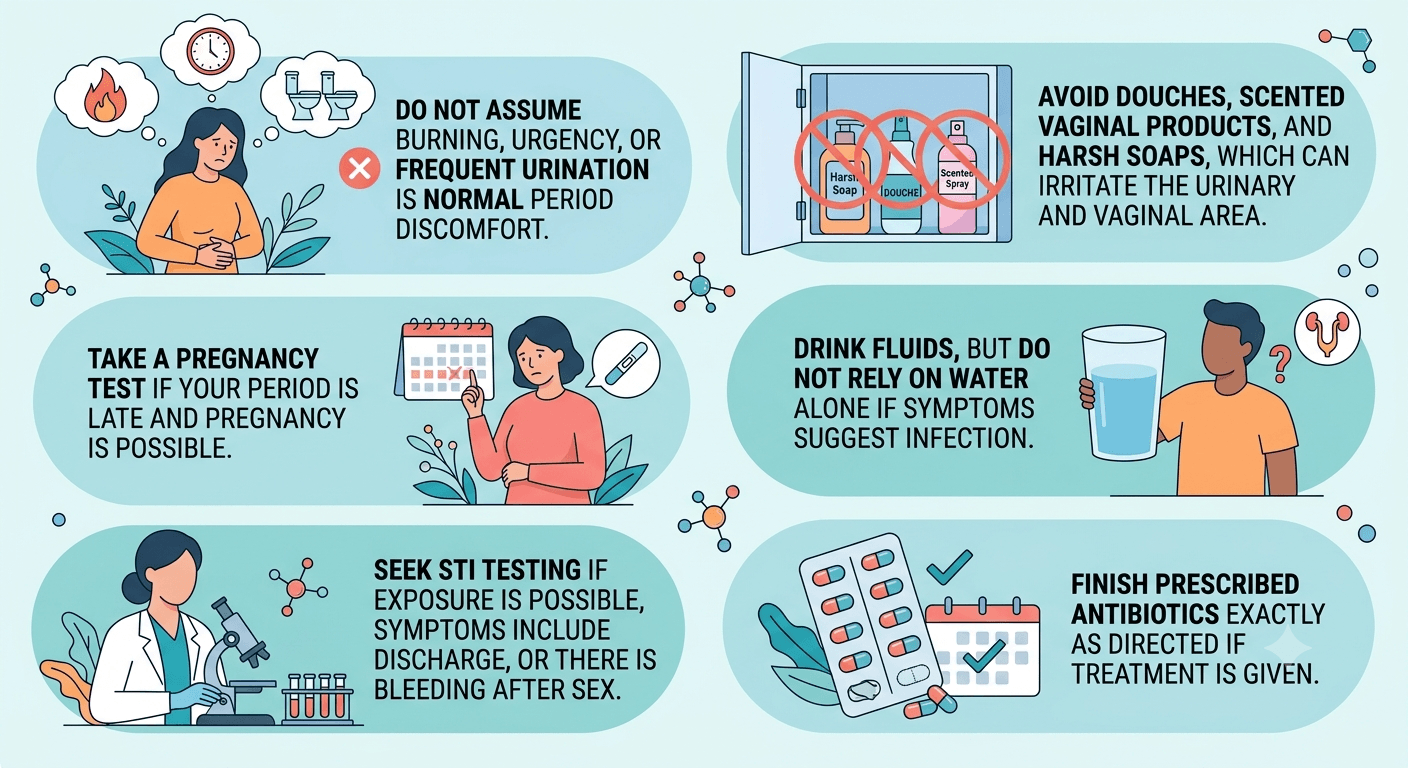
- Do not assume burning, urgency, or frequent urination is normal period discomfort.
- Take a pregnancy test if your period is late and pregnancy is possible.
- Seek STI testing if exposure is possible, symptoms include discharge, or there is bleeding after sex.
- Avoid douches, scented vaginal products, and harsh soaps, which can irritate the urinary and vaginal area.
- Drink fluids, but do not rely on water alone if symptoms suggest infection.
- Finish prescribed antibiotics exactly as directed if treatment is given.
When To Seek Care Quickly
A bladder infection can sometimes spread to the kidneys. Seek prompt care if urinary symptoms come with fever, chills, nausea, vomiting, back or flank pain, worsening pelvic pain, or blood in the urine. Pregnant patients, people with diabetes, people with kidney disease, and anyone with immune suppression should seek care sooner.
For preventive conversations about reproductive and urinary health, a well-woman exam checkup may also be useful outside of an acute visit.
How +Medrite Can Help
+MEDRITE can evaluate symptoms that feel like a UTI, period-related discomfort, pregnancy concern, or STI concern. Depending on the situation, your visit may include urine testing, pregnancy testing, STI testing, symptom review, medication guidance, and recommendations for follow-up care if symptoms suggest a gynecologic condition that needs additional evaluation.
Frequently Asked Questions
Can a UTI cause an irregular period?
A UTI does not usually directly cause an irregular period. Illness, stress, pregnancy, hormonal changes, medications, and other conditions are more common explanations. If irregular periods continue, talk with a healthcare provider.
Can a UTI cause spotting?
A UTI can cause blood in the urine, which may look like spotting. Vaginal spotting can come from many other causes, including pregnancy, hormonal changes, STIs, or abnormal uterine bleeding. Testing can help identify the source.
Can antibiotics for a UTI delay your period?
Most antibiotics do not directly delay periods. Stress, illness, pregnancy, and cycle variation are more common explanations. Ask a clinician or pharmacist about medication questions, especially if you use hormonal contraception.
Should I go to urgent care for UTI symptoms during my period?
Yes, urgent care can be appropriate if you have burning urination, frequent urination, urinary urgency, lower abdominal pressure, blood in urine, or symptoms that are hard to separate from menstrual cramps. Seek emergency care for severe pain, fainting, pregnancy with pain or bleeding, or signs of kidney infection.
How To Track Symptoms Before Your Visit
A few notes can make the visit more useful. Write down the first day of your last period, whether your cycle is usually regular, whether pregnancy is possible, and when urinary symptoms started. Note whether pain is centered over the bladder, on one side of the pelvis, in the back or flank, or throughout the lower abdomen. Also note whether blood appears only when urinating or continues like vaginal bleeding.
Bring a list of medications, including birth control, emergency contraception, antibiotics taken recently, supplements, and over-the-counter pain relievers. Tell the clinician if you have had UTIs before, kidney infections, kidney stones, pregnancy complications, STIs, pelvic inflammatory disease, endometriosis, ovarian cysts, or irregular periods. These details help decide which tests are appropriate.
Why Self-Treating Can Create Problems
It can be tempting to drink cranberry juice, take leftover antibiotics, or wait until the period ends before getting checked. That can backfire. Leftover antibiotics may be the wrong medication, too short a course, or unsafe with pregnancy or other medicines. Waiting too long can allow a bladder infection to worsen or spread. Treating what seems like a UTI without testing can also miss pregnancy, STI, vaginitis, a kidney stone, or another pelvic condition.
Over-the-counter urinary pain relievers may temporarily reduce burning, but they do not treat the infection. They can also alter urine color, making it harder to judge whether blood is present. If you use one, follow the label and tell the clinician, especially if symptoms continue.
UTIs During Menstruation: Practical Comfort Tips
While waiting to be evaluated, drink fluids, urinate when you feel the urge, and avoid scented tampons, pads, wipes, sprays, douches, or bubble baths that can irritate the area. Change menstrual products regularly. If sex seems to trigger symptoms, avoid intercourse until you are evaluated and symptoms improve. Heat may help menstrual cramps, but it will not treat a bladder infection.
If antibiotics are prescribed, take the full course exactly as directed, even if symptoms improve before the medication is finished. Ask whether the medication is safe with your other medicines, whether it affects contraception, and what to do if symptoms do not improve within the expected timeframe.
When Menstrual Symptoms Need A Different Type Of Care
Urgent care can help with many UTI, pregnancy testing, and STI testing needs, but some symptoms may need gynecology or emergency evaluation. These include severe one-sided pelvic pain, positive pregnancy test with pain or bleeding, very heavy bleeding, dizziness or fainting, fever with pelvic pain, new pain during sex, or bleeding after menopause. If a clinician suspects a condition outside the urinary tract, follow-up with an OB-GYN or emergency department may be recommended.
What To Tell Your Healthcare Provider
Tell the clinician if symptoms started after sex, after beginning a new birth control method, after taking an antibiotic, or after using a new soap, hygiene product, or menstrual product. Also mention whether pain is worse during urination, sex, bowel movements, or menstrual cramps. These details can help distinguish urinary, vaginal, pelvic, and gastrointestinal causes.
Share whether you have taken a home pregnancy test, what the result was, and when you took it. A test taken very early may need to be repeated. If pregnancy is possible and you have pain or bleeding, seek medical guidance rather than assuming the symptoms are caused by a UTI.
How Long To Wait Before Getting Checked
If urinary symptoms are mild but clearly present, it is reasonable to seek care rather than waiting several days. Burning, urgency, and frequent urination usually have an explanation, and a urine test can help avoid guesswork. If symptoms begin during a period, you do not need to wait until bleeding stops to be evaluated. Clinicians are used to interpreting symptoms and testing in that context.
Get checked sooner if symptoms are new for you, if pain is more severe than usual cramps, if you see blood outside your expected period, or if symptoms interfere with sleep, work, school, or normal activity. Earlier evaluation is especially important before travel, before a weekend, or when symptoms are worsening quickly.
If you have already started your period, describe whether the flow, timing, pain level, and clotting are typical for you. If something feels noticeably different, that information matters. Normal varies from person to person, so your own baseline is often the most useful comparison.
Related +MEDRITE services
These +MEDRITE pages may be useful for readers who want care options related to this topic:
- Review STD testing when urinary or pelvic symptoms may overlap with STI symptoms.
- Review well-woman exam checkup for preventive conversations about reproductive and urinary health.
- Review on-site lab services when testing helps clarify urinary, pregnancy, or infection concerns.
- Review urgent care services for same-day evaluation of UTI symptoms and related concerns.
Medical disclaimer
This article is for general educational purposes only and is not a diagnosis or a substitute for professional medical advice. Symptoms can have many causes. If you have severe symptoms, worsening symptoms, or a medical emergency, call 911 or go to the nearest emergency room.
References
- National Institute of Diabetes and Digestive and Kidney Diseases. (n.d.). Bladder Infection (UTI) in Adults. https://www.niddk.nih.gov/health-information/urologic-diseases/bladder-infection-uti-in-adults
- Office on Women’s Health. (n.d.). Urinary Tract Infections. https://www.womenshealth.gov/a-z-topics/urinary-tract-infections
- American College of Obstetricians and Gynecologists. (n.d.). Urinary Tract Infections FAQ. https://www.acog.org/womens-health/faqs/urinary-tract-infections
- Mayo Clinic. (n.d.). UTI symptoms and causes. https://www.mayoclinic.org/diseases-conditions/urinary-tract-infection/symptoms-causes/syc-20353447
- Eunice Kennedy Shriver National Institute of Child Health and Human Development. (n.d.). Menstrual irregularities cause. https://www.nichd.nih.gov/health/topics/menstruation/conditioninfo/causes
- American College of Obstetricians and Gynecologists. (n.d.). Abnormal Uterine Bleeding FAQ. https://www.acog.org/womens-health/faqs/abnormal-uterine-bleeding