
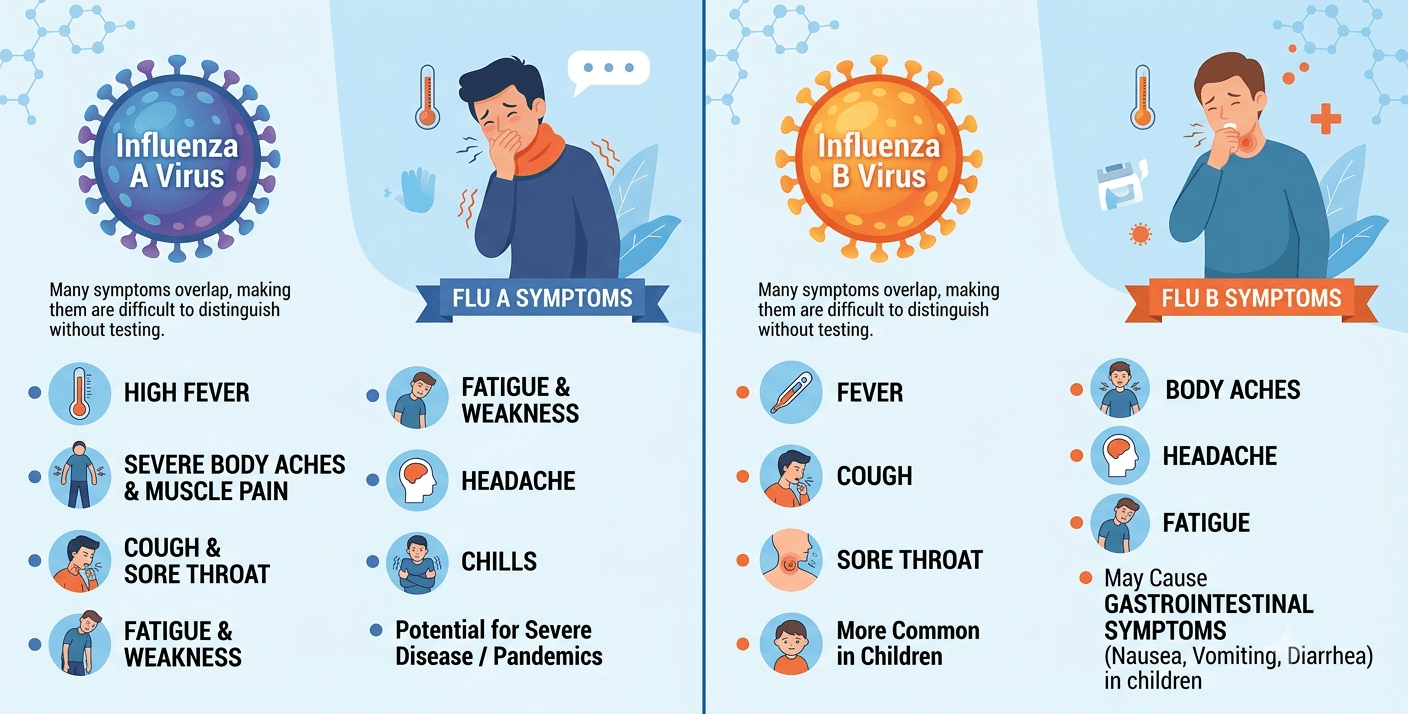
Flu A and Flu B can cause nearly the same symptoms, so you usually cannot tell them apart by how you feel. Fever, chills, cough, sore throat, runny or stuffy nose, body aches, headache, and fatigue can happen with either type. Some people also have vomiting or diarrhea, especially children. The most reliable way to know whether you have Flu A or Flu B is to get tested.
That is the most important update to this topic. Flu A vs Flu B symptoms can be compared, but symptoms alone are not a dependable way to identify the type. Testing is useful when the result may affect treatment decisions, school or work guidance, or care for someone at higher risk of flu complications.
What Are Flu A And Flu B?
Influenza is a contagious respiratory illness caused by influenza viruses. The CDC explains that there are four types of influenza viruses: A, B, C, and D. Influenza A and B are the types responsible for seasonal flu epidemics in people.
Flu A viruses are divided into subtypes based on two surface proteins, hemagglutinin and neuraminidase. Current influenza A viruses that routinely circulate in people include A(H1N1) and A(H3N2). Flu A is also the type known to cause pandemics when a new virus emerges and spreads efficiently among people.
Flu B viruses are not divided into subtypes. They are classified into lineages instead. Influenza B can still make people very sick, even if it is often discussed as less contagious than Flu A. A person with Flu B may need the same level of symptom care, testing, isolation precautions, or antiviral treatment consideration as someone with Flu A.
Flu A Vs Flu B Symptoms: What Overlaps?
The CDC lists common flu symptoms as fever or feeling feverish, chills, cough, sore throat, runny or stuffy nose, muscle or body aches, headache, fatigue, and sometimes vomiting or diarrhea. Not everyone with the flu has a fever, so a normal temperature does not rule it out.
Both Flu A and Flu B tend to come on suddenly. People often describe feeling fine earlier in the day and then developing chills, aches, cough, and exhaustion within hours. That sudden onset can help separate flu from some colds, which may build more gradually, but it still cannot identify the flu type.
| Symptom or Feature | Flu A | Flu B | What to Know |
|---|---|---|---|
| Fever or chills | Common | Common | Not everyone with the flu develops a fever. |
| Cough | Common | Common | Often dry at first and may linger after other symptoms improve. |
| Sore throat and congestion | Can happen | Can happen | These symptoms overlap with colds, COVID-19, RSV, and strep throat. |
| Body aches and headache | Common | Common | Aches can be intense with either type. |
| Fatigue | Common | Common | Tiredness can last after the fever improves. |
| Vomiting or diarrhea | Possible, more often in children | Possible, more often in children | GI symptoms do not prove stomach flu or a specific flu type. |
| Complications | Possible | Possible | Pneumonia, worsening asthma, dehydration, and other complications can occur with either type. |
| Best way to confirm | Testing | Testing | Symptoms alone cannot reliably identify Flu A or Flu B. |
Why Symptoms Alone Are Not Enough
The older framing of this topic suggested that certain symptoms might help identify Flu A or Flu B. That can be misleading. Flu seasons vary, circulating strains change, and a person’s age, immune status, vaccination history, and underlying conditions affect how the illness feels. A healthy adult with Flu B may feel worse than another adult with Flu A, and the reverse can also be true.
The CDC notes that it is impossible to know for sure whether an illness is flu-based on symptoms alone because other viruses and some bacterial infections can cause similar respiratory symptoms. COVID-19, RSV, common cold viruses, and strep throat can all overlap with flu-like illness. Co-infections are also possible.
When Flu Testing Is Helpful
A flu test may be recommended when symptoms started recently, the result could change treatment, or the person is at higher risk for complications. Testing can also help when symptoms are confusing, when COVID-19 is also possible, or when someone needs documentation for school, work, travel, or caregiving decisions.
+MEDRITE can assess flu-like symptoms and provide testing when appropriate. Rapid tests can often identify influenza A, influenza B, or both. A negative rapid test does not always rule out flu, especially if symptoms and exposure strongly suggest it. Providers consider your symptoms, timing, risk factors, and local virus activity together.
Flu Treatment: Timing Matters
Most people with uncomplicated flu recover with rest, fluids, fever control, and time. Some patients may benefit from antiviral medication. The CDC says flu antiviral drugs work best when started as soon as possible, ideally within 2 days of becoming sick, especially for children and others who may need treatment.
Antiviral decisions should be made by a medical provider. They may be especially important for adults 65 and older, pregnant people, young children, and people with asthma, heart disease, diabetes, immune system problems, or other conditions that increase complication risk. Even if more than two days have passed, higher-risk patients or people with severe illness should still contact a provider.
Who Is At Higher Risk For Flu Complications?
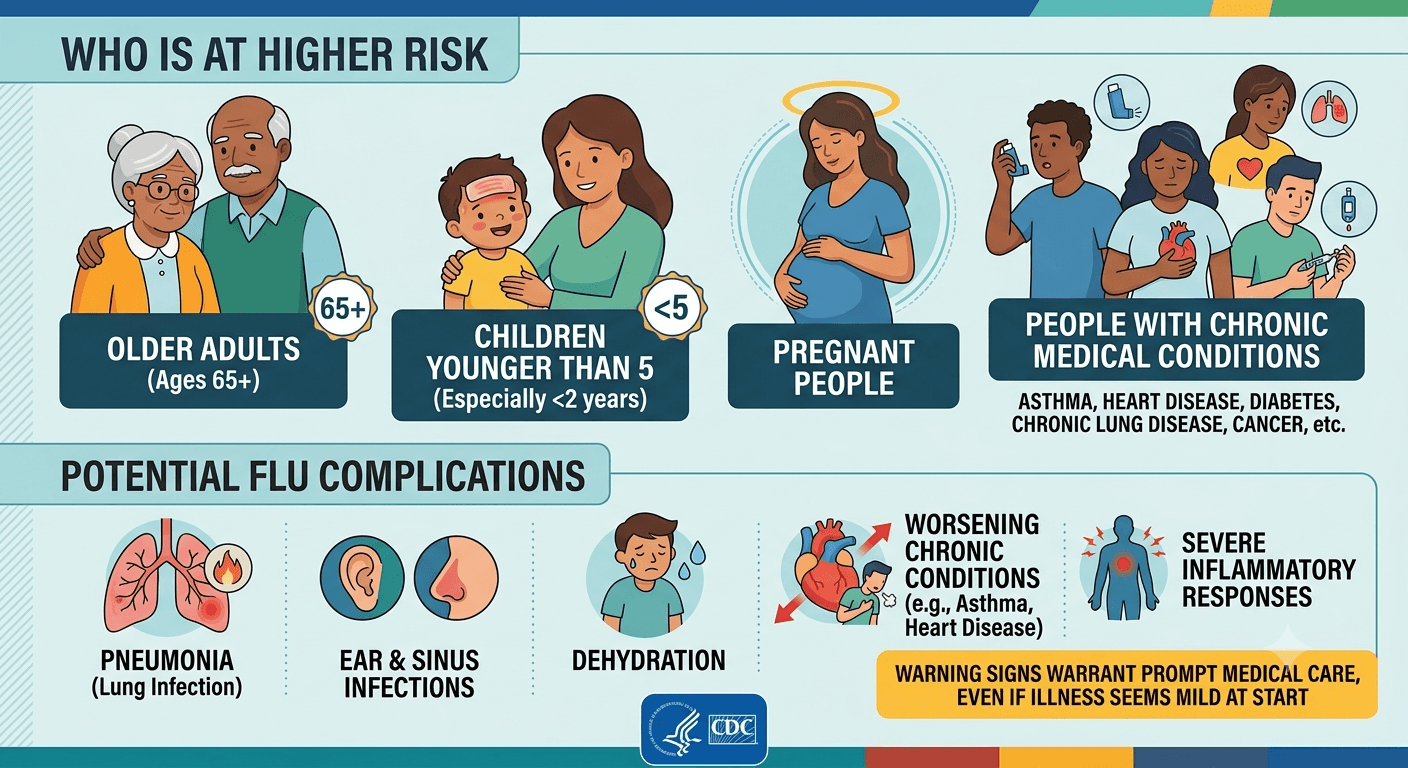
Anyone can become very sick from the flu, but some people face a higher risk. The CDC highlights older adults, children younger than 5, pregnant people, and people with certain chronic medical conditions as groups more likely to develop serious flu-related complications.
Complications can include pneumonia, sinus or ear infections, dehydration, worsening asthma or heart disease, and severe inflammatory responses. Warning signs warrant prompt care, even if the illness started like an ordinary case of the flu.
When To Go To Urgent Care For Flu-Like Symptoms
Urgent care can help when you have flu symptoms and need testing, symptom guidance, a work or school note, or evaluation for complications. It is also appropriate when fever persists, symptoms are worsening instead of improving, you have a chronic condition, or you are unsure whether symptoms could be flu, COVID-19, strep, bronchitis, or another illness.
For children, urgent care may be appropriate for fever, dehydration concerns, worsening cough, ear pain, sore throat, or symptoms that are not following an expected pattern. Parents should not rely on flu-type guesses to decide care. Severity, hydration, breathing, and risk factors matter more.
When Flu Symptoms Need Emergency Care
Some symptoms are not urgent-care problems. They call for emergency care. Go to the emergency room or call 911 for severe trouble breathing, blue or gray lips, severe chest pain, confusion, inability to stay awake, seizures, signs of severe dehydration, or symptoms that improve and then return with a much worse fever or cough.
Babies, older adults, pregnant people, and people with serious medical conditions may need care earlier in the course of illness. When in doubt, it is safer to call a medical provider for guidance.
What To Expect During A Flu-Related Urgent Care Visit
A flu visit usually starts with timing. Your provider will ask when symptoms began because that helps determine whether testing and antivirals are likely to be useful. They may also ask about vaccination, exposure to sick contacts, pregnancy, chronic health conditions, immune system problems, and medications. A lung exam, throat exam, temperature check, and oxygen level may help determine whether symptoms are uncomplicated or need further workup.
Depending on your symptoms, the provider may test for influenza, COVID-19, strep throat, or other illnesses. If cough, fever, chest discomfort, low oxygen, or abnormal lung sounds raise concern for pneumonia, further evaluation may be needed. The goal is not just to name the virus. It is to identify who can recover safely at home and who needs additional treatment or monitoring.
Flu, Cold, Covid-19, RSV, And Strep Can Overlap
The flu often comes on suddenly with fever, chills, aches, cough, and fatigue. A cold may be milder and more focused on congestion, but that is not always true. COVID-19 and RSV can also cause cough, fever, fatigue, sore throat, and congestion. Strep throat may cause fever and severe throat pain without cough, but symptoms can vary. Because these illnesses can look alike, testing and an exam are more reliable than relying on a single symptom.
Returning To Work, School, Or Daily Activities
If you have flu-like symptoms, rest and avoid close contact with others while symptoms are active. Follow your provider’s instructions, workplace or school policies, and public health guidance. Fever should be improving without fever-reducing medication before returning to normal activities. If symptoms rebound or if cough and fever return after initial improvement, get checked because secondary infections or complications can occur.
People who care for babies, older adults, pregnant people, or medically fragile relatives should be especially cautious. Even a mild case of the flu in one person can lead to severe illness in someone at higher risk.
How To Care For Flu Symptoms At Home
If symptoms are mild and no risk factors are present, home care often includes rest, fluids, fever reducers used as directed, humidified air, warm fluids for throat comfort, and staying home while contagious. Avoid giving aspirin to children or teens because of the risk of Reye syndrome. Ask a clinician before combining over-the-counter cold and flu products, since many contain overlapping ingredients.
Because flu spreads easily, cover coughs, wash hands, improve ventilation when possible, and avoid close contact with people at higher risk while you are sick. If you need to visit urgent care, wearing a mask can help protect others in the waiting area.
Prevention: Flu Vaccination Still Matters
Annual flu vaccination remains a key prevention tool. It cannot prevent every infection or protect against all respiratory viruses, but it can reduce the risk of flu illness and serious outcomes. Flu viruses change, which is why vaccine recommendations are updated seasonally.
Other prevention habits also help: stay home when sick, wash hands, cover coughs and sneezes, avoid touching your face with unwashed hands, and clean high-touch surfaces when someone at home is ill.
How +Medrite Can Help With Flu A and Flu B
+MEDRITE provides walk-in care for flu-like symptoms, including evaluation, flu testing when appropriate, and guidance on next steps. Providers can help determine whether symptoms suggest flu, COVID-19, strep throat, bronchitis, pneumonia, or another condition that needs different care.
If antiviral medication may be appropriate, earlier evaluation matters. If you are high-risk, severely ill, or caring for a high-risk family member, do not wait several days to see whether symptoms declare themselves as Flu A or Flu B. Testing and clinical judgment are more useful than symptom guessing.
Frequently Asked Questions
Is Flu A worse than Flu B?
Not always. Flu A is more likely to drive major outbreaks and pandemics, but Flu B can still cause serious illness. How sick you become depends on your health, age, vaccination status, and the specific virus circulating.
Can you have Flu A and Flu B at the same time?
It is uncommon, but co-infections can happen. A flu test and provider assessment can help clarify what is going on if symptoms are severe or unusual.
How soon after symptoms start should I get tested?
Testing is often most useful early, especially when antiviral treatment might be considered. If you are high-risk or if your symptoms are severe, contact a provider as soon as possible.
Can flu symptoms look like COVID-19?
Yes. Flu and COVID-19 can overlap. Testing may be the only practical way to tell which infection is present, and both can require special care for higher-risk patients.
A Practical Bottom Line
If you suddenly feel sick with fever, chills, cough, aches, and exhaustion, treat it as a contagious respiratory illness and seek evaluation early, especially if you may need testing or antivirals. The difference between Flu A and Flu B is medically relevant, but the care decision starts with symptom severity, timing, and risk factors.
Related +MEDRITE services
These +MEDRITE service pages may be useful for readers who want care options related to this topic:
- Review influenza urgent care for flu-like symptoms, testing, and treatment guidance.
- Review flu shots for seasonal flu prevention.
- Review acute illness care when symptoms overlap with COVID, RSV, strep, or another infection.
- Review pediatric care for children with fever, cough, sore throat, or dehydration concerns.
Medical disclaimer
This article is for educational purposes only and does not replace medical care. Seek emergency care for severe breathing trouble, chest pain, confusion, dehydration, or any symptom that feels life-threatening.
References
- Centers for Disease Control and Prevention. (n.d.). Signs and symptoms of flu. https://www.cdc.gov/flu/signs-symptoms/index.html
- Centers for Disease Control and Prevention. (n.d.). Types of influenza viruses. https://www.cdc.gov/flu/about/viruses-types.html
- Centers for Disease Control and Prevention. (n.d.). Flu diagnosis and testing. https://www.cdc.gov/flu/testing/index.html
- Centers for Disease Control and Prevention. (n.d.). Flu antiviral drugs. https://www.cdc.gov/flu/treatment/antiviral-drugs.html
- World Health Organization. (n.d.). Influenza (seasonal) fact sheet. https://www.who.int/news-room/fact-sheets/detail/influenza-(seasonal)
- Mayo Clinic. (n.d.). Influenza symptoms and causes. https://www.mayoclinic.org/diseases-conditions/flu/symptoms-causes/syc-20351719