
Prediabetes affects millions of adults, yet many people don’t know they have it. In most cases, blood sugar levels begin rising gradually, often without causing noticeable symptoms. Because of this, many men may have prediabetes for years before it is identified through routine screening.
The good news is that prediabetes does not automatically mean you will develop type 2 diabetes. With early detection and healthy lifestyle changes, many people can improve their blood glucose levels and reduce their risk of developing diabetes. Understanding the warning signs, risk factors, and importance of regular screening can help you take a proactive approach to your long-term health.
What Is Prediabetes?
Prediabetes occurs when blood sugar levels are higher than normal but not yet high enough for a diagnosis of type 2 diabetes. It often develops when the body becomes less responsive to insulin, a condition known as insulin resistance.
Insulin helps move glucose from the bloodstream into cells where it can be used for energy. When insulin resistance develops, glucose builds up in the blood, causing blood glucose levels to rise over time.
Without intervention, prediabetes can increase the risk of developing type 2 diabetes, heart disease, and other health conditions. However, many people can slow or even reverse prediabetes through lifestyle changes and routine medical care.
Why Prediabetes Often Goes Undiagnosed
One of the biggest challenges with prediabetes is that it often causes few or no symptoms. Many people feel completely healthy even when their blood glucose levels are elevated.
In fact, many cases are discovered during routine blood work rather than because symptoms prompted someone to seek care. This is why preventive care and regular screenings are so important, particularly for individuals with known risk factors.
Routine blood tests may include:
- Fasting blood sugar level testing
- Hemoglobin A1C testing, which reflects average blood sugar levels over several months
- Oral glucose tolerance test when appropriate
These tests can help identify prediabetes before more serious complications develop.
Prediabetes Warning Signs Men Should Know
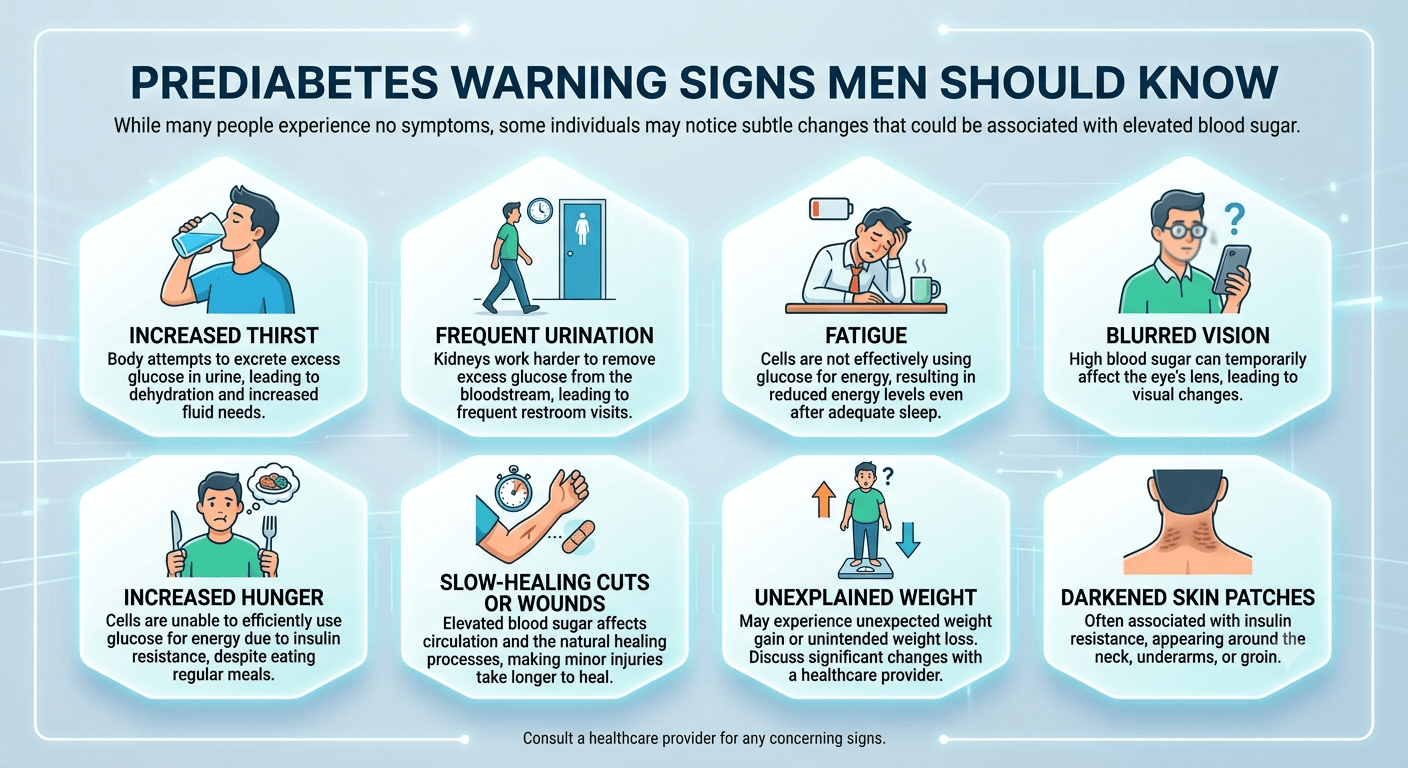
While many people experience no symptoms, some individuals may notice subtle changes that could be associated with elevated blood sugar.
Increased Thirst
One of the more common warning signs of prediabetes is increased thirst. When blood sugar levels rise, the body attempts to excrete excess glucose in the urine, which can lead to dehydration and increased fluid needs.
Frequent Urination
Frequent urination often accompanies increased thirst. As the kidneys work harder to remove excess glucose from the bloodstream, individuals may find themselves needing to urinate more often than usual.
Fatigue
Fatigue is another symptom that can develop when the body’s cells are not effectively using glucose for energy. Men with elevated blood glucose levels may notice reduced energy levels or feel tired even after getting adequate sleep.
Blurred Vision
High blood sugar can temporarily affect the eye’s lens, leading to blurred vision or other visual changes. Although these symptoms may improve when blood glucose levels are better controlled, they should still be discussed with a healthcare provider.
Increased Hunger
Some people experience increased hunger despite eating regular meals. This can occur when cells are unable to efficiently use glucose for energy due to insulin resistance.
Slow-Healing Cuts or Wounds
Elevated blood sugar may affect circulation and the body’s natural healing processes. As a result, cuts, scrapes, or other minor injuries may take longer to heal.
Unexplained Weight Changes
Some men may experience unexplained weight gain, while others may notice unintended weight loss. Significant or unexplained changes in weight should always be discussed with a healthcare provider.
Darkened Skin Patches
Darkened areas of skin, particularly around the neck, underarms, or groin, may sometimes be associated with insulin resistance. This condition, known as acanthosis nigricans, can be an early sign that blood sugar regulation is being affected.
Can You Have Prediabetes Without Symptoms?
Yes. Many people with prediabetes experience no obvious symptoms at all.
This is one reason why screening is so important. Even if you feel healthy, elevated blood sugar levels can still affect your long-term health. Routine screenings help identify concerns early and may provide an opportunity to make lifestyle changes before type 2 diabetes develops.
Regular wellness visits and conversations with a healthcare provider can help determine whether screening is appropriate based on your age, health history, and individual risk factors.
Risk Factors for Prediabetes
Certain factors can increase the likelihood of developing prediabetes.
Common risk factors include:
- Family history of diabetes
- Excess weight or obesity
- Physical inactivity or a sedentary lifestyle
- High blood pressure
- Obstructive sleep apnea
- Cigarette smoking
- Increasing age
- Metabolic syndrome
- History of gestational diabetes
Having one or more risk factors does not mean you will develop diabetes, but it may increase your risk and make routine screening more important.
When Should Men Be Screened for Prediabetes?
Screening recommendations vary depending on personal health history and risk factors. The American Diabetes Association recommends discussing diabetes screening with a healthcare provider if certain risk factors are present.
| Risk Category | Screening Considerations |
| Average-risk adults | Discuss screening during routine preventive visits |
| Overweight adults | Earlier screening may be appropriate |
| Family history of diabetes | More frequent screening may be recommended |
| High blood pressure | Increased importance of routine blood glucose monitoring |
Because every person is different, screening recommendations should be individualized based on your medical history and overall health.
Can Prediabetes Be Reversed?
In many cases, prediabetes can be improved or reversed through healthy lifestyle changes.
Strategies that may help include:
- Maintaining a healthy weight
- Eating healthy foods, including vegetables, fruits, whole grains, and lean proteins
- Limiting sugary beverages and sugary drinks
- Participating in regular physical activity
- Reducing stress
- Getting adequate sleep
- Following recommendations from your healthcare team
Even modest weight loss can improve insulin sensitivity and support healthier blood sugar levels.
How +MEDRITE Can Help
Early detection plays an important role in preventing future health complications. At +MEDRITE, our providers can help evaluate risk factors, review your medical history, and recommend appropriate screening options based on your individual needs.
Whether you need blood glucose testing, preventive care services, wellness evaluations, or follow-up recommendations, our team is here to support your health goals.
Walk-ins are welcome, and appointments are also available for added convenience.
Frequently Asked Questions
What Is the First Sign of Prediabetes?
Many people experience no symptoms. For those who do, increased thirst, frequent urination, fatigue, and blurred vision are among the more common early signs.
Can Prediabetes Go Away?
In some cases, yes. Healthy lifestyle changes such as weight management, regular exercise, and improved nutrition can help reverse prediabetes and reduce the risk of developing type 2 diabetes.
How Is Prediabetes Diagnosed?
Prediabetes is typically diagnosed through blood tests such as fasting blood sugar testing, Hemoglobin A1C testing, or an oral glucose tolerance test.
Should I Be Screened If I Feel Healthy?
Possibly. Because prediabetes often develops without symptoms, routine screening may be recommended based on age, family history, weight, and other risk factors.
Take Steps to Protect Your Long-Term Health
Prediabetes often develops quietly, making routine screening and preventive care especially important. Understanding the warning signs and recognizing your risk factors can help you take action before more serious health concerns develop.
If you have concerns about your blood sugar levels or want to learn more about your risk of prediabetes, speaking with a healthcare provider is an important first step. Early detection, healthy lifestyle habits, and regular follow-up care can support better health now and in the future.