

High blood pressure, also called hypertension, is one of the most common health conditions affecting men today. It is often referred to as a “silent killer” because many people have elevated blood pressure without experiencing obvious symptoms. In fact, some individuals may not realize they have high blood pressure until it is discovered during a routine exam or after complications develop.
While high blood pressure does not always cause noticeable symptoms, there are certain warning signs that should never be ignored. Understanding these symptoms, knowing your risk factors, and having your blood pressure checked regularly can help identify potential problems early and support long-term heart health.
What Is High Blood Pressure?
Blood pressure measures the force of blood pushing against the walls of your arteries as your heart pumps blood throughout the body. A blood pressure measurement consists of two numbers:
- Systolic blood pressure: The top number, which measures pressure when the heart contracts.
- Diastolic blood pressure: The bottom number, which measures pressure between heartbeats.
These blood pressure numbers help healthcare providers determine whether your readings fall within a normal range, indicate elevated blood pressure, or suggest hypertension.
When blood pressure remains elevated over time, it can place additional strain on the heart, blood vessels, kidneys, and other organs. Uncontrolled high blood pressure increases the risk of cardiovascular disease, heart disease, chronic kidney disease, heart failure, and other serious health problems.
Why High Blood Pressure Often Goes Undetected
One of the challenges with high blood pressure is that it often develops gradually and may not cause symptoms during the early stages. Many men feel completely healthy even when their blood pressure readings are consistently elevated.
Because symptoms may not appear until blood pressure becomes dangerously high or complications develop, routine screening plays an important role in preventive care. Regular wellness visits allow a healthcare provider to monitor blood pressure trends and identify concerns before they lead to more serious issues.
Even if you feel well, having your blood pressure checked regularly can help detect changes that might otherwise go unnoticed.
High Blood Pressure Symptoms Men Should Never Ignore
Although many people with hypertension experience no symptoms, certain warning signs may indicate that blood pressure has become significantly elevated or is contributing to other health concerns.
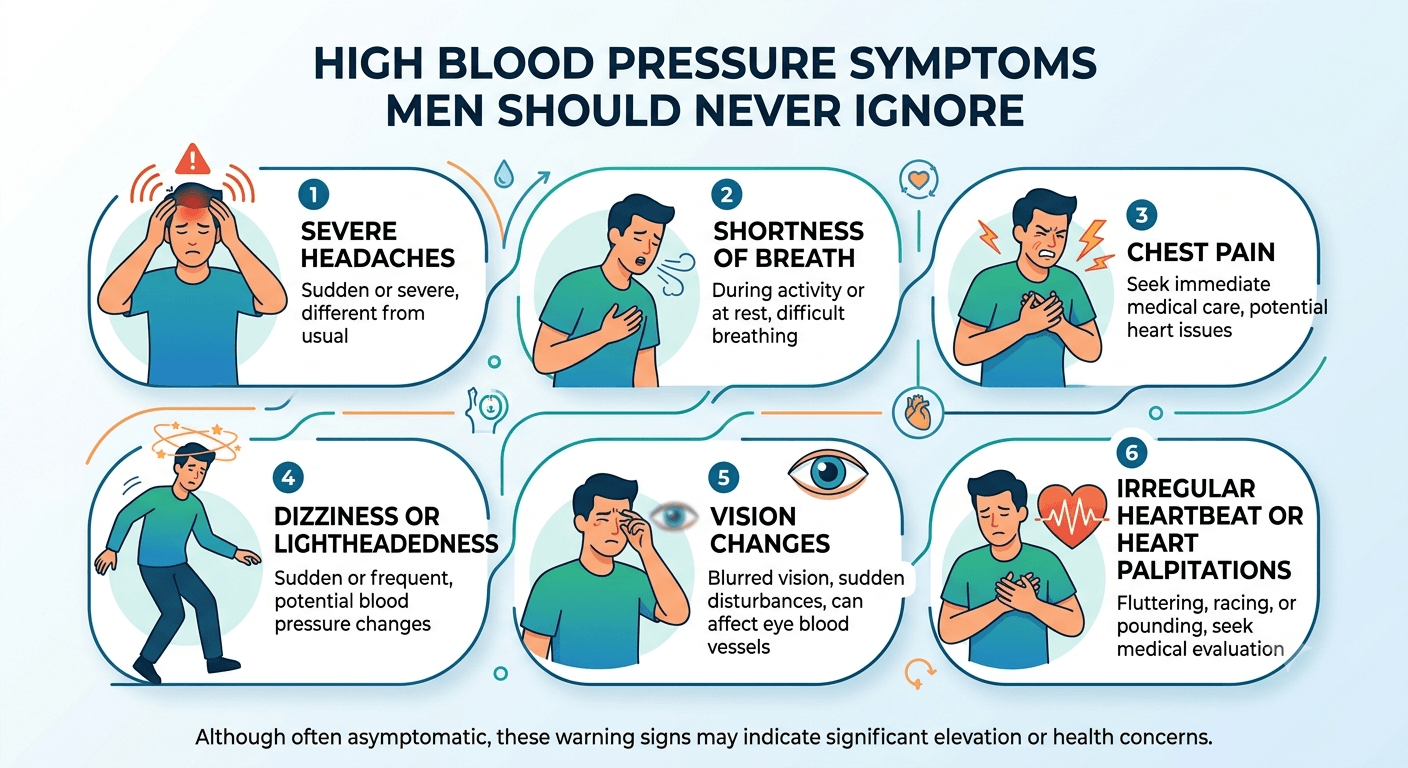
Severe Headaches
Occasional headaches are common and can occur for many reasons. However, a sudden or severe headache, especially one that feels different from your typical headaches, may warrant medical attention.
In some cases, severe hypertension can contribute to intense headaches that occur alongside other symptoms such as vision changes, dizziness, or confusion.
Shortness of Breath
Shortness of breath can occur for many reasons, but it should never be ignored. High blood pressure can affect the heart and blood vessels over time, potentially making it more difficult for the body to circulate blood efficiently.
If breathing becomes difficult, especially during normal activities or at rest, it is important to seek medical evaluation.
Chest Pain
Chest pain is a symptom that always deserves prompt attention. While chest discomfort does not automatically mean a person has high blood pressure, it can be associated with serious cardiovascular conditions that require immediate medical care.
If chest pain is severe, persistent, or accompanied by shortness of breath, dizziness, or other concerning symptoms, seek emergency care immediately.
Dizziness or Lightheadedness
Feeling dizzy or lightheaded can have many causes, including dehydration, illness, or medication side effects. However, sudden dizziness may also occur alongside blood pressure changes and other cardiovascular concerns.
If dizziness becomes frequent or occurs with additional symptoms, it is important to discuss it with a healthcare provider.
Vision Changes
Blurred vision or sudden visual disturbances can sometimes occur when blood pressure becomes very high. Over time, uncontrolled hypertension can affect the small blood vessels in the eyes, potentially leading to vision-related complications.
Any sudden vision changes or vision loss should be evaluated promptly.
Irregular Heartbeat or Heart Palpitations
Some individuals describe heart palpitations as a fluttering, racing, or pounding sensation in the chest. While palpitations are not always caused by high blood pressure, they can sometimes occur alongside cardiovascular issues that require medical evaluation.
If you experience frequent palpitations or an irregular heartbeat, consult a healthcare provider to determine the cause.
Symptoms That Require Immediate Medical Attention
Certain symptoms may indicate a hypertensive emergency or another serious medical condition requiring urgent care.
Seek emergency medical attention immediately if you experience:
- Chest pain
- Sudden shortness of breath
- Signs of a stroke, such as facial drooping or difficulty speaking
- A severe headache accompanied by confusion or neurological symptoms
- Sudden vision loss
- Symptoms associated with a sudden spike in blood pressure
Prompt treatment can help reduce the risk of serious complications and improve outcomes.
For non-life-threatening concerns such as elevated blood pressure without emergency symptoms, urgent care may be an appropriate place to receive evaluation and treatment.
Risk Factors That Increase High Blood Pressure Risk
Several factors can increase the likelihood of developing high blood pressure. While some risk factors cannot be changed, others may be managed through healthy lifestyle choices.
Common risk factors include:
- Family history of hypertension
- Excess weight or obesity
- Physical inactivity
- Smoking
- Too much alcohol consumption
- High sodium intake
- Diabetes
- Chronic kidney disease
- Obstructive sleep apnea
- Increasing age
Because diabetes and hypertension often occur together, recognizing the warning signs of prediabetes may help you seek care earlier.
Having one or more risk factors does not mean you will develop hypertension, but it may increase your likelihood of needing more frequent monitoring.
How Often Should Men Check Their Blood Pressure?
Routine blood pressure monitoring is an important part of preventive health care. General recommendations may vary based on age, medical history, and individual risk factors.
| Age Group | General Monitoring Guidance |
| 18–39 | Blood pressure is checked during routine wellness visits |
| 40–59 | More frequent monitoring based on individual risk factors |
| 60+ | Regular monitoring and ongoing follow-up care |
Blood pressure is just one part of preventive care. Knowing how often men should get a health screening can help ensure other important conditions are detected early.
Because every person is different, your healthcare provider may recommend a different screening schedule based on your medical history and overall health.
Can High Blood Pressure Be Prevented?
While not every case of hypertension can be prevented, healthy habits can help lower blood pressure and reduce overall cardiovascular risk.
Lifestyle changes that support heart health include:
- Following a healthy diet rich in fruits, vegetables, and whole grains
- Participating in regular physical activity
- Maintaining a healthy weight
- Limiting alcohol consumption
- Managing stress effectively
- Getting adequate sleep
- Attending routine preventive care visits
These habits can help prevent high blood pressure and support overall wellness.
How +MEDRITE Can Help
Routine blood pressure screening is an important part of preventive care and can help identify concerns before symptoms develop.
At +MEDRITE, our providers can evaluate blood pressure readings, assess risk factors, review your medical history, and recommend appropriate next steps. Whether you need a wellness visit, blood pressure screening, or follow-up care, our team can help support your health goals.
Walk-ins are always welcome, and appointments are also available for added convenience.
Frequently Asked Questions
Can You Have High Blood Pressure Without Symptoms?
Yes. Many people with hypertension experience no symptoms at all. This is one reason regular blood pressure screening is so important.
What Is Considered Dangerously High Blood Pressure?
A dangerously high blood pressure reading may indicate a hypertensive emergency, particularly when accompanied by symptoms such as chest pain, severe headache, vision changes, or difficulty breathing. Seek immediate medical attention if these symptoms occur.
How Often Should Men Check Their Blood Pressure?
The frequency depends on age, health history, and risk factors. Many adults benefit from having their blood pressure checked during routine healthcare visits.
Can Stress Raise Blood Pressure?
Stress can temporarily increase blood pressure and may contribute to long-term health concerns when combined with other risk factors. Managing stress is an important component of overall cardiovascular health.
Take Control of Your Heart Health
High blood pressure often develops without warning, but understanding potential symptoms and risk factors can help you stay proactive about your health. Routine screenings, healthy lifestyle habits, and regular follow-up with a healthcare provider can play an important role in preventing complications and supporting long-term wellness.
If you have concerns about your blood pressure or are due for a screening, early evaluation can provide valuable insight into your overall health. Walk-ins and appointments are available at +MEDRITE to help you take the next step toward better heart health.