
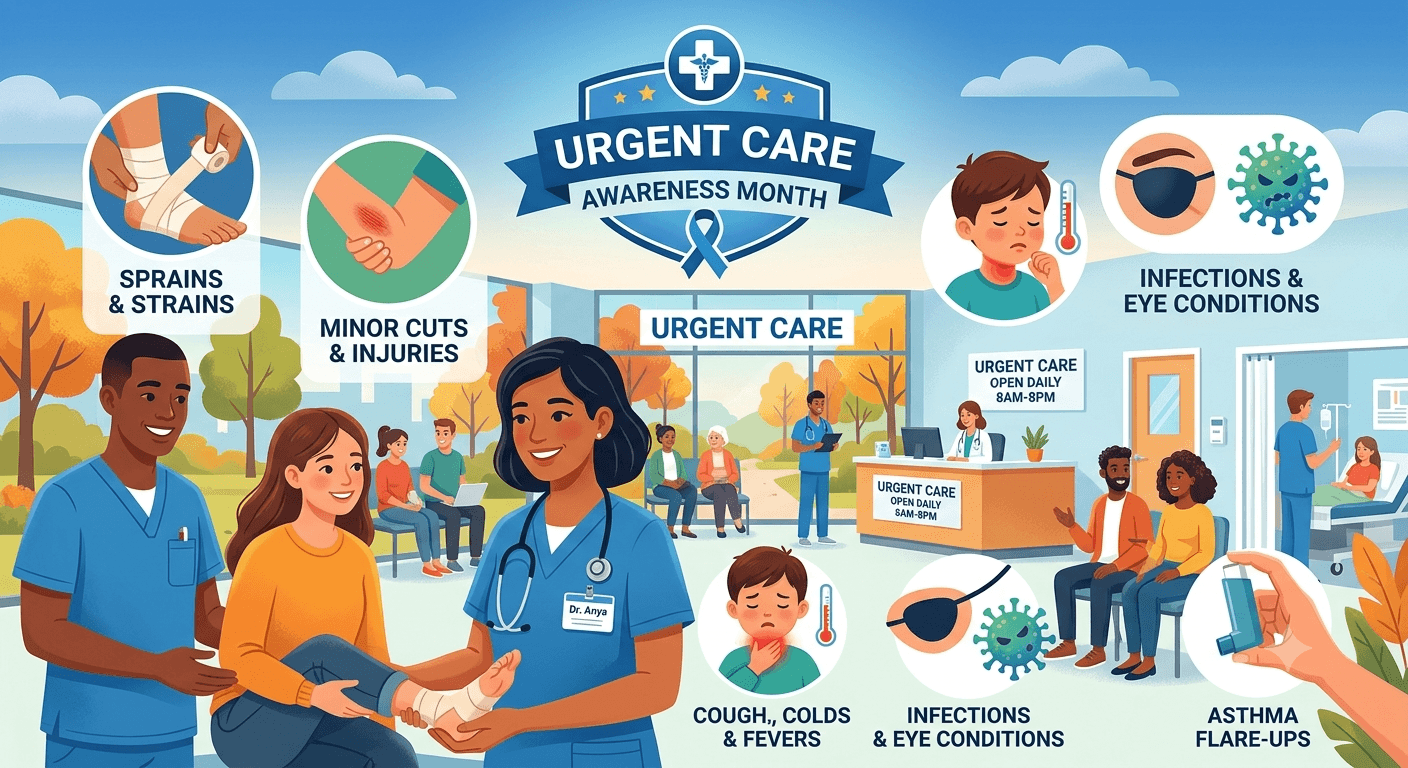
Urgent Care Awareness Month is a good reminder of the important role urgent care plays in helping patients access timely medical care for non-life-threatening illnesses and injuries. While many people are familiar with urgent care centers, there is often confusion about which conditions they treat and when a visit makes more sense than going to the emergency room.
Urgent care is designed for health concerns that require prompt attention but are not severe enough for emergency care. It helps bridge the gap between primary care and the emergency department by providing convenient access to same-day treatment, often during evenings, weekends, and other times when primary care offices may be unavailable.
For many patients, urgent care offers a practical option for unexpected illnesses, minor injuries, and other medical concerns that should not wait several days for treatment.
What Is Urgent Care Used For?
Urgent care is used for non-emergency medical conditions that still require timely attention from a healthcare provider. These clinics are designed to treat illnesses and injuries that are not life-threatening but may worsen or become more uncomfortable if care is delayed.
Urgent care centers commonly provide treatment for sudden illness, minor injuries, infections, and other health concerns that need same-day medical attention. This may include sore throats, ear infections, sinus infections, mild stomach pain, minor cuts, sprains, or sports injuries.
Urgent care also serves as a convenient option when a primary care physician is unavailable, fully booked, or closed outside of regular office hours. Many clinics offer extended hours, walk-in visits, and on-site services, allowing patients to receive care quickly without the long waits often associated with emergency rooms.
Common Conditions Treated at Urgent Care
Urgent care clinics can treat a wide range of non-life-threatening illnesses and injuries for both adults and children. Many patients visit urgent care when symptoms develop suddenly or when treatment is needed before they can see a primary care provider.
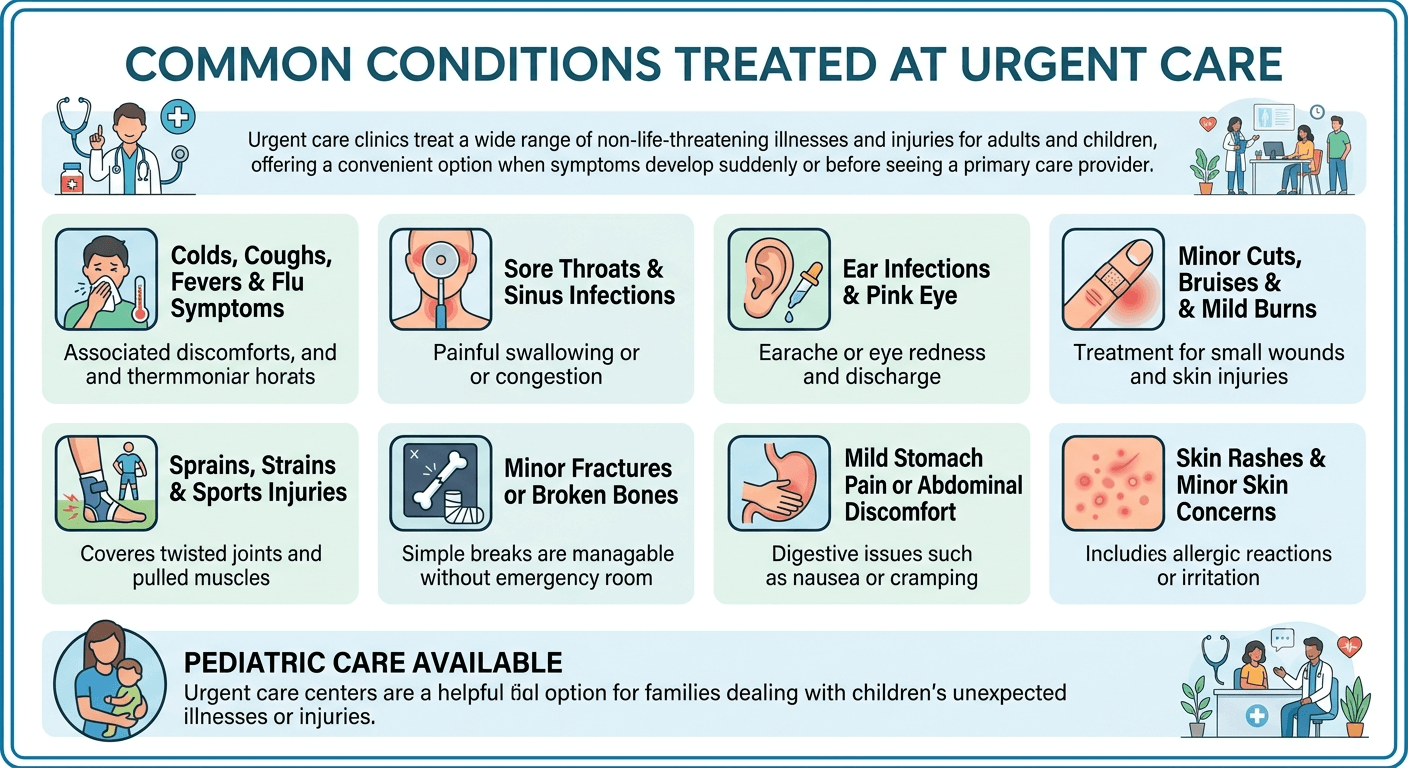
Common conditions treated at urgent care include:
- Colds, coughs, fevers, and flu symptoms
- Sore throats and sinus infections
- Ear infections and pink eye
- Minor cuts, bruises, and mild burns
- Sprains, strains, and sports injuries
- Minor fractures or broken bones
- Mild stomach pain or abdominal discomfort
- Skin rashes and other minor skin concerns
Urgent care centers can also treat many pediatric concerns, making them a helpful option for families dealing with unexpected illness or injury.
Urgent Care vs the Emergency Room: What’s the Difference?
Knowing whether to visit urgent care or the emergency room can help patients get the right care faster while avoiding unnecessary costs and wait times.
| Urgent Care | Emergency Room |
|---|---|
| Minor injuries and illnesses | Chest pain |
| Ear infections and sore throats | Difficulty breathing |
| Mild stomach pain | Stroke symptoms |
| Sprains and sports injuries | Severe trauma |
| X-rays and basic testing | Life-threatening emergencies |
| Shorter wait times | Conditions requiring hospitalization |
| Lower costs for many conditions | Severe allergic reactions |
Urgent care is intended for non-life-threatening conditions that still require prompt medical attention. Emergency rooms are equipped to manage severe or potentially life-threatening emergencies that may require advanced treatment or hospitalization.
Patients experiencing chest pain, severe bleeding, loss of consciousness, severe allergic reactions, stroke symptoms, or serious head injuries should seek emergency care immediately.
What Services Does Urgent Care Offer?
Many urgent care centers provide more than treatment for common illnesses. They also offer diagnostic and preventive medical services that help patients receive care quickly in one convenient location.
Services commonly available at urgent care include:
- X-rays for injuries and suspected fractures
- Basic lab testing
- Physical exams and wellness screenings
- Prescription medications and treatment plans
- Minor wound care and stitches
- STD testing and treatment
- Pediatric urgent care services
Having access to these services during a single urgent care visit can simplify treatment and reduce the need for multiple appointments. For many patients, this makes urgent care a convenient option when primary care offices are unavailable or closed.
Why Many Patients Choose Urgent Care
Urgent care has become an increasingly popular healthcare option because of its convenience and accessibility. Many clinics offer extended hours in the evenings and on weekends, helping patients receive medical attention outside traditional office hours.
For many families and working adults, urgent care provides a practical solution when unexpected symptoms or injuries occur and waiting for a primary care appointment is not realistic. Walk-in availability and same-day care also help patients address concerns more quickly, often with shorter wait times and lower costs than an emergency room visit for non-emergency conditions.
When Urgent Care May Not Be the Right Choice
While urgent care is appropriate for many illnesses and injuries, there are situations where emergency care is necessary. Patients experiencing severe or life-threatening symptoms should go directly to the emergency room or call emergency services.
This includes:
- Chest pain or pressure
- Severe difficulty breathing
- Stroke symptoms
- Major trauma or severe bleeding
- Loss of consciousness
- Severe allergic reactions
- Serious head injuries
Urgent care is designed to treat non-life-threatening conditions that require prompt medical attention, but emergency rooms remain the safest option for serious medical emergencies.
Get Convenient Medical Care with +MEDRITE Urgent Care
Whether you’re dealing with a sudden illness, minor injury, or need same-day medical attention, +MEDRITE Urgent Care is here to help. Our urgent care centers provide convenient access to treatment for many non-emergency conditions, including illnesses, injuries, physical exams, X-rays, lab testing, and more.
With extended hours, walk-in visits, and appointments available for added convenience, +MEDRITE makes it easier to get the care you need when you need it.