
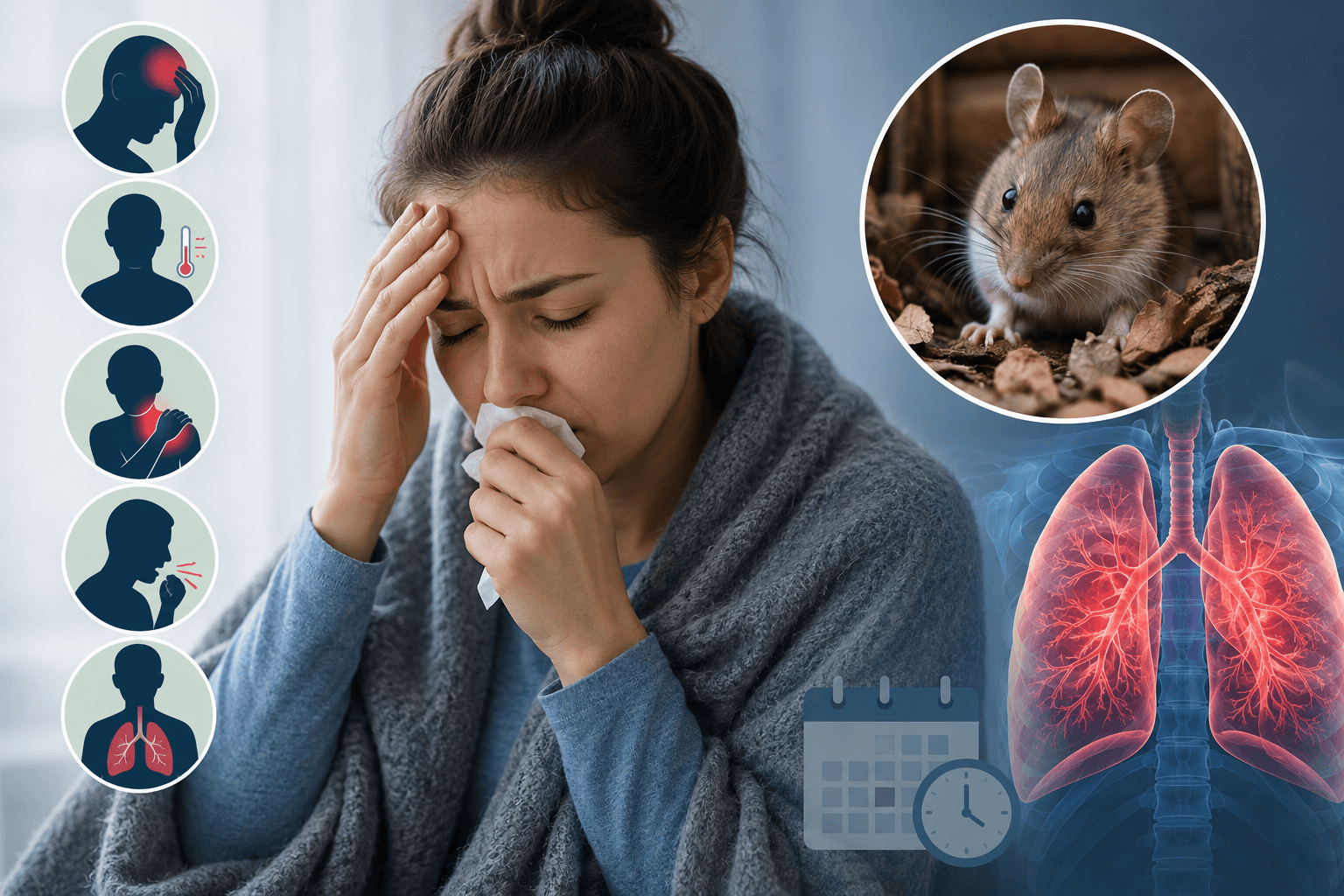
Hantavirus is a rare but serious viral infection that can affect the lungs if not recognized early. While cases are uncommon, understanding hantavirus symptoms can help you take the right steps if you’ve had potential rodent exposure.
Most people will never encounter hantavirus, but for those at risk, such as those who clean areas with rodere.
What Is Hantavirus?
Hantavirus is caused by a virus carried by certain wild rodents, most commonly the deer mouse in North America. Other rodents, such as the white-footed mouse and cotton rat, can also carry different strains.
The virus is typically spread through contact with:
- Rodent droppings or urinent activity, being aware of the symptoms can make a meaningful difference. This guide walks through how symptoms develop and when it’s important to seek ca
- Dust contaminated with rodent waste
- Surfaces or materials that have been exposed
In most cases, infection occurs when these particles become airborne and are inhaled, especially in enclosed spaces like sheds, garages, or cabins. Person-to-person spread is extremely rare in the United States.
How Do People Get Hantavirus?
Hantavirus exposure is usually linked to environments where rodents have been present. This doesn’t mean someone is doing anything unsafe; it often happens during everyday activities like cleaning or organizing.
Situations that may increase risk include:
- Cleaning areas with visible rodent infestation
- Disturbing rodent nests or droppings
- Working in enclosed or poorly ventilated spaces
- Handling items exposed to contaminated dust
Taking simple precautions can significantly reduce this risk, which we’ll cover below.
Hantavirus Symptoms Timeline
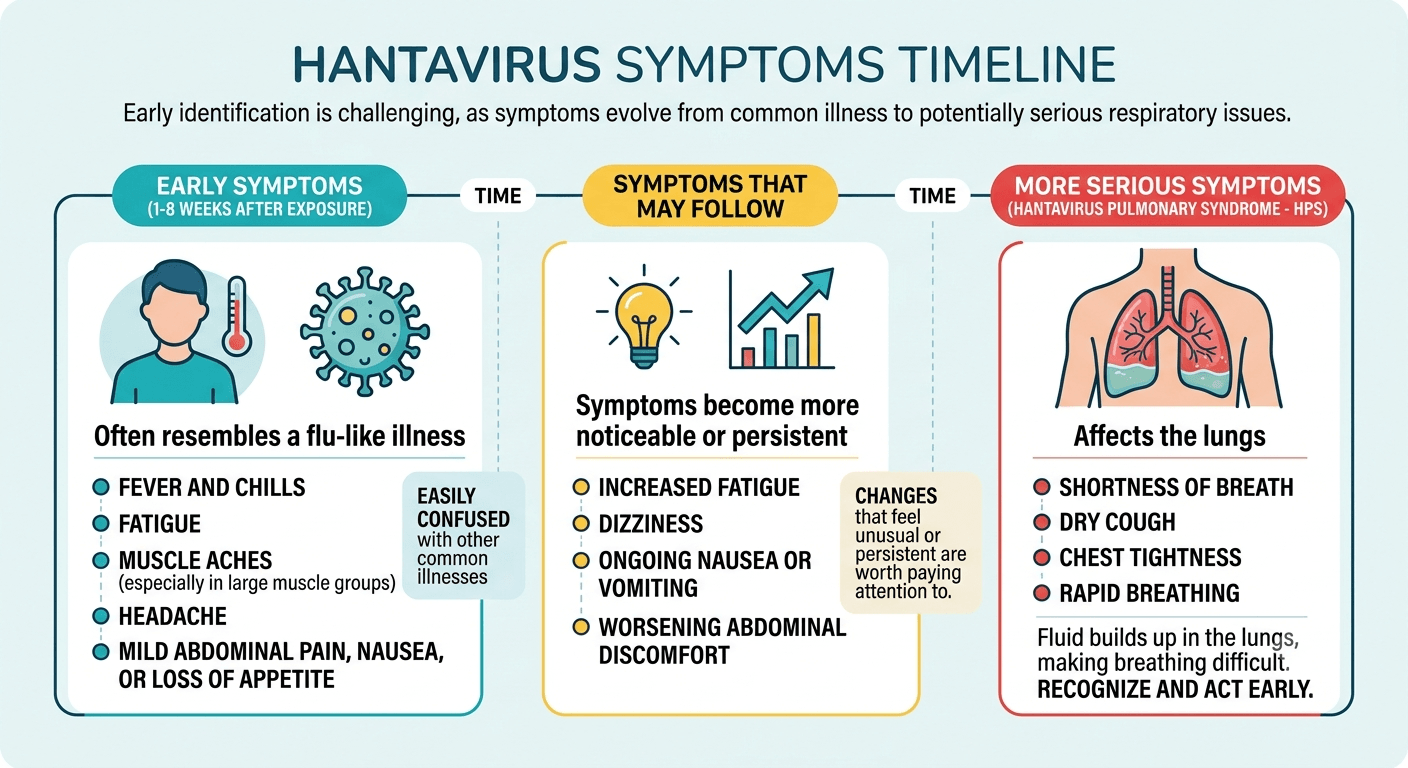
One of the challenges with hantavirus is that early symptoms can be similar to those of a common illness. The infection generally develops in stages, beginning with mild symptoms before potentially becoming more serious.
Early Symptoms
Symptoms typically appear 1 to 8 weeks after exposure and often resemble a flu-like illness. This early stage is sometimes called the initial phase.
Common early symptoms include:
- Fever and chills
- Fatigue
- Muscle aches, especially in large muscle groups
- Headache
- Mild abdominal pain, nausea, or loss of appetite
Because these symptoms are easily confused with other common illnesses, many people may not immediately connect them to hantavirus.
Early hantavirus symptoms can resemble other viral illnesses currently circulating, it’s important to consider both your symptoms and any recent rodent exposure. Early hantavirus symptoms can also resemble COVID-19, making it important to consider recent exposure history in addition to your symptoms.
Symptoms That May Follow
As the illness progresses, some people notice that symptoms become more noticeable or persistent. This stage can still feel similar to a viral illness, but may include:
- Increased fatigue
- Dizziness
- Ongoing nausea or vomiting
- Worsening abdominal discomfort
Not everyone will experience all symptoms, but changes that feel unusual or persistent are worth paying attention to.
More Serious Symptoms (Hantavirus Pulmonary Syndrome)
In some cases, hantavirus can develop into hantavirus pulmonary syndrome (HPS), which affects the lungs.
Symptoms at this stage may include:
- Shortness of breath
- Dry cough
- Chest tightness
- Rapid breathing
These symptoms occur as fluid builds up in the lungs, making breathing more difficult. While this stage is less common, it’s important to recognize and act on these symptoms early.
When to Seek Medical Care
If you’ve had possible exposure to rodent-contaminated areas and develop symptoms, it’s a good idea to check in with a healthcare provider.
You may want to seek care if you notice:
- Flu-like symptoms that don’t improve
- Unusual fatigue or muscle aches
- Symptoms after cleaning or being in areas with rodent activity
Seek immediate medical attention if you experience:
- Trouble breathing
- Chest pain or tightness
- Rapid worsening of symptoms
Early evaluation helps ensure you get the right care, even if symptoms turn out to be something more common.
How Is Hantavirus Treated?
There is no specific antiviral treatment for hantavirus, but medical care can help manage symptoms and support recovery.
Treatment typically focuses on:
- Monitoring symptoms
- Supporting breathing if needed
- Providing care in a hospital setting for more severe cases
With early care, many people recover, and healthcare providers can guide the best course of action based on symptoms.
How to Prevent Hantavirus
Prevention focuses on reducing contact with rodents and contaminated areas. Small steps can go a long way in lowering risk.
To help protect yourself:
- Avoid sweeping or vacuuming rodent droppings
- Use disinfectant before cleaning affected areas
- Wear rubber or plastic gloves when handling materials
- Wash your hands thoroughly after cleanup
- Seal gaps in your home to reduce rodent entry
These steps are especially important when cleaning enclosed spaces like garages, sheds, or cabins.
Who May Be at Higher Risk?
Hantavirus is more commonly reported in rural areas, particularly in regions west of the Mississippi River, where rodent populations may be higher.
People who may have increased exposure include those who:
- Clean or maintain storage spaces
- Work outdoors or in construction
- Spend time in areas with known rodent activity
Again, the overall risk remains low, but awareness helps you take appropriate precautions.
How +MEDRITE Urgent Care Can Help
If you’re experiencing symptoms or have concerns about possible exposure, +MEDRITE Urgent Care can help evaluate your condition and guide next steps.
Our providers can:
- Assess symptoms and possible exposure
- Help rule out other common illnesses
- Provide guidance on monitoring and follow-up care
Walk-ins and appointments are available, so you can get evaluated in a way that works best for your schedule.
Urgent care can evaluate many non-life-threatening illnesses, help determine possible causes of your symptoms, and recommend the next steps if additional care is needed.
Final Thoughts
Hantavirus is uncommon, but being aware of the symptoms can help you respond appropriately if needed. Because early symptoms often resemble a common illness, it’s helpful to pay attention to how you’re feeling, especially after potential exposure to rodent droppings or contaminated spaces.
If something doesn’t feel right, checking in with a healthcare provider is a simple step that can provide clarity and peace of mind.