

Commercial drivers are required to meet certain medical standards to safely operate commercial motor vehicles (CMVs). A DOT physical helps determine whether a driver is physically, mentally, and emotionally fit to perform the demands of commercial driving while remaining compliant with Federal Motor Carrier Safety Administration (FMCSA) regulations.
DOT physical requirements depend on the type of commercial vehicle being operated, whether driving occurs across state lines, and the type of cargo or passengers being transported. For many commercial drivers, maintaining a valid medical examiner’s certificate, commonly called a DOT medical card, is an important part of staying compliant and remaining safe on the road.
Understanding what the exam includes, who needs one, and how medical certification works can help drivers stay prepared and avoid unnecessary delays.
What Is a DOT Physical?
A DOT physical is a medical examination required for many drivers who operate commercial motor vehicles. The purpose of the exam is to evaluate a driver’s overall health and determine whether they can safely handle the physical and mental demands of commercial driving.
The Federal Motor Carrier Safety Administration (FMCSA) requires these exams to be completed by certified medical examiners listed on the FMCSA National Registry. After successfully completing the examination, drivers receive a medical examiner’s certificate, also referred to as a DOT medical card.
The evaluation helps identify medical conditions that could affect driving safety, including high blood pressure, sleep apnea, hearing concerns, vision impairment, or other health conditions that may interfere with alertness or reaction time behind the wheel.
In most cases, medical certification is valid for up to 24 months. However, some drivers may require shorter certification periods depending on their medical history or ongoing health conditions.
If you’re preparing for your first exam, learn what to expect during a DOT physical.
Who Needs a DOT Physical?
DOT physical requirements apply to many drivers operating commercial motor vehicles in interstate commerce or transporting certain passengers or materials.
Drivers typically need medical certification if they:
- Operate a commercial motor vehicle with a gross vehicle weight rating or gross combination weight rating over 10,000 pounds
- Transport hazardous materials that require placarding
- Drive a motor vehicle designed to transport more than 15 passengers
- Operate commercial vehicles across state lines
- Hold a commercial driver’s license (CDL) for regulated commercial driving activities
These federal regulations are designed to help ensure commercial drivers can safely operate large vehicles in changing traffic and road conditions. Because CMV drivers are considered safety-sensitive employees, maintaining current medical certification is an important part of commercial driving compliance.
Drivers who are unsure whether they need certification should review FMCSA requirements or speak with their employer or healthcare provider.
What Happens During a DOT Physical Exam?
A DOT examination evaluates a driver’s ability to safely operate a commercial motor vehicle. During the exam, a certified medical examiner reviews medical history, checks vital signs, and performs a hands-on physical examination.
The examination typically includes:
- Review of medical history and current medications
- Blood pressure measurement
- Vision test and vision evaluation report, if needed
- Hearing test, including the forced whisper test in some situations
- Urinalysis to check for underlying health concerns
- Physical examination of the throat, heart, lungs, abdomen, reflexes, and general appearance
Drivers who wear contact lenses or corrective lenses should bring them to the appointment. Drivers who use hearing aids should also wear them during the hearing evaluation.
The medical examiner may also ask questions about medical conditions, prior surgeries, medications, sleep patterns, or ongoing treatment plans. In some situations, drivers may need to provide additional medical records or specialist documentation before certification can be completed.
It’s also important to understand the difference between a DOT drug test and a non-DOT drug test, as the physical examination itself does not include federally required drug testing.
The goal of the examination is to help ensure drivers can continue operating commercial vehicles safely while meeting FMCSA medical standards.
Common Health Conditions That May Affect DOT Certification
Certain health conditions may affect whether a driver qualifies for medical certification or how long the certification remains valid. In some cases, drivers may still qualify after additional evaluation, treatment, or follow-up care.
Medical examiners commonly review conditions that could interfere with safe driving performance or increase the risk of medical emergencies while operating a commercial vehicle.
Conditions that may require additional evaluation include:
- Uncontrolled high blood pressure
- Untreated sleep apnea
- Certain heart conditions
- Severe vision impairment
- Hearing loss that affects communication or awareness
- Use of narcotic medications or benzodiazepines
Sleep apnea is one of the more common concerns during certification exams because untreated sleep apnea can significantly affect alertness and reaction time. Drivers with high blood pressure may also receive shorter certification periods until their condition is better controlled. Some employers may also require DOT breath alcohol testing as part of federally regulated workplace testing programs.
In many situations, drivers can continue to qualify if their health conditions are properly managed and monitored by a healthcare provider. Bringing updated medical records and treatment documentation to the appointment can help simplify the process.
How Long Is a DOT Medical Card Valid?
A DOT medical card is generally valid for up to 24 months, commonly referred to as a two-year certificate. However, some drivers may receive shorter certification periods depending on their overall health or specific medical conditions.
Medical examiners may require more frequent follow-up exams for drivers with conditions such as high blood pressure, diabetes, sleep apnea, or other concerns requiring ongoing monitoring. Drivers are responsible for renewing their medical certification before the certificate expires.
Keeping a current DOT medical card is essential for maintaining commercial driving privileges and remaining compliant with FMCSA regulations.
How to Prepare for Your DOT Physical Appointment
Preparing in advance can help the appointment process go more smoothly and reduce delays during certification.
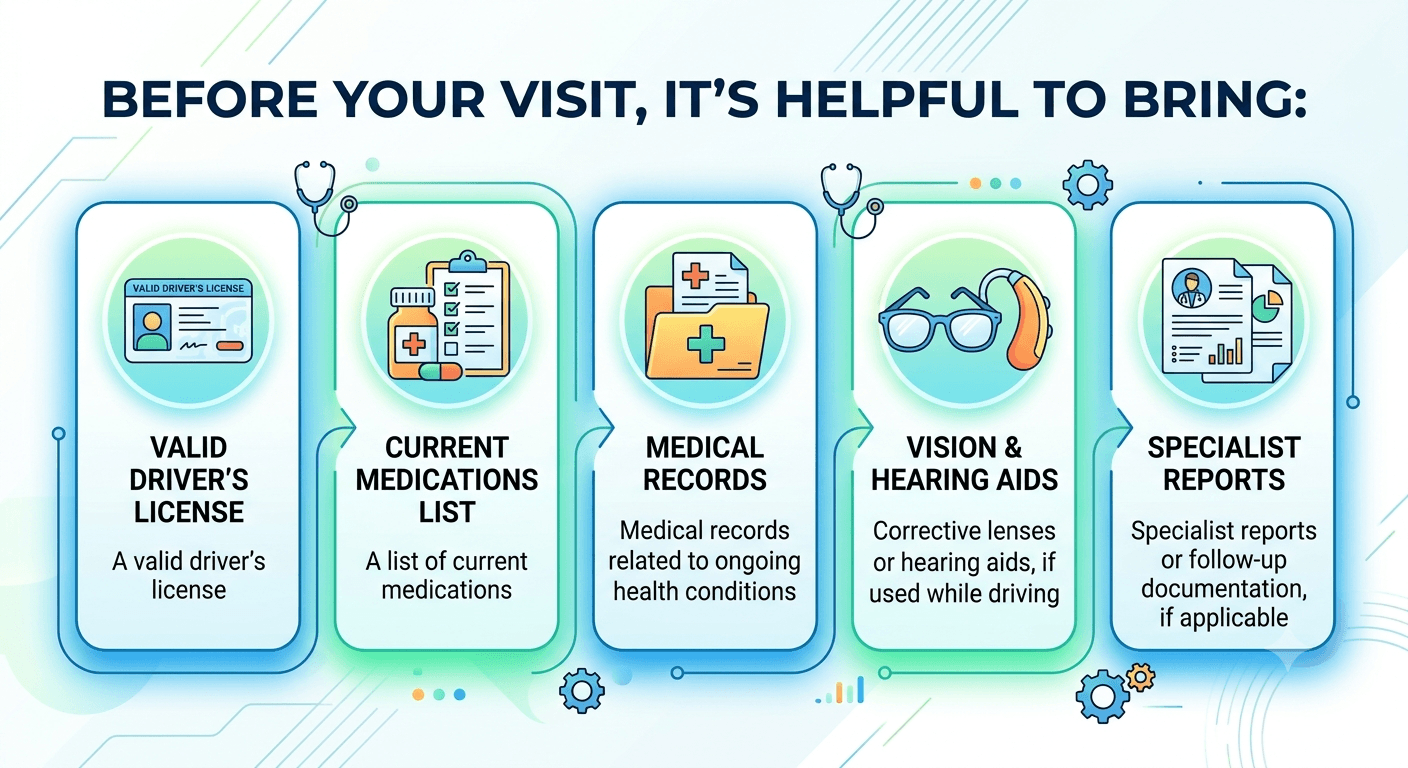
Before your visit, it’s helpful to bring:
- A valid driver’s license
- A list of current medications
- Medical records related to ongoing health conditions
- Corrective lenses or hearing aids, if used while driving
- Specialist reports or follow-up documentation, if applicable
Drivers with high blood pressure or sleep apnea should also bring documentation showing treatment compliance or recent medical evaluations when available.
Getting enough rest before the appointment and continuing prescribed medications as directed can also help support a smoother evaluation process.
Schedule a DOT Physical at +MEDRITE Urgent Care
+MEDRITE Urgent Care offers DOT exams performed by certified medical examiners in accordance with FMCSA guidelines. Whether you need a new medical certificate or renewal certification, our team helps commercial drivers complete the process efficiently and conveniently. +MEDRITE also provides workplace drug screening services for employers and employees who need pre-employment, random, or return-to-duty testing.
Employers can also rely on +MEDRITE for evaluation and treatment of workplace injuries to help employees receive timely care and return to work safely. With extended hours, walk-in visits, and appointments available for added convenience, +MEDRITE helps make the certification process more efficient and accessible for busy drivers.