

Workplace injuries can happen in almost any job setting, from offices and warehouses to construction sites and retail environments. Whether the injury is caused by lifting heavy objects, repetitive movements, slips and falls, or equipment accidents, getting prompt medical treatment is important for both recovery and workers’ compensation documentation.
Urgent care centers can provide fast access to treatment for many non-life-threatening workplace injuries without the long wait times often associated with emergency rooms. Many facilities also offer extended hours, walk-in care, diagnostic testing, and occupational medicine services that help injured workers begin treatment quickly.
Understanding when urgent care may be appropriate for a work-related injury and when emergency medical attention is necessary can help employees protect their health, recovery process, and workers’ compensation claims.
What Types of Workplace Injuries Can Urgent Care Treat?
Urgent care centers are equipped to evaluate and treat many common workplace injuries that require prompt medical attention but are not considered life-threatening emergencies.
Common work injuries treated at urgent care may include:
- Sprains and strains
- Back injuries from lifting heavy objects
- Minor fractures or broken bones
- Cuts requiring proper wound care
- Burns and minor chemical exposure
- Repetitive strain injuries and repetitive motion injuries
- Eye injuries involving irritation or foreign objects
- Carpal tunnel syndrome symptoms
- Dislocated joints
- Bruising and soft tissue injuries
Many urgent care facilities also provide on-site X-rays, wound care, pain management, and other diagnostic services that support workplace injury care and ongoing recovery.
Prompt treatment can help prevent complications such as infection, worsening pain, reduced mobility, or prolonged recovery time.
When Should You Go to Urgent Care Instead of the Emergency Room?
Urgent care is often appropriate for non-life-threatening injuries that still need immediate evaluation and treatment. In many situations, injured employees can receive expert care more quickly and at a lower cost than visiting an emergency room.
Urgent care may be appropriate for:
- Moderate sprains or strains
- Minor fractures
- Cuts that may require stitches
- Back pain after lifting or repetitive motions
- Mild burns
- Eye irritation or foreign objects
- Workplace injuries causing pain or swelling without severe bleeding
Emergency rooms should still be used for serious or life-threatening injuries requiring emergency medical care.
Seek emergency care immediately for:
- Heavy bleeding
- Head trauma with loss of consciousness
- Chest pain
- Severe burns
- Compound fractures
- Serious eye trauma
- Difficulty breathing
Choosing the right level of care can help injured workers receive timely treatment while helping employers and insurance providers manage workers’ compensation cases more efficiently.
What to Do After a Workplace Injury
After a workplace injury occurs, taking the right steps early can help support both medical care and workers’ compensation claims.
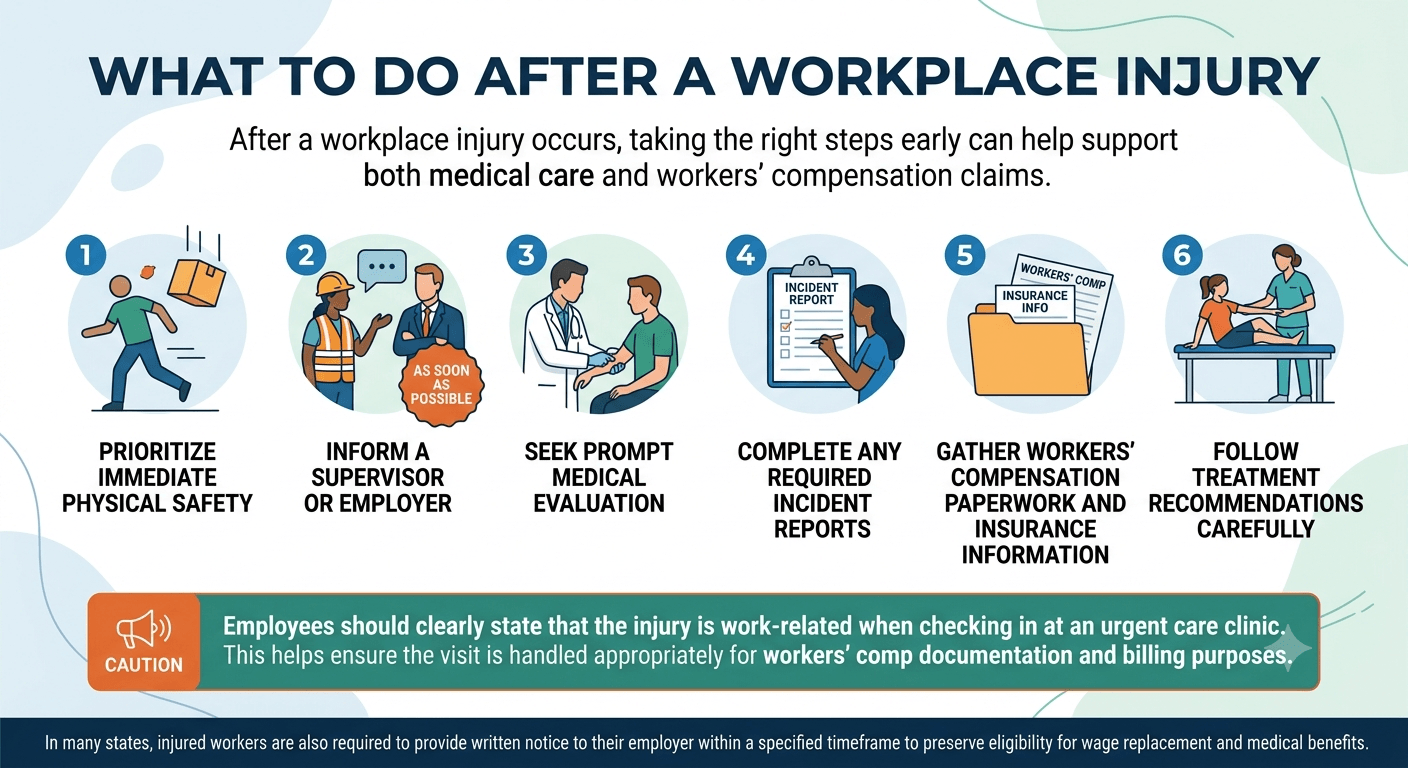
Important steps may include:
- Prioritize immediate physical safety
- Inform a supervisor or employer as soon as possible
- Seek prompt medical evaluation
- Complete any required incident reports
- Gather workers’ compensation paperwork and insurance information
- Follow treatment recommendations carefully
Employees should clearly state that the injury is work-related when checking in at an urgent care clinic. This helps ensure the visit is handled appropriately for workers’ comp documentation and billing purposes.
In many states, injured workers are also required to provide written notice to their employer within a specified timeframe to preserve eligibility for wage replacement and medical benefits.
What Happens During a Workplace Injury Visit?
During a workplace injury visit, medical professionals evaluate the injury, provide treatment, document findings, and help determine whether additional care or work restrictions may be necessary.
Depending on the injury, treatment may include:
- Physical examination
- Diagnostic testing, such as X-rays
- Wound care and infection prevention
- Splinting or stabilization
- Pain management recommendations
- Referrals for physical therapy or specialist care
Medical records created during the visit are important because they help establish a connection between the injury and the employee’s job duties, which may support workers’ compensation claims and ongoing care.
In many cases, injured employees may also receive work status documentation outlining whether they can return to full duty, require accommodations, or need temporary work restrictions during recovery.
How Workers’ Compensation and Urgent Care Work Together
Workers’ compensation is a state-regulated insurance program that provides medical benefits and wage replacement for employees injured while performing job duties.
Workers’ compensation may cover:
- Urgent care visits
- Medical treatment
- Diagnostic testing
- Physical therapy
- Ongoing care related to the injury
- Wage replacement for missed work time
Requirements and procedures vary by state, employer, and insurance provider. Some states or employers may require injured workers to visit authorized occupational medicine providers for treatment.
Employees should avoid using personal health insurance or paying out-of-pocket for work-related injuries unless specifically instructed to do so by their employer or insurance company.
Why Prompt Treatment Matters for Workplace Injuries
Delaying medical treatment after a workplace injury can sometimes lead to worsening symptoms, prolonged recovery, or complications that may affect long-term health and job performance.
Prompt treatment can help:
- Reduce pain and swelling
- Prevent infection
- Identify fractures or more serious injuries early
- Support faster recovery
- Create important medical documentation for workers’ comp claims
Even injuries that initially seem minor can worsen over time if left untreated. Early evaluation also helps injured workers better understand treatment plans, recovery expectations, and any temporary work restrictions that may be needed.
Workplace Injury Care at +MEDRITE Urgent Care
+MEDRITE Urgent Care provides treatment for many non-life-threatening workplace injuries, including sprains, strains, cuts, burns, back injuries, and other common job-related injuries.
With on-site X-rays, extended hours, walk-in care, and appointment availability, +MEDRITE helps injured employees access prompt medical care and workplace injury documentation when they need it most.