
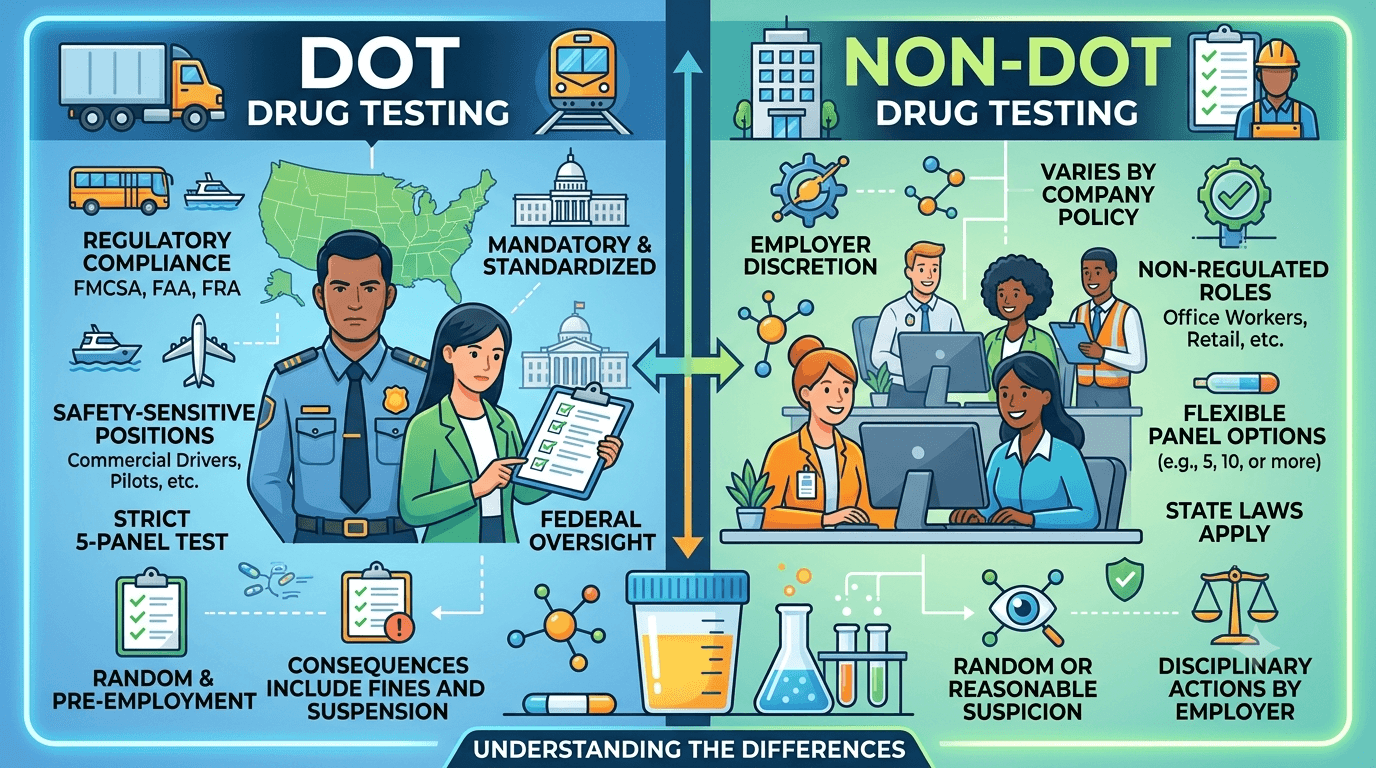
Drug testing programs are commonly used by employers to support workplace safety, regulatory compliance, and drug-free workplace policies. However, not all workplace drug testing follows the same rules. One of the biggest distinctions employers and employees may encounter is between DOT and non-DOT drug testing.
DOT drug testing is federally regulated and required for employees in safety-sensitive positions within the transportation industry. Non-DOT drug testing, on the other hand, is generally managed according to company policy and state laws, giving employers greater flexibility in structuring testing programs.
Understanding the key differences between DOT and non-DOT testing can help employees better understand testing procedures, employer expectations, and how workplace drug and alcohol testing programs operate.
What Is DOT Drug Testing?
DOT drug testing refers to workplace drug and alcohol testing programs regulated by the Department of Transportation (DOT) under strict federal guidelines.
DOT testing applies to employees performing safety-sensitive duties in industries regulated by DOT agencies, including:
- Commercial motor vehicle drivers
- Aviation employees regulated by the Federal Aviation Administration
- Railroad workers
- Pipeline employees
- Transit and public transportation workers
Because these positions directly affect public safety, DOT regulations require strict testing procedures, collection guidelines, documentation standards, and return-to-duty protocols.
DOT drug testing programs are designed to help ensure employees operating commercial motor vehicles and performing other safety-sensitive responsibilities can safely perform their duties without impairment from drug or alcohol use.
Drivers who require DOT medical certification can also benefit from knowing what to expect during a DOT physical before their appointment.
What Is Non-DOT Drug Testing?
Non-DOT drug testing refers to workplace drug testing programs that are not regulated by federal DOT rules. These programs are typically established by employers in accordance with company policy, workplace safety goals, industry standards, and applicable state laws.
Non-DOT testing is common in industries such as:
- Healthcare systems and hospitals
- Construction
- Manufacturing
- Hospitality
- Corporate offices
- Retail and warehouse environments
Unlike DOT testing, non-DOT drug testing offers employers greater flexibility regarding:
- Which substances are tested
- Testing methods used
- Frequency of testing
- Consequences of positive results
- Return-to-work policies
Employers may use non-DOT testing as part of broader drug-free workplace programs or company safety initiatives.
Key Differences Between DOT and Non-DOT Drug Testing
While both testing programs aim to support workplace safety, there are important differences in how they are regulated and performed.
DOT Drug Testing
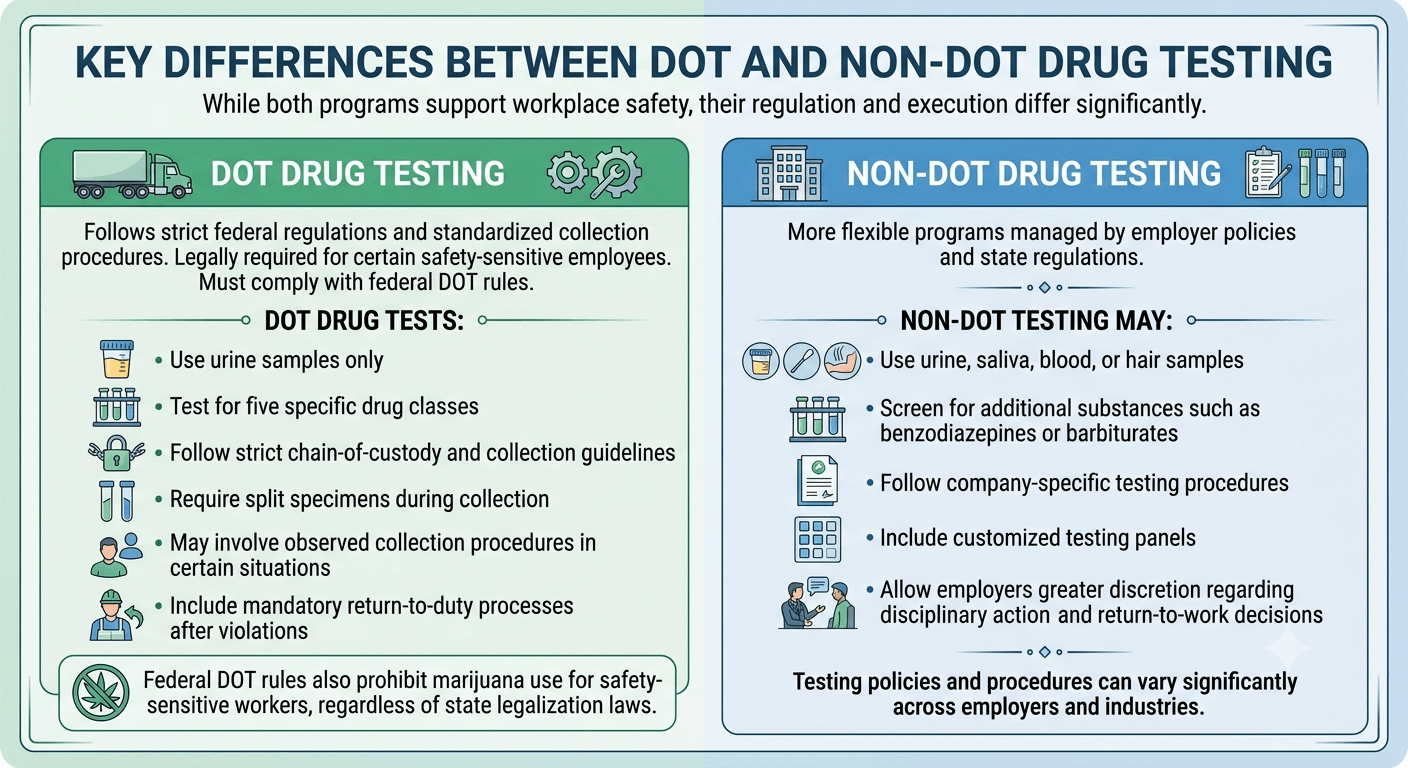
DOT testing follows strict federal regulations and standardized collection procedures. These programs are legally required for certain safety-sensitive employees and must comply with federal DOT rules.
DOT drug tests:
- Use urine samples only
- Test for five specific drug classes
- Follow strict chain-of-custody and collection guidelines
- Require split specimens during collection
- May involve observed collection procedures in certain situations
- Include mandatory return-to-duty processes after violations
Federal DOT rules also prohibit marijuana use for safety-sensitive workers, regardless of state legalization laws.
Non-DOT Drug Testing
Non-DOT testing programs are more flexible and are managed in accordance with employer policies and state regulations.
Non-DOT testing may:
- Use urine, saliva, blood, or hair samples
- Screen for additional substances such as benzodiazepines or barbiturates
- Follow company-specific testing procedures
- Include customized testing panels
- Allow employers greater discretion regarding disciplinary action and return-to-work decisions
Testing policies and procedures can vary significantly across employers and industries.
What Substances Are Tested in DOT Drug Testing?
DOT drug testing screens for five federally regulated drug classes:
- Amphetamines
- Cocaine
- Marijuana
- Opioids
- Phencyclidine (PCP)
These substances are tested using federally approved urine testing procedures under DOT regulations.
Non-DOT testing programs may include additional substances depending on employer needs or workplace safety concerns.
When Are DOT and Non-DOT Drug Tests Performed?
Both DOT and non-DOT testing programs may include several types of workplace drug testing situations.
Testing may occur:
- Before employment
- During random testing programs
- After workplace accidents
- Under reasonable suspicion testing
- During return-to-duty processes
- As part of follow-up testing programs
However, DOT employers are required to follow federally mandated testing rates and procedures, particularly for random testing and return-to-duty testing after violations.
Non-DOT employers generally have greater authority to create testing schedules and policies tailored to their needs.
What Happens After a Positive Drug Test Result?
The consequences of a failed drug test differ significantly between DOT and non-DOT testing programs.
For DOT-regulated employees:
- A positive test result or refusal to test requires immediate removal from safety-sensitive duties
- Employees must complete an evaluation by a qualified Substance Abuse Professional (SAP)
- Return-to-duty testing and follow-up testing are required before returning to work
DOT return-to-duty programs involve strict documentation requirements, counseling, and ongoing testing protocols under federal regulations.
For non-DOT testing, employer responses may vary according to company policy. Some employers may terminate employment immediately, while others may offer treatment programs, second-chance agreements, or return-to-work opportunities after rehabilitation.
Why Understanding the Difference Matters
Understanding whether a workplace drug testing program is DOT or non-DOT regulated can help employees better understand:
- Their testing responsibilities
- Workplace safety requirements
- Employer expectations
- Testing procedures
- Return-to-work processes
- Applicable federal regulations and state laws
For employers, maintaining compliant testing programs is important for workplace and public safety and for avoiding regulatory penalties.
DOT and Non-DOT Drug Testing at +MEDRITE Urgent Care
+MEDRITE Urgent Care provides DOT- and non-DOT-compliant drug testing services for employers, commercial drivers, safety-sensitive employees, and occupational health programs.
With professional testing services, extended hours, walk-in care, and appointment availability, +MEDRITE helps employers and employees access reliable workplace drug and alcohol testing while supporting workplace safety and regulatory compliance.
Related Resource: Learn how urgent care can help evaluate and treat workplace injuries.