
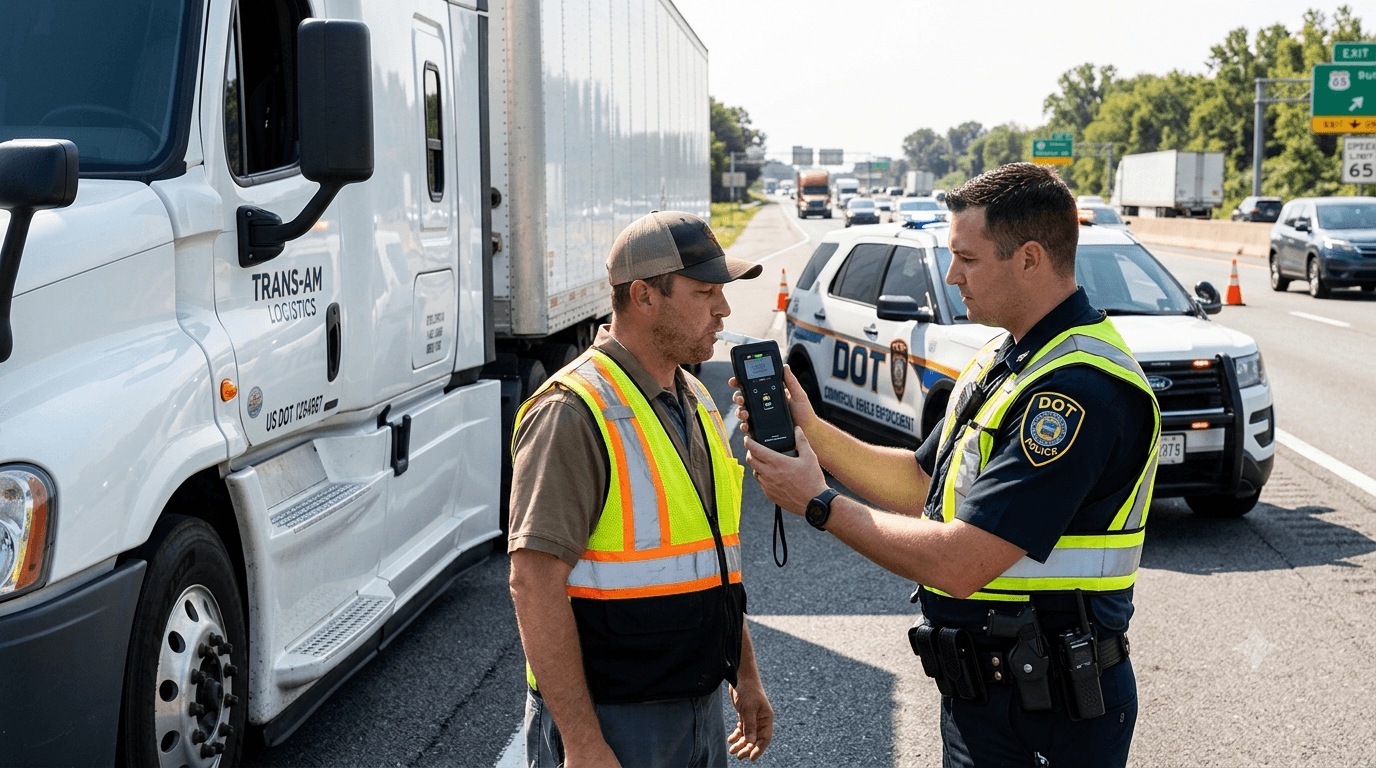
Breath alcohol testing is an important part of many workplace safety and compliance programs, particularly in transportation industries regulated by the Department of Transportation (DOT). For commercial drivers and other employees performing safety-sensitive duties, alcohol testing helps reduce the risk of workplace accidents and supports public safety.
DOT breath alcohol testing follows strict federal regulations designed to ensure accurate results, consistent testing procedures, and fair handling of employees throughout the testing process. Understanding how breath alcohol testing works, when testing may be required, and what employees should expect can help make the process feel more straightforward and less stressful.
Whether testing occurs as part of a random testing program, post-accident evaluation, or return-to-duty process, DOT alcohol testing is designed to support workplace safety and regulatory compliance.
Many employees who undergo DOT alcohol testing may also be required to complete a DOT medical exam. Learn when you need a DOT physical based on your job and FMCSA requirements.
What Is BAT Testing?
BAT testing refers to breath alcohol testing performed by a Breath Alcohol Technician (BAT). A BAT is a trained professional responsible for conducting DOT-mandated alcohol testing for safety-sensitive employees in transportation industries regulated by the Department of Transportation.
The testing process is regulated under 49 CFR Part 40, which establishes federal standards for alcohol testing procedures, documentation, device requirements, and employee protections.
A BAT does not need to hold a medical license, but they must complete specialized training, demonstrate proficiency with approved evidential breath-testing devices, and closely follow DOT regulations to ensure accurate, legally defensible testing procedures.
BATs commonly perform testing for:
- Commercial drivers.
- Transportation employees.
- Safety-sensitive positions are regulated by the DOT.
- Employees returning to duty after policy violations.
When Is DOT Breath Alcohol Testing Required?
DOT alcohol testing may be required under various circumstances, depending on federal regulations and employer policies.
Common situations where testing may occur include:
- Random testing
- Post-accident testing
- Reasonable suspicion testing
- Return-to-duty testing
- Follow-up testing after a policy violation
These testing programs are intended to help ensure employees performing safety-sensitive functions are able to safely perform their duties without impairment from alcohol misuse or substance abuse.
Employers regulated by agencies such as the Federal Motor Carrier Safety Administration (FMCSA) must follow strict DOT rules regarding when alcohol testing can be performed and how the testing process must be handled.
How Does the Breath Alcohol Testing Process Work?
A DOT breath alcohol test follows a structured multi-step process designed to protect accuracy, privacy, and regulatory compliance.
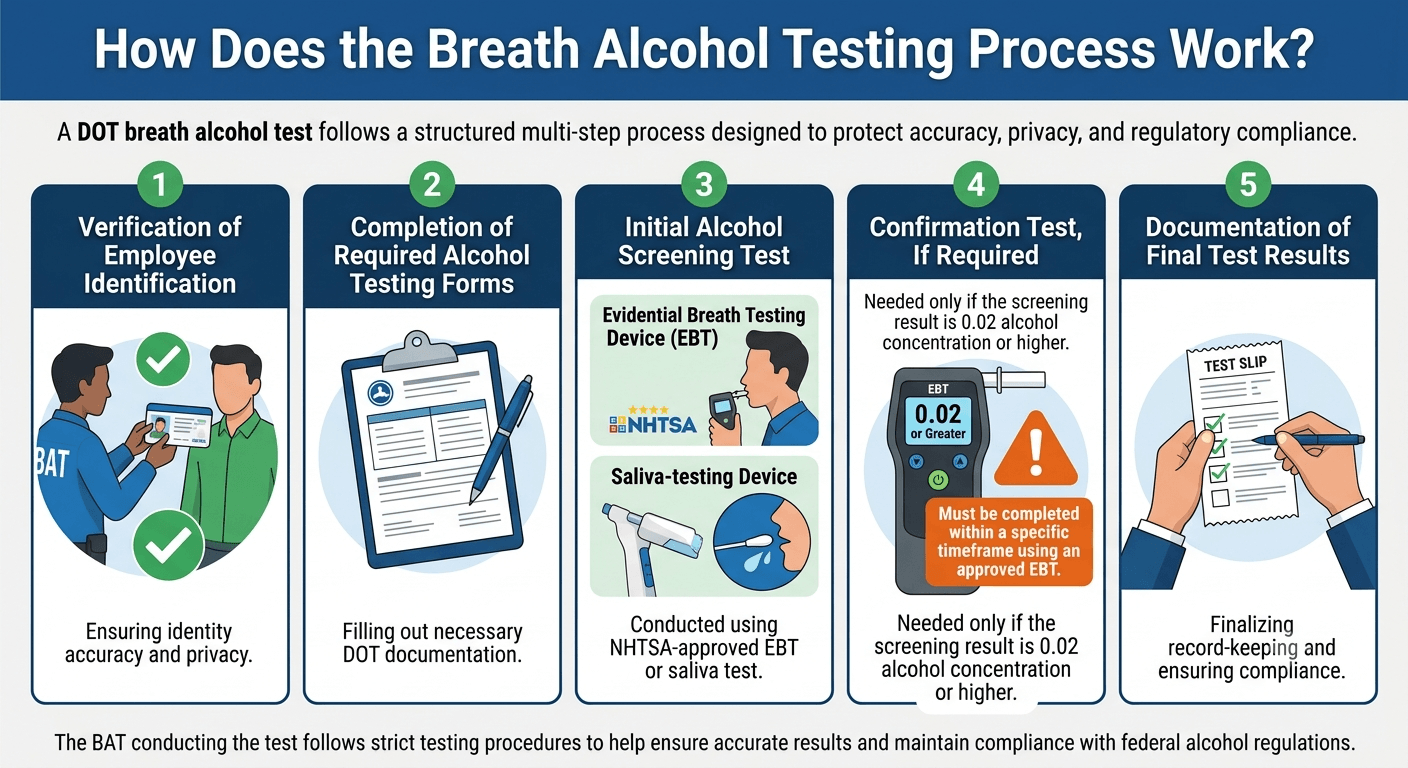
The alcohol testing process typically includes:
- Verification of employee identification
- Completion of required alcohol testing forms
- An initial alcohol screening test
- A confirmation test, if required
- Documentation of final test results
The initial screening test may be conducted using either a saliva-testing device or an evidential breath-testing device (EBT) approved by the National Highway Traffic Safety Administration (NHTSA).
If the screening test shows an alcohol concentration of 0.02 or greater, a confirmation test must be completed within the required timeframe using an approved evidential breath testing device.
The BAT conducting the test follows strict testing procedures to help ensure accurate results and maintain compliance with federal alcohol regulations.
What Is an Evidential Breath Testing Device?
An evidential breath-testing device, often called an EBT, is a specialized breathalyzer approved for DOT alcohol testing. These devices are designed to accurately and consistently measure breath alcohol concentration.
Approved EBT devices undergo strict calibration and maintenance requirements to support reliable testing. BATs must also complete device-specific training before using a particular testing device during workplace alcohol screening programs.
Some commonly referenced DOT-approved devices include:
- Alco Sensor IV
- Alco Sensor III
- Alco Sensor AZ
- X BAC Verifier DataMaster
DOT alcohol testing procedures may also include external calibration checks and other quality control measures designed to support test accuracy and regulatory compliance.
What Happens If a Test Result Is Positive?
DOT alcohol test results are based on blood alcohol concentration (BAC) levels measured during breath analysis testing.
Generally:
- A BAC below 0.02% is considered a negative result.
- A BAC between 0.02% and 0.039% requires temporary removal from safety-sensitive duties for at least 24 hours.
- A BAC of 0.04% or higher is considered a positive test result under DOT regulations.
Employees who test positive or refuse to complete the alcohol testing process may be immediately removed from safety-sensitive functions. Additional steps may include evaluation by a substance abuse professional, return-to-duty requirements, or follow-up testing programs.
DOT regulations treat refusal to complete the testing process similarly to a positive alcohol test result.
Why Accuracy and Compliance Matter in DOT Alcohol Testing
DOT breath alcohol testing is highly regulated because results can directly affect employment status, commercial driving privileges, and workplace safety.
Strict testing procedures help protect:
- Employee privacy
- Test accuracy
- Regulatory compliance
- Fair documentation of results
Testing must be completed using approved devices and properly trained BATs, in accordance with federal guidelines. Documentation, timing requirements, confirmation testing procedures, and calibration standards all play important roles in ensuring reliable and legally defensible results.
Employers operating in the transportation industry are also responsible for maintaining compliant alcohol testing programs in accordance with applicable DOT regulations and local laws.
Preparing for a DOT Breath Alcohol Test
Employees scheduled for alcohol screening should follow any instructions provided by their employer or testing provider before arriving for the test.
Helpful preparation tips may include:
- Bring a valid photo ID
- Arriving on time for the scheduled appointment
- Avoiding alcohol use before reporting for duty
- Following employer-specific testing instructions
- Providing accurate information during the testing process
The testing process is typically brief, and many employees complete it during a relatively short visit.
If your employer also requires medical certification, knowing what to expect during a DOT physical can help you prepare for every step of the process.
DOT Alcohol Testing Services at +MEDRITE Urgent Care
+MEDRITE Urgent Care provides DOT breath alcohol testing for employers, commercial drivers, and other safety-sensitive employees who require workplace alcohol testing.
With trained testing professionals, extended hours, walk-in care, and appointment availability, +MEDRITE supports workplace safety, regulatory compliance, and efficient alcohol testing services for transportation and occupational health programs.
Related Resource: Learn how urgent care can help after a workplace injury