
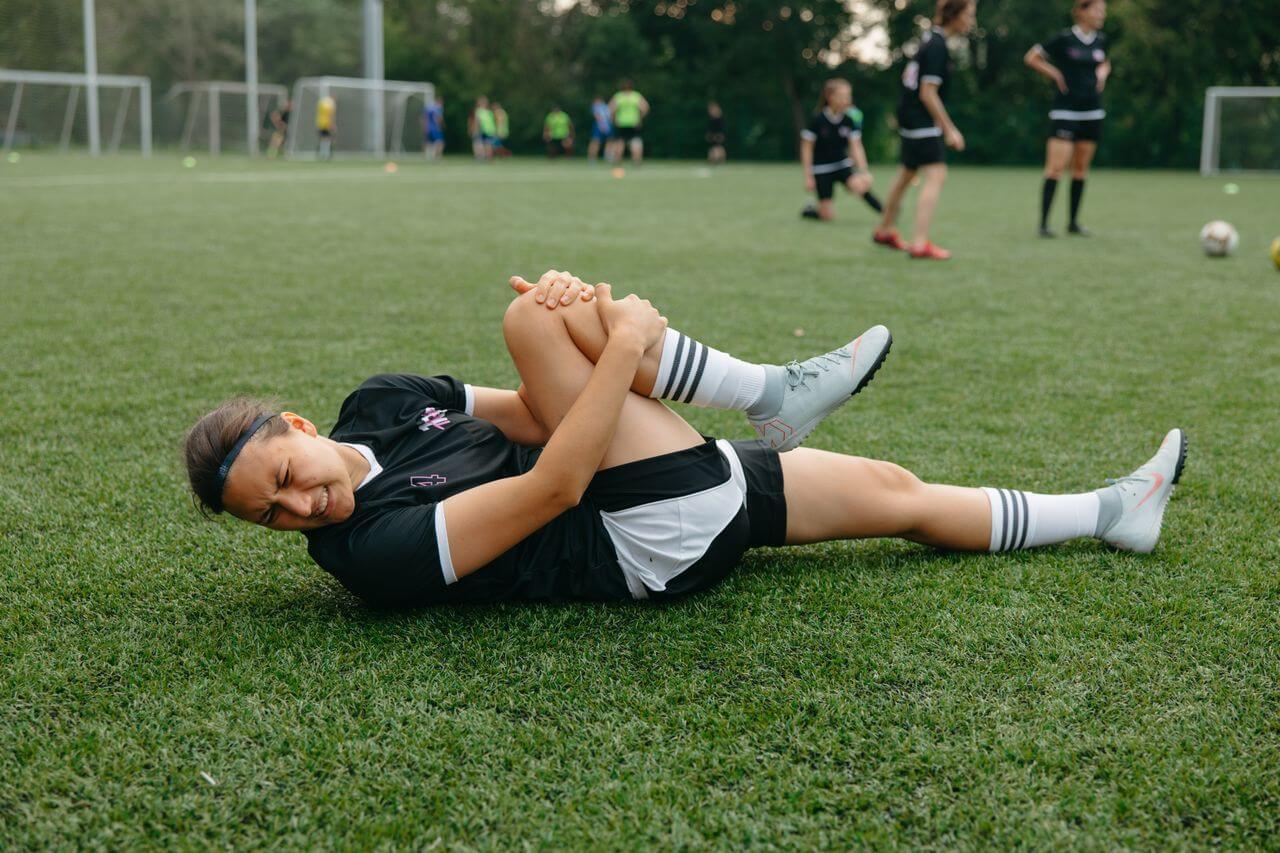
Soccer is one of the most physically demanding sports for both children and adults. Constant running, sudden stops, rapid changes in direction, jumping, and player contact all place stress on the body during practices and games. Because of these physical demands, soccer injuries are common among players of all ages and skill levels.
Many common soccer injuries involve the lower body, including the knees, ankles, hamstrings, and Achilles tendons. While some injuries may improve with rest and home care, others require prompt medical attention to help prevent long-term complications or delayed recovery.
Understanding the signs of common injuries, when to seek medical evaluation, and how injury-prevention strategies can reduce risk can support safer play for young athletes and experienced soccer players alike.
Why Soccer Injuries Are So Common
Soccer injuries often occur because the sport combines continuous movement with sudden acceleration, rapid deceleration, pivoting, and physical contact. Repetitive stress on muscles and joints can also increase the likelihood of overuse injuries during long seasons or intense training schedules.
Factors that may increase injury risk include:
- Inadequate warm-up routines
- Improper footwear or poorly fitted cleats
- Muscle imbalances or tight calf muscles
- Hard playing surfaces
- Sudden increases in training intensity
- Poor landing mechanics during jumps or headers
Young athletes may be especially vulnerable to injuries in soccer because their muscles, joints, and soft tissues are still developing. Paying attention to lingering pain, swelling, or changes in mobility can help prevent minor injuries from becoming more serious problems.
Most Common Soccer Injuries
Many soccer injuries can be evaluated and treated in an urgent care setting, especially when players experience pain, swelling, bruising, or difficulty walking after practices or games.
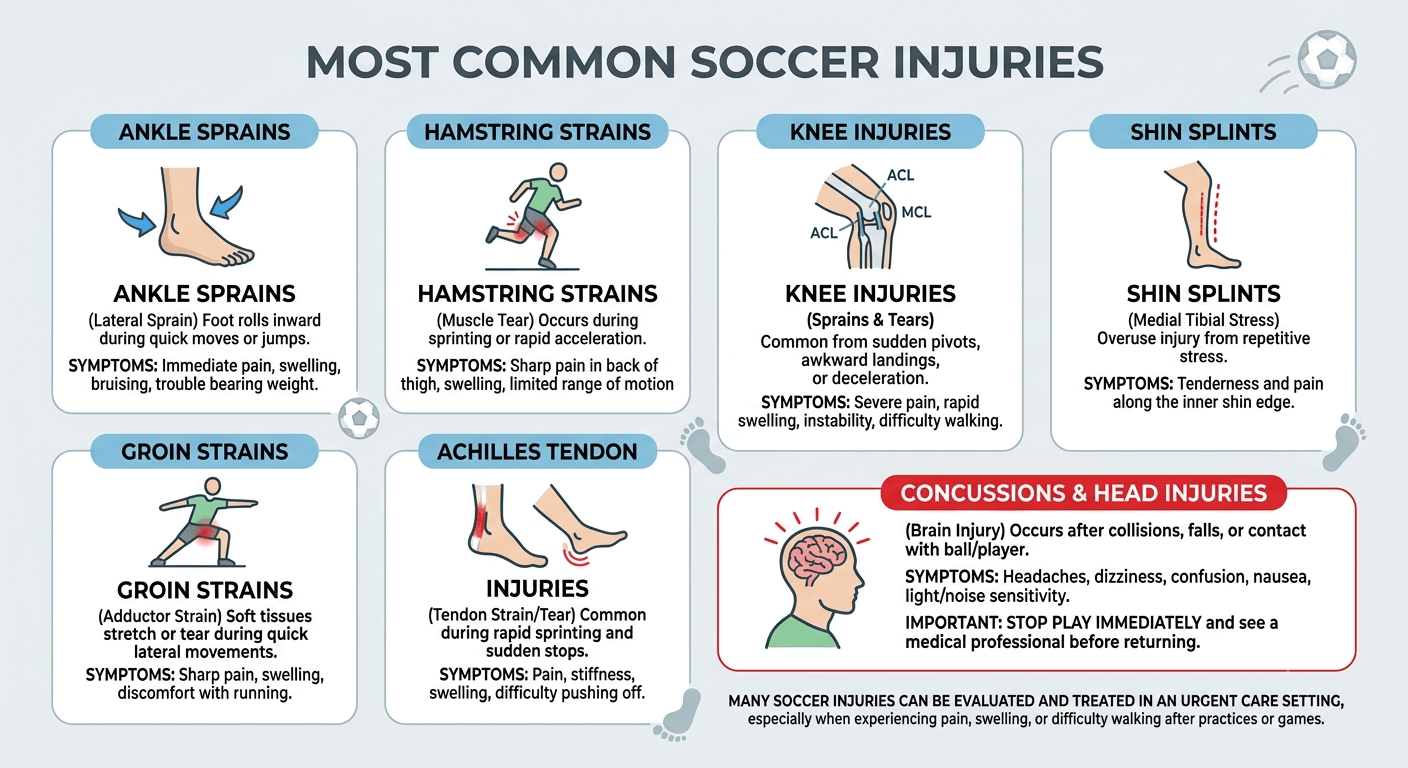
Common soccer injuries include:
Ankle Sprains
Ankle sprains are among the most common injuries in soccer. A lateral ankle sprain often occurs when the foot rolls inward during quick movements, sudden stops, or awkward landings after jumping. Symptoms may include immediate pain, swelling, bruising, and difficulty bearing weight.
Hamstring Strains
Hamstring strains commonly occur during sprinting, rapid acceleration, or sudden changes in direction. Players may feel sharp pain in the back of the thigh along with swelling or tightness that limits the range of motion.
Knee Injuries
Knee injuries can range from mild sprains to more serious injuries involving the anterior cruciate ligament (ACL) or MCL. These injuries often occur during sudden pivots, rapid deceleration, or awkward landings. Severe pain, instability, rapid swelling, or difficulty walking should be evaluated promptly.
Shin Splints
Shin splints, also called medial tibial stress syndrome, are overuse injuries caused by repetitive stress on the shinbone and surrounding muscles. Symptoms typically include tenderness and pain along the inner edge of the shin, especially during or after activity.
Groin Strains
Groin pulls occur when the soft tissues of the inner thigh or groin are overstretched or torn during sudden lateral movements. Symptoms may include sharp pain, swelling, and discomfort with running or changing direction.
Achilles Tendon Injuries
Rapid sprinting and sudden stops can strain the Achilles tendon. Pain, stiffness, swelling, or difficulty pushing off the foot may indicate an Achilles tendon injury that requires medical evaluation.
Concussions and Head Injuries
Concussions are among the most serious soccer injuries and should never be ignored. A concussion or other brain injury may occur after collisions, falls, or contact involving the soccer ball or another player. Symptoms can include headaches, dizziness, confusion, nausea, or sensitivity to light and noise.
Players with suspected head injuries should stop playing immediately and be evaluated by a medical professional before returning to activity.
When to Visit Urgent Care for a Soccer Injury
Some minor injuries may improve with rest, ice, compression, and elevation (RICE). However, certain symptoms should be evaluated by a healthcare provider as soon as possible.
Urgent care may be appropriate for:
- Rapid swelling or bruising
- Difficulty walking or bearing weight
- Sharp pain during movement
- Reduced range of motion
- Suspected sprains or minor fractures
- Head injuries without loss of consciousness
- Persistent pain that does not improve with rest
Prompt evaluation can help identify more serious injuries early and reduce the risk of chronic instability, prolonged pain, or re-injury.
In some situations, imaging such as X-rays may be recommended to rule out fractures or other complications.
How Soccer Injuries Are Commonly Treated
Treatment depends on the type and severity of the injury. Many minor injuries improve with conservative care, while more serious injuries may require specialist evaluation, physical therapy, or surgery.
Common treatment recommendations may include:
- Relative rest and temporary activity modification
- Ice and compression to reduce swelling
- Elevation of the injured area
- Stretching and strengthening exercises
- Physical therapy to restore strength and range of motion
- Protective gear or supportive bracing during recovery
More serious injuries, such as ACL tears, may require surgical intervention followed by structured rehabilitation lasting several months.
Following a proper recovery plan is important for helping athletes safely return to sports while reducing the risk of future injuries.
Tips for Soccer Injury Prevention
While not every injury can be avoided, injury-prevention strategies can significantly reduce the risk during practices and games.
Helpful prevention strategies include:
- Completing dynamic warm-ups before activity
- Incorporating strength training for the knees, ankles, and core
- Wearing properly fitted cleats and shin guards
- Using proper technique during play
- Staying hydrated before and during activity
- Allowing time for recovery between games and practices
- Cooling down and stretching after activity
Programs focused on balance, stability, and proper landing mechanics may also help reduce the risk of knee and other overuse injuries among soccer players.
Listening to the body and addressing pain early can help prevent small issues from developing into more serious injuries over time.
Routine annual physical exams can also help identify health concerns, evaluate overall fitness, and support injury prevention for athletes of all ages.
Soccer Injury Care at +MEDRITE Urgent Care
+MEDRITE Urgent Care provides evaluation and treatment for a variety of sports injuries, including many common soccer injuries affecting young athletes and adult players.
With on-site X-rays, extended hours, walk-in care, and appointment availability, +MEDRITE helps players and families access timely medical care for injuries that occur during practices, games, and training.
Find your nearest +MEDRITE Urgent Care location for walk-in evaluation and treatment of sports injuries.
Related Resource: Learn how urgent care also treats workplace injuries.