

Workplace drug testing is a common part of the hiring and employment process across many industries. Employers may use drug screening programs to support workplace safety, meet federal or industry regulations, reduce workplace accidents, and maintain a drug-free workplace environment.
Drug screening for work can occur in several situations, including pre-employment testing, random drug testing, post-accident testing, or testing based on reasonable suspicion. Understanding how the process works and what to expect before a test can help employees feel more prepared and informed.
While policies may vary by employer and state law, most workplace drug testing programs follow standardized procedures designed to protect accuracy, privacy, and compliance.
Why Employers Use Workplace Drug Testing
Many employers use workplace drug testing as part of broader workplace safety and compliance programs. In certain industries, especially transportation, construction, healthcare, and other safety-sensitive environments, substance use can increase the risk of workplace accidents and injuries.
Studies have shown that substance impairments may contribute to increased workplace incidents, lost productivity, absenteeism, and higher healthcare costs. Drug testing programs are often intended to help reduce these risks while supporting safer working environments for employees and the public.
Employers may also conduct testing to comply with federal regulations or company policies, particularly in industries regulated by the Department of Transportation or other government agencies.
When Drug Screening May Be Required for Work
Drug testing can occur at several points during employment, depending on company policy, job responsibilities, and applicable regulations.
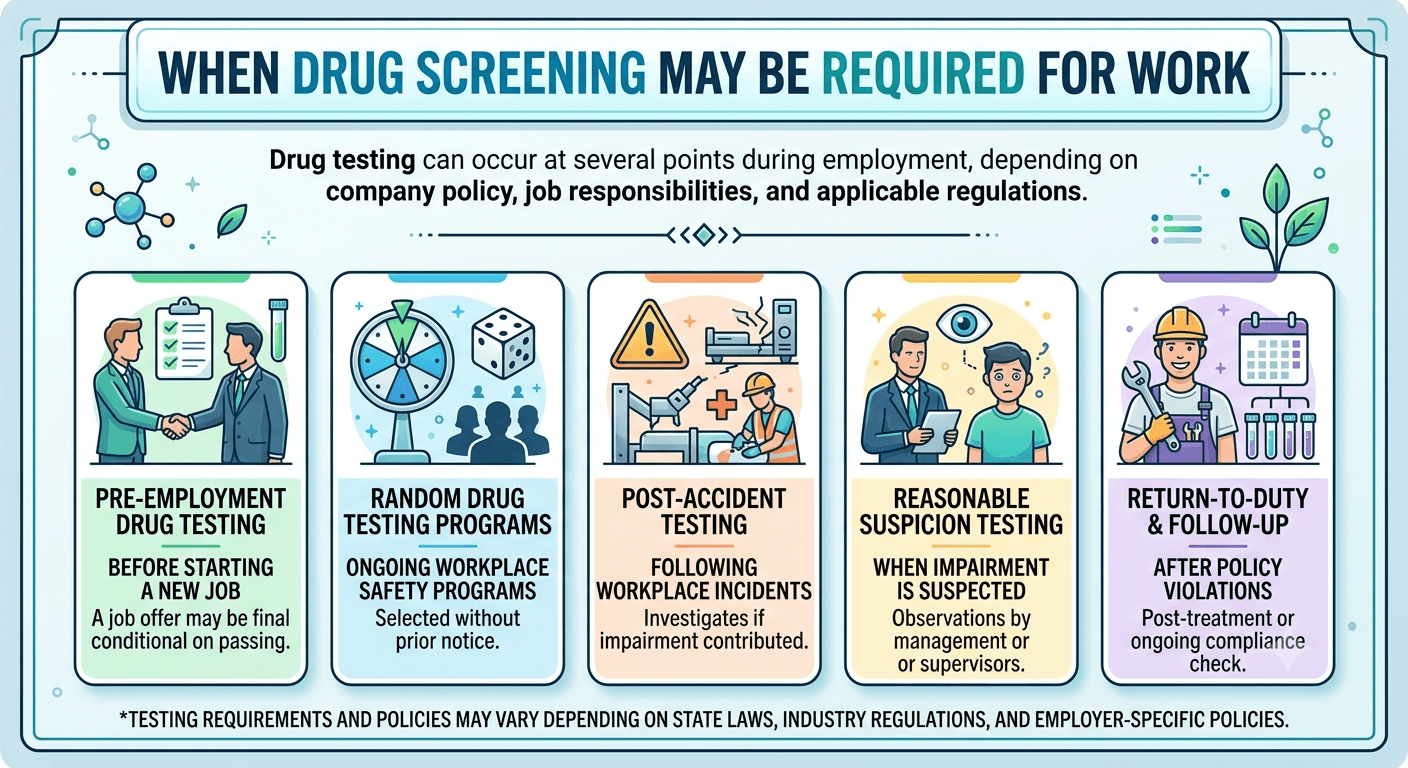
Common situations where testing may be required include:
- Pre-employment drug testing before starting a new job
- Random drug testing programs
- Post-accident testing following workplace incidents
- Reasonable suspicion testing when impairment is suspected
- Return-to-duty or follow-up testing after policy violations
Pre-employment drug tests are among the most common types of workplace drug screening and may be required before a job offer becomes final. Some employers also conduct random testing as part of ongoing workplace safety programs.
Testing requirements and policies may vary depending on state laws, industry regulations, and employer-specific policies.
What Happens During a Workplace Drug Test?
The workplace drug screening process follows standardized steps designed to protect sample integrity and ensure accurate test results.
In most cases, employees will:
- Complete identification and consent paperwork
- Provide a urine, saliva, blood, or hair sample, depending on the type of test being conducted
- Follow collection procedures designed to reduce contamination or tampering
- Have the sample sealed and documented through a chain of custody process
- Have the sample sent to a certified laboratory for analysis
Many workplace drug screening programs use a two-step testing process. An initial screening test is performed first, and any non-negative or positive test result may then undergo additional confirmation testing using more advanced laboratory methods such as Gas Chromatography/Mass Spectrometry (GC/MS).
This confirmation process helps improve testing accuracy and reduce the likelihood of false-positive results.
Common Types of Drug Tests Used by Employers
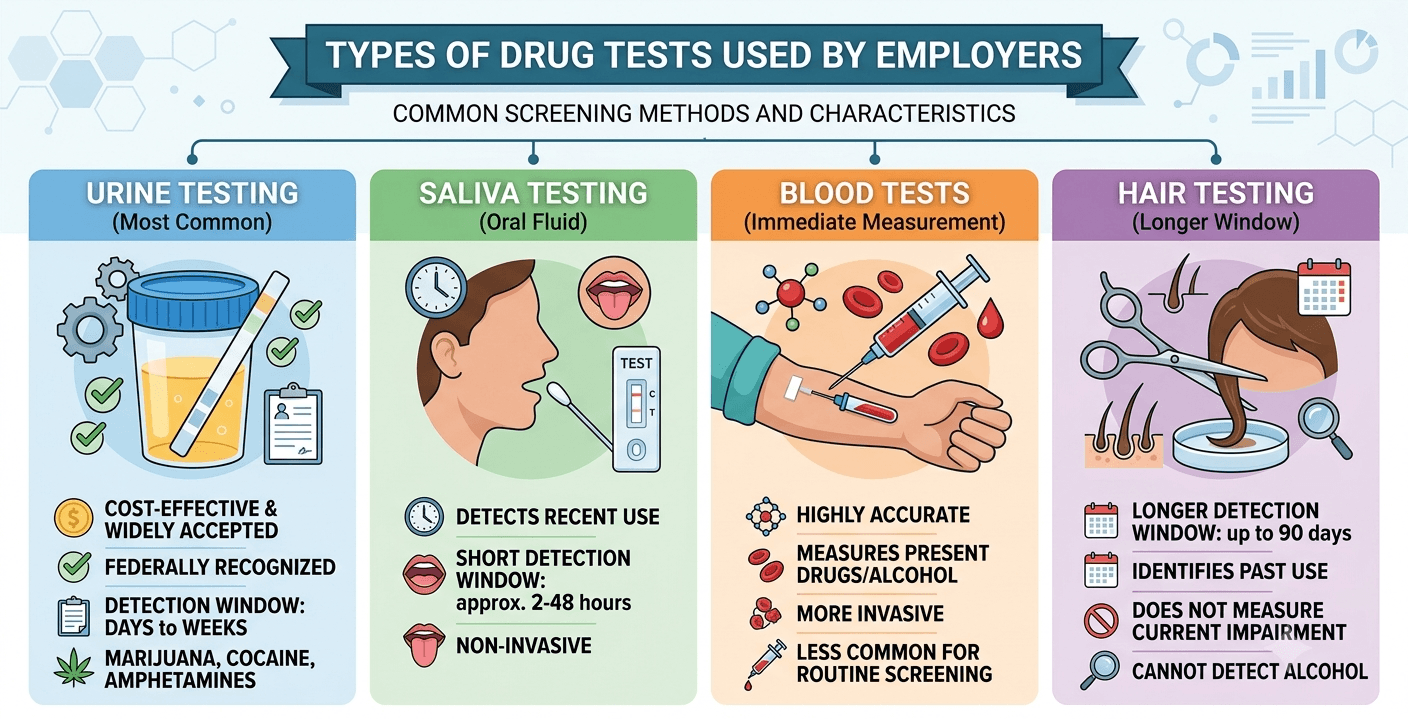
Several different testing methods may be used depending on employer policies, industry regulations, and the substances being screened.
Urine Testing
Urine testing is the most commonly used method for workplace drug screening because it is cost-effective and widely accepted under many federal testing guidelines. Urine tests can detect a variety of substances, including marijuana, cocaine, amphetamines, opiates, and PCP.
Saliva Testing
Saliva testing, also called oral fluid testing, is often used to identify more recent substance use. This method has a shorter detection period and may detect drug use within approximately 2 to 48 hours.
Blood Tests
Blood tests provide a more immediate measurement of drugs or alcohol currently present in the bloodstream. While highly accurate, blood testing is typically more invasive and less commonly used for routine workplace screening.
Hair Testing
Hair testing provides a longer detection window and may identify drug use for up to 90 days. However, it does not measure current impairment and cannot detect alcohol use.
Different testing methods may be used depending on workplace policies, federal regulations, or the nature of the job.
What Can Affect Drug Test Results?
Several factors can influence drug test results and detection windows. Individual metabolism, frequency of use, dosage, hydration levels, body composition, and the type of substance used may all affect how long substances remain detectable.
Certain prescription medications may also affect results. Employees should always disclose prescription medications during the testing process when requested by the testing provider or medical review officer (MRO).
In some situations, additional documentation from a healthcare provider may be required to verify legitimate prescription use.
What Happens After a Positive Test Result?
A positive result means that a detectable amount of a substance was identified during testing. Employers typically follow internal policies and applicable regulations to determine next steps after a positive drug test.
Depending on workplace policy, outcomes may include:
- Additional confirmation testing
- Review by a medical review officer (MRO)
- Disciplinary action
- Temporary suspension from duty
- Referral to rehabilitation or treatment programs
Some employers maintain zero-tolerance drug policies, while others may offer opportunities for evaluation or treatment depending on the situation and company guidelines.
Employees who have concerns about test results, prescription medications, or workplace policies should speak directly with their employer or human resources department for clarification.
Understanding Workplace Drug Testing Policies
Drug testing laws and employer policies can vary by state and industry. Employers are generally required to provide written drug testing policies explaining:
- When testing may occur
- Which employees are covered
- What substances are included in testing panels
- Potential disciplinary measures for policy violations
- Employee rights and procedures related to testing
Federal regulations may also apply in certain industries, particularly transportation and safety-sensitive positions regulated by the Department of Transportation.
Requirements vary by job role, and understanding when you need a DOT physical can help you stay compliant before starting or continuing employment. If you’re preparing for a DOT medical exam, knowing what to expect during a DOT physical can make the process easier and help you arrive prepared.
Reviewing company policies carefully before testing can help employees better understand expectations, procedures, and compliance requirements.