
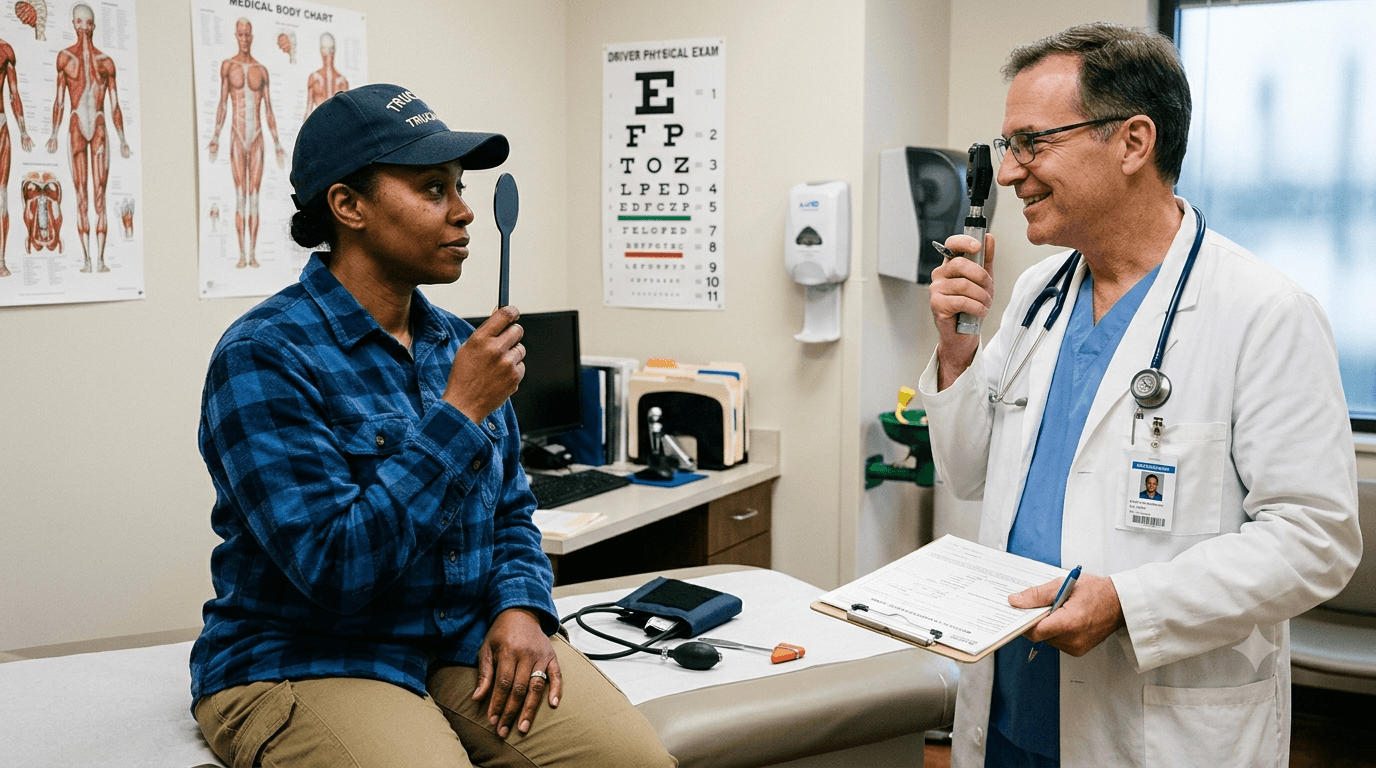
For many commercial drivers, preparing for a DOT physical can feel stressful, especially if it’s their first time completing the exam. Understanding what happens during the appointment, what the medical examiner checks, and what documentation to bring can help make the process feel more manageable.
A DOT physical is a federally required medical exam designed to help ensure commercial drivers are physically, mentally, and emotionally capable of safely operating commercial motor vehicles (CMVs). The examination follows Federal Motor Carrier Safety Administration (FMCSA) guidelines and includes a review of medical history, vision and hearing evaluations, vital signs, urinalysis, and a comprehensive physical examination.
If you’re unsure whether your job requires this exam, learn when you need a DOT physical and which drivers must meet FMCSA medical certification requirements.
Being prepared in advance can help reduce delays and make the certification process smoother.
Before Your DOT Physical Appointment
Preparing before the appointment can help the process move more efficiently and reduce the chance of needing follow-up visits or additional documentation later.
Before arriving, drivers should bring:
- A valid driver’s license
- A complete list of current medications and dosages
- Names and contact information for healthcare providers
- Corrective lenses or hearing aids if used while driving
- Relevant medical records or specialist documentation
- Any required forms related to ongoing medical conditions
Drivers with insulin-treated diabetes may also need to bring an insulin-treated diabetes mellitus assessment form completed by their healthcare provider within the required timeframe.
Many clinics also ask drivers to complete a health history questionnaire or portions of the medical examination report form before the appointment begins.
Review of Medical History
One of the first parts of the exam is a review of the driver’s medical history. During this step, the medical examiner reviews current and past health conditions, medications, surgeries, and any symptoms that could affect safety in commercial driving.
Drivers may be asked about:
- High blood pressure
- Sleep apnea
- Diabetes
- Heart conditions
- Neurological disorders
- Past surgeries or injuries
- Current prescription medications
The medical examiner may also ask questions about sleep quality, daytime fatigue, breathing concerns, or previous medical treatment. Being honest and thorough during this portion of the exam is important because the goal is to help ensure drivers can safely operate commercial vehicles while properly managing any underlying medical conditions.
Vision and Hearing Tests
Vision and hearing evaluations are standard parts of every DOT physical examination because both are critical for safe driving.
During the vision test, drivers must generally demonstrate:
- At least 20/40 vision acuity in each eye, with or without corrective lenses
- At least 70 degrees of peripheral vision in the horizontal meridian in each eye
- The ability to recognize traffic signal colors
Drivers who normally wear corrective lenses should bring them to the appointment.
The hearing test typically involves a forced whisper test, in which the driver must hear and repeat words spoken from approximately 5 feet away, with or without a hearing aid. An additional hearing evaluation may sometimes be required if concerns about average hearing loss are identified during the exam.
Blood Pressure and Vital Signs
Blood pressure and pulse rate are also checked during the appointment. Blood pressure is an important part of the DOT physical because uncontrolled high blood pressure can increase the risk of serious health complications while driving.
In many cases, drivers with blood pressure readings at or below 140/90 may qualify for a two-year medical certificate. Drivers with elevated blood pressure may still receive certification, although shorter certification periods or follow-up evaluations may be required, depending on the severity and control of the condition.
The examiner may also review overall appearance, breathing patterns, mobility, and other basic indicators of general health during this portion of the visit.
Urinalysis and Health Screening
A urine sample is routinely collected during the DOT physical exam. The urinalysis helps screen for underlying health conditions by checking for:
- Sugar
- Protein
- Blood
- Other abnormalities that may require additional evaluation
This portion of the exam is used to identify potential medical concerns, such as diabetes or kidney conditions that could affect overall health or driving safety.
Unless specifically requested by an employer or required for a separate workplace testing program, the urinalysis performed during a DOT physical is not the same as a drug test.
Depending on employer policies and federal regulations, some commercial drivers may also be required to complete DOT breath alcohol testing as part of their workplace compliance program.
DOT Physical: What to Expect
The physical examination itself involves a general assessment of the driver’s health and physical ability to safely operate a commercial motor vehicle.
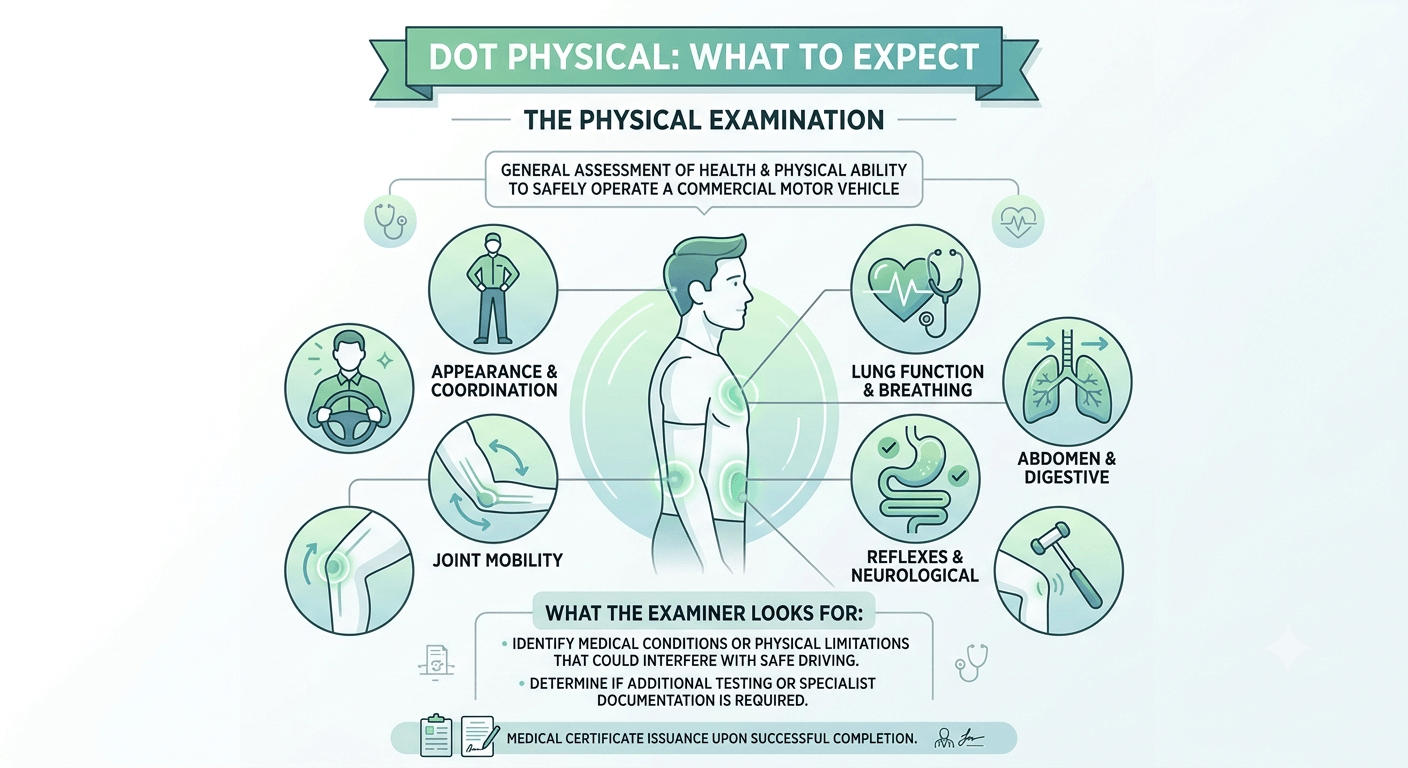
During this portion of the appointment, the medical examiner may evaluate:
- Heart and cardiovascular function
- Lung function and breathing
- Abdomen and digestive health
- Reflexes and neurological function
- Joint mobility and range of motion
- General appearance and coordination
The examiner is looking for medical conditions or physical limitations that could interfere with safe commercial driving. In some situations, additional testing or specialist documentation may be required before a medical certificate can be issued.
Medical Conditions That May Require Additional Review
Some medical conditions may require further evaluation, monitoring, or follow-up documentation before certification can be completed.
Conditions that commonly require additional review include:
- High blood pressure
- Sleep apnea
- Insulin-treated diabetes
- Certain heart conditions
- Neurological disorders
- Vision impairment
- Use of certain medications, including narcotics or benzodiazepines
Drivers with well-managed conditions may still qualify for certification when appropriate medical documentation and treatment records are provided.
After the Exam: What Happens Next?
After the examination is complete, the certified medical examiner reviews all findings and determines whether the driver meets FMCSA medical certification requirements.
Depending on the results, drivers may:
- Receive a medical examiner’s certificate
- Receive a shorter certification period requiring follow-up monitoring
- Need additional testing or specialist evaluation before certification is finalized
Many drivers who meet all required health standards receive certification the same day.
DOT Physical Exams at +MEDRITE Urgent Care
+MEDRITE Urgent Care offers DOT physical exams performed by certified medical examiners in accordance with FMCSA guidelines. Our team helps commercial drivers complete required medical certification exams efficiently and professionally.
With extended hours, walk-in care, and appointments available, +MEDRITE provides convenient access to DOT physical exams for commercial drivers and other professionals who require medical certification.
Related Resource: Learn how urgent care can help after a workplace injury.