

Planning for international travel often includes booking flights and accommodations, but protecting your health should be just as important. If you’re traveling to certain parts of the world, getting a typhoid vaccine can help reduce your risk of a serious infection that spreads through contaminated food and water.
Typhoid fever remains a concern in many regions, and taking preventive measures before your trip can make a significant difference. Understanding how typhoid spreads, where it’s most common, and how vaccination helps protect you can ensure safer, more confident travel.
What Is Typhoid Fever?
Typhoid fever is a bacterial infection caused by Salmonella Typhi. This typhoid infection spreads through contaminated food or water, or through close contact with someone who is infected.
Once inside the body, the bacteria can affect multiple systems, leading to symptoms such as high fever, abdominal pain, weakness, headache, and loss of appetite. In some cases, individuals may also experience diarrhea, nausea, or vomiting.
Without proper treatment, typhoid can become severe and lead to serious complications. Antibiotics are typically used to treat infections, but vaccination remains one of the most effective ways to reduce risk.
Where Is Typhoid Most Common?
Typhoid fever is more common in areas where access to clean water and sanitation may be limited. Travelers should be especially cautious when visiting regions such as South Asia, Africa, and Central and South America.
The risk is higher in locations where food-handling and water-safety standards may vary. Even short-term travelers can be exposed through everyday activities, such as eating improperly cooked food or drinking untreated water. Because of this, the Centers for Disease Control and Prevention (CDC) recommends vaccination before traveling to high-risk areas.
Why Vaccinate Against Typhoid?
Vaccination is one of the most effective ways to prevent typhoid infection, particularly for travelers. The typhoid vaccine significantly reduces your risk of illness and helps protect your overall health while abroad. It also minimizes the chances of your trip being interrupted by a preventable disease.
In addition to protecting individuals, vaccination supports broader disease control and prevention efforts by reducing the spread of infection in vulnerable regions. For this reason, the CDC recommends getting vaccinated at least one to two weeks before travel to allow time for the vaccine to take effect.
Preparing for Your Vaccine
Before your appointment, it’s important to speak with your doctor or healthcare provider to determine which of the available typhoid vaccines is right for you. There are two main options: an injectable vaccine and an oral typhoid vaccine, and the right choice may depend on your age, travel plans, and overall health.
Your provider may also consider whether you have a weakened immune system, are pregnant, or take medications that could affect how the vaccine works.
To make your visit more efficient, it helps to bring a few essentials:
- A government-issued ID
- Your insurance card, if applicable
- Your travel itinerary
Typhoid vaccines are widely available at travel clinics, urgent care centers, pharmacies, and local health departments. Many locations offer flexible appointments and walk-in availability, making it easy to get vaccinated before your trip.
Many travelers are surprised to learn that urgent care centers provide travel vaccinations and other preventive health services.
Post-Vaccination: What to Expect
After receiving the typhoid vaccine, it’s normal to experience mild side effects as your body builds protection. Most symptoms are temporary and resolve on their own within a few days.
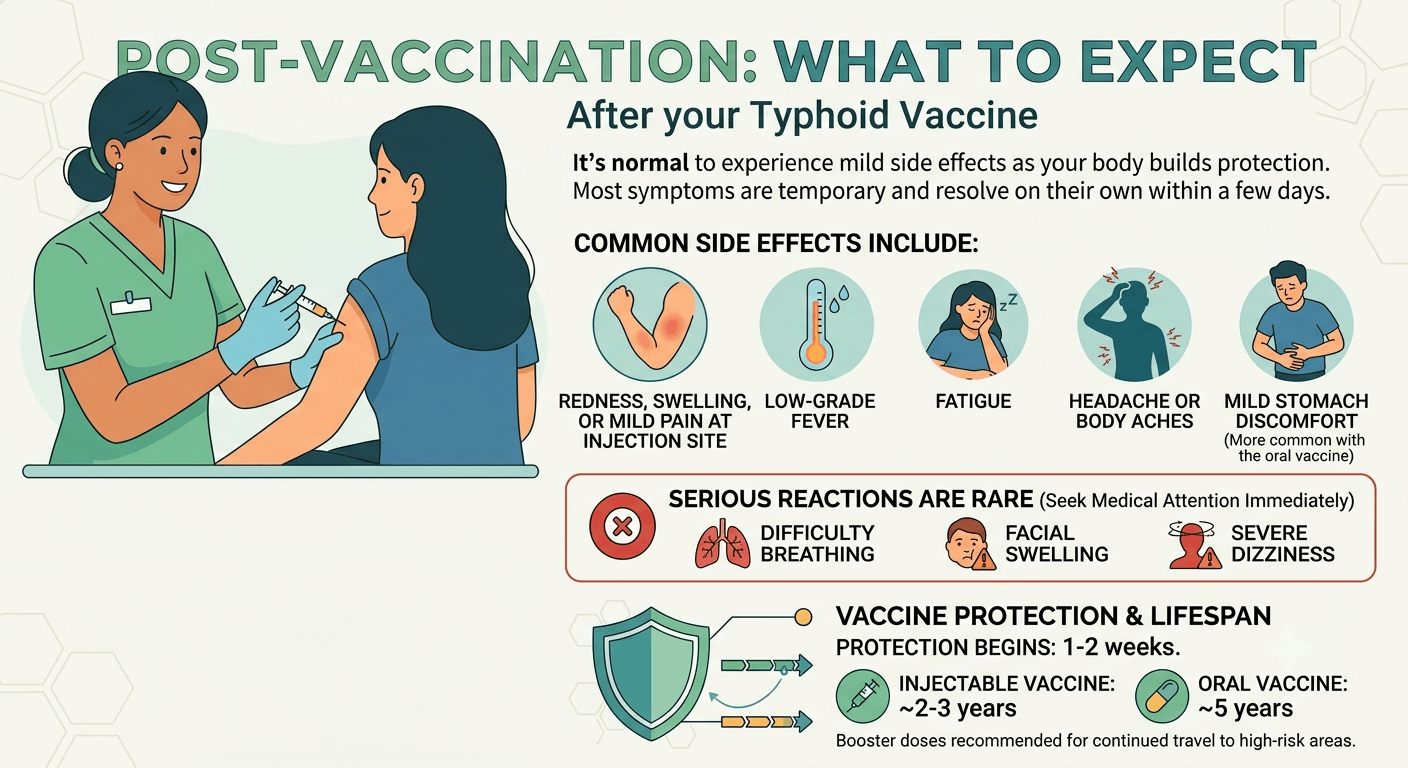
Common side effects include:
- Redness, swelling, or mild pain at the injection site
- Low-grade fever
- Fatigue
- Headache or body aches
- Mild stomach discomfort (more common with the oral vaccine)
Serious allergic reactions are rare, but you should seek medical attention immediately if you experience symptoms such as difficulty breathing, facial swelling, or severe dizziness.
Protection from the vaccine typically begins within one to two weeks. The injectable vaccine provides protection for about two to three years, while the oral vaccine may last up to five years. Booster doses may be recommended for continued travel to high-risk areas.
Additional Prevention Tips
While vaccination plays a key role, it should be combined with safe travel habits to reduce the risk of exposure. Typhoid spreads easily through contaminated food and water, so being mindful of what you eat and drink is essential.
To help protect yourself:
- Avoid untreated or tap water in high-risk areas.
- Choose fully cooked foods served hot.
- Wash your hands frequently.
- Be cautious with street food or unpasteurized products.
Taking these precautions alongside vaccination offers the strongest protection against typhoid fever.
Depending on your destination, it may also be helpful to stay informed about common travel-related illnesses, including COVID-19.
Frequently Asked Questions
How long does the vaccine last?
The injectable vaccine typically provides protection for 2 to 3 years, while the oral vaccine can provide protection for up to 5 years. Booster doses may be needed if you continue to travel to high-risk regions.
Are there any side effects to typhoid shots?
Side effects are usually mild and may include soreness, fatigue, headache, or a low-grade fever. Some individuals taking the oral vaccine may experience mild stomach discomfort.
Is the vaccine covered by insurance?
Coverage varies depending on your provider. Many clinics and pharmacies can help verify benefits before your visit.
What should I do before getting vaccinated?
Stay hydrated, get enough rest, and inform your healthcare provider of any allergies, medications, or prior reactions to vaccines.
Next Steps Before Your Trip
Getting a typhoid vaccine is a simple but important step to protect your health while traveling. With the risk of typhoid infection still present in many parts of the world, especially in areas with limited sanitation, vaccination helps reduce your chances of illness and serious complications.
If you’re planning a trip, try to schedule your vaccination at least one to two weeks before departure to ensure full protection. Walk-ins and appointments are both available, making it easy to get vaccinated before you travel.